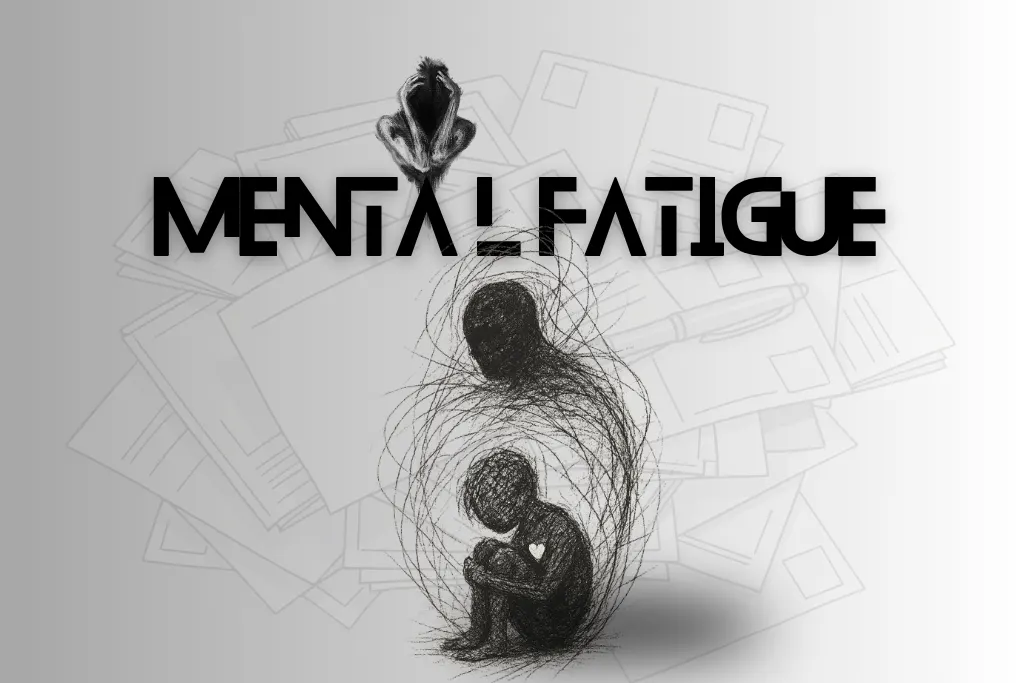
Mental fatigue is quickly becoming another one of those conditions that you have every day but don’t know how to explain.
You run through your normal tasks. You haven’t done anything that requires excessive energy or a significant time commitment. Your mind is simply tired, slow, and exhausted.
That’s why it can be so perplexing.
Because you aren’t feeling tired from physical strain. Instead, it’s a condition built slowly throughout the course of the day because of how your mind processes everything around it.
What Is Mental Fatigue?
Mental fatigue refers to cognitive exhaustion caused by an overload on your mind that isn’t necessarily related to any particular effort you have made. Symptoms include poor concentration, lethargic thoughts, lack of motivation, and feeling mentally heavy.
It is usually developed gradually over the course of many small activities.
1. Your Brain Doesn’t Really Rest
Try to reflect on your daily activities.
Even when you are idle, can you really do nothing?
For most people, the answer will be a big fat “no”. As you are having your lunch, you browse through your mobile screen. When you are relaxing on the sofa, you are still watching TV as you reply to some text messages.
Your brain remains active.
It seems that you are resting, but your brain cannot take any break from all those stimuli.
2. You Consume More Than You Know
Working long hours is not required to experience mental fatigue. Constant consumption will do the trick.
In just a few minutes, consumption turns into a chain of little information inputs – videos, opinions, news, comparisons. The mind processes everything; it doesn’t matter whether or not you think about it.
And at the end of the day, the mind has processed much more information than it should have been able to process.
That’s why “doing nothing” doesn’t feel like doing anything anymore.
3. Small Choices Are Silently Wearing You Out
Your entire day is full of choices that you don’t think are significant.
What should be opened. What should not be. Whether you should answer right away or respond later on. Which video should be watched next?
Individually, these choices may not have much meaning to you. But it is draining your mind because the brain is expending effort making these decisions anyway.
4. You Are Always Changing Focus
These days, it is rare for people to concentrate on only one thing at a time.
They shift from one application to another without even being aware of it. Engaging in an activity while checking their phones. Thinking of something else while working on some project.
Every time there is a change in your focus, there will be an additional expense of energy for resetting your brain.
5. You Are Always a Little Bit Stressed
All stress is not intense.
At times, there is merely an acknowledgment of some pending work. The message that remains unanswered. The work which needs to be done but which is being put off.
There is always this sense of pressure that never seems to go away.
It does not overwhelm you, but it lingers. This lingering thought takes away a lot from you.
6. You Hardly Ever Have True Quiet Times
Once upon a time, there were natural breaks in life.
When waiting around somewhere. When just sitting doing nothing. Or when simply taking a pause.
All such moments would be instantly filled up.
You would take out your cell phone, click on anything or scroll mindlessly through your device. There is no more quietness to be had, and hence it has become uncomfortable.
7. Your Rest Isn’t Truly Rest
Everyone thinks that they rest whenever they are not working.
However, moving from work to browsing through social media is not rest; rather, it is a different form of engagement.
Your brain will continue its activity – processing and consuming information, reacting to new data.
True rest involves distancing yourself from all kinds of information sources for even a few minutes.
Studies conducted on attention and mental processes related to prolonged engagement with technologies show that persistent digital interaction can decrease focus and induce mental fatigue in the long run.
Mental Fatigue That Gradually Leads to Burnout
Once you have mental fatigue, nothing stops it from becoming a long-lasting issue.
If you continue exposing your brain to the same amount of stimuli over a period of time, it affects other functions such as motivation, concentration, and emotional stamina.
As a result, there may be an evolution of this condition into something more profound.
Burnout in a professional setting provides an example of this gradual process leading to long-term mental health problems.
An Approach That Is More Likely To Work
The problem is not just spending less time in front of a screen.
What you should do is become more mindful of when your mind is constantly engaging without any intent.
Simple tweaks can make a big difference:
- Leave some blanks
- Concentrate on one thing only
- Keep unnecessary information out of your life
Here is where the knowledge of how digital minimalism is developing in 2026 and why it requires the conscious usage of technology may prove helpful.
Final Thought
The cause of mental exhaustion lies not in excessive workload. It lies in the fact that there are no breaks for your mind. You never rest, not even for a moment, and this non-stop functioning leads to the feeling of weariness.
Because of overwork or because you were working nonstop?
If you get exhausted after doing nothing…
What burden has been weighing on your brain all the day long?