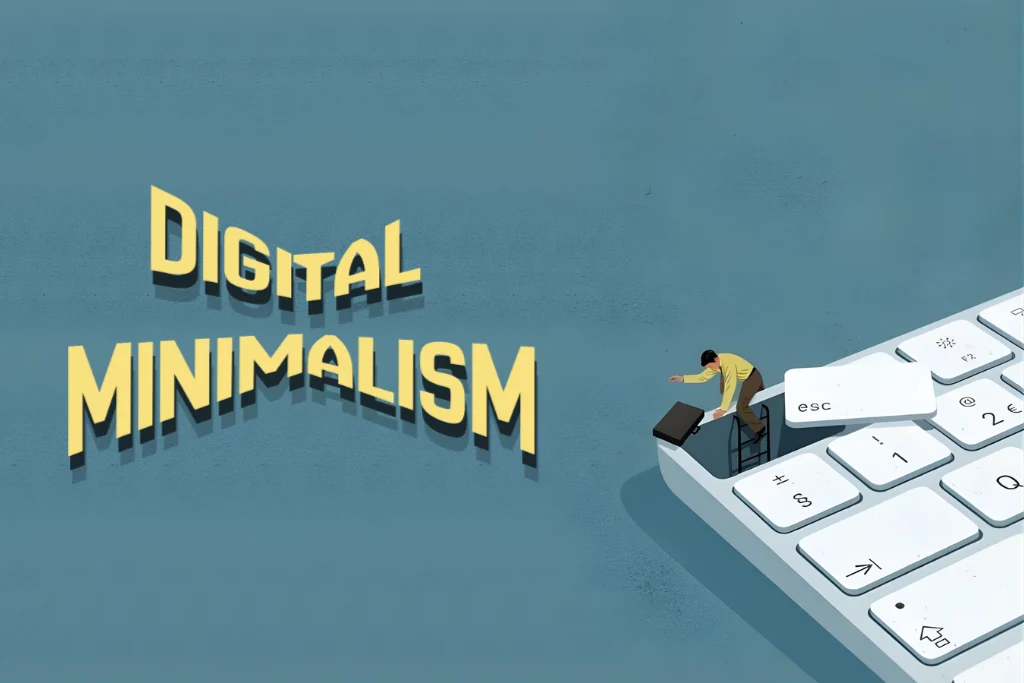
In Digital Minimalism in 2026, however, the idea of screen-time reduction is not only an answer to a need to spend less time in front of screens. Rather, it represents a reaction to a greater issue that has emerged along the way, the realization that we no longer have full control over our attention.
You don’t need less screen time—you need your attention back.
Digital overwhelm has become the default state. Most people will check their smartphones within several minutes after they wake up in the morning not due to some urgency, but simply because it has become second nature to us. The act of checking a phone symbolizes the fact that attention has been constantly stolen from us.
What is Digital Minimalism?
Digital Minimalism in 2026 is the process of adopting technology consciously rather than subconsciously.
It centers on regulating attention, minimizing unintentional usage, and ensuring that one’s behavior with technology is aligned with their goals rather than reacting to any external stimuli.
What People Believes
According to popular opinion, Digital Minimalism entails removing unnecessary applications and notifications or abstaining from engaging with social media for a while.
However, such solutions do not yield long-lasting results since individuals revert to their previous behavior after several days. The problem lies in how people have conditioned themselves to use technology.
What It Truly Implies in 2026
Contrary to popular belief, Digital Minimalism in 2026 involves purposeful engagement rather than minimal usage.
Each scroll, each notification, and each click are conscious decisions. The challenge is that most users make these choices unconsciously based on habit loops driven by boredom, stress, or stimulation needs.
This is where the idea behind why we can’t stop using digital platforms even when we want to becomes important. The behavior is not random. It follows predictable loops that operate without awareness, making it feel almost impossible to break
Why Is It Important Now?
Digital minimalism is crucial since current technology was designed specifically to attract attention. If you do not pay attention, technology can overwhelm you with distractions and lack of focus. By practicing digital minimalism, you can reestablish clarity and enhance your productivity.
Why It Is Essential in 2026
Current technology is not there to serve you. It observes you.
AI predicts your actions. You receive suggestions based on content you have yet to search for. This saves effort; it also takes away your intentions.
Once you notice that your smartphone knows about your preferences before you, you will start understanding how you lose control over technology.
The Unspoken Side Effect of Always-On Devices
It is not screen time. It is your scattered attention span.
Notifications and fast-paced formats create an illusion that you need to react quickly. This gradually degrades your cognitive abilities to concentrate on a task at hand.
Notifications and fast-paced content create a constant sense of urgency, making it feel like every update needs immediate attention. Over time, this pattern weakens your ability to stay focused on a single task and increases mental fatigue. Research exploring the psychological effects of intentional technology use and attention behavior shows that continuous digital engagement can significantly impact focus and cognitive clarity.
A More Sustainable Approach to Digital Minimalism
A better approach to Digital Minimalism in 2026 is awareness over restriction.
Instead of asking how to reduce screen time, ask:
- Why do I reach for my phone when nothing is happening?
- Why does silence feel uncomfortable?
- Why does scrolling feel easier than thinking?
Understanding these triggers creates long-term change.
Is Digital Minimalism Just a Trend, or Is It Really Needed?
Digital minimalism might seem like a trend, but, actually, it is turning into something that everyone really needs. With digital tools trying to catch one’s attention constantly, staying in control requires some conscious effort and a proper use of technology.
Final Note
Attention is one of the very few things that are really yours. How you direct it determines what you observe, what you observe influences your thoughts, and in turn, defines you.
This has nothing to do with anything digital. This is all about being aware.
For the simple reason that when your attention is being directed elsewhere constantly, it is your thinking which gradually gets influenced.
So how much of your attention is actually yours?