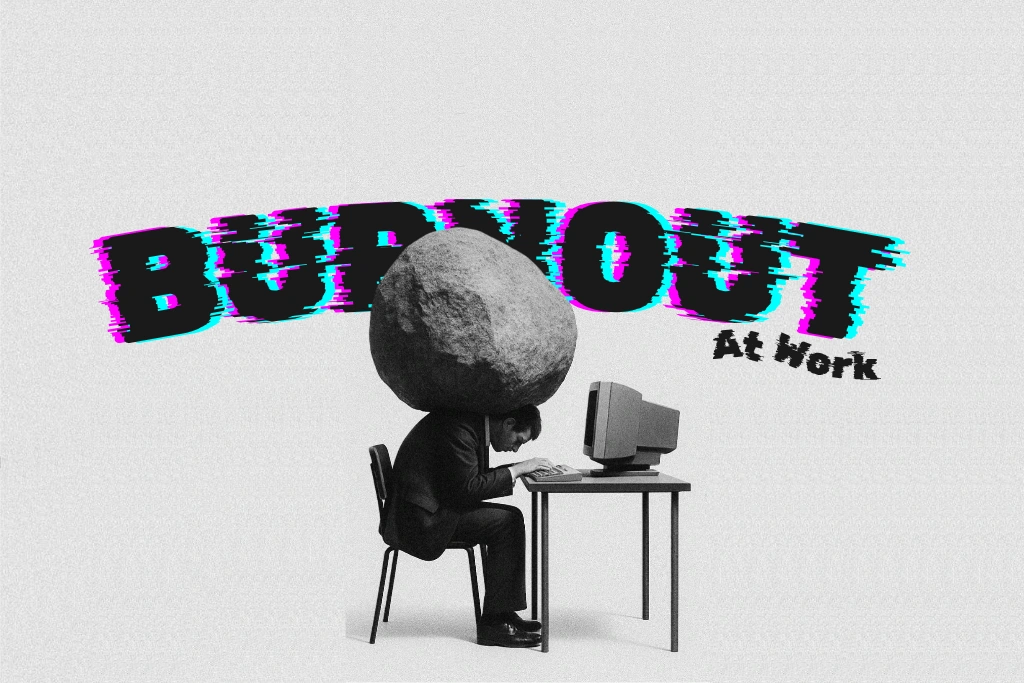
It’s not a lack of effort. This is mental exhaustion, and you have allowed it to continue too long.
While people often view successful careers as free and flexible, what most people don’t understand is that after the initial wave of excitement comes burnout because of pressures and expectations.
What Burnout At Work Actually Means
Work burnout doesn’t only mean exhaustion. It is an ongoing process where your emotions and thoughts slowly erode due to over-exhaustion of your mind. In fact, burnout at work is now widely recognized as a real workplace issue and is even classified globally as burnout as an occupational phenomenon by the World Health Organization.
Though you may keep on working, completing tasks, attending meetings, and responding to emails, in your heart, you become emotionally detached from all of it. While your body remains, your mind has become exhausted.
You are physically there. But your mind has gone elsewhere.
The important thing here is that burnout does not concern itself with how hard you work, but how your mind processes the hard work.
The Symptoms of Burnout That You Need to Look Out For
Generally speaking, the symptoms of burnout develop gradually, and most people ignore them until it is too late.
Emotional Exhaustion
You start to feel very exhausted even before things have started to happen as if all your emotional strength had run out.
Motivation Deficiency
What used to excite you now seems dull and boring without having any particular reason.
Confusion and poor concentration
You start to find it difficult to complete the simplest of tasks, let alone make decisions.
Emotional disconnection with the workplace
You don’t have any sense of involvement with what you’re supposed to do.
These are seen as signs of laziness and indiscipline, but the true reason behind its mental exhaustion builds up over time. This doesn’t happen to you because of being inactive or idle. It happens because of having too much work to do on your mind.
Why Work Begins to Feel Heavy
Work is never immediately stressful. It is made heavy by its repetition without the associated emotional payoff.
If there is no longer a sense of achievement or fulfillment derived from the work, then the mind begins to dissociate from what one is doing.
Control is another major factor, since when you begin to feel like work is reactive rather than proactive, your mind becomes less willing to engage with even getting started.
Finally, there is a buildup factor involved, as things that might be insignificant in themselves start building up and creating emotional stress.
In many cases, this pressure is not just external, it comes from internal expectations and the constant fear of failure and work pressure that keeps pushing you beyond your limits.
None of it feels wrong on its own, but all of it feels heavy collectively.
Why People Struggling with Today’s Work Culture
The modern work culture brings changes to how people view effort. It is not just about doing tasks anymore. It involves thinking.
You are supposed to be accessible, responsive, productive, and consistent all the time. Gradually, you lose chances of recovery.
Even if you do creative work, you have to think about performing rather than the process of doing. This leads you to burnout without even realizing it.
You do not stop working when you get off work. You keep thinking about work all the time.
Why Some Feel It Stronger than Others
Everyone does not feel burned out equally. Depending on their investment emotionally, control, and expectations, two individuals in the same role can react quite differently.
Individuals who have strong emotions towards their job are likely to suffer from severe burnout since they invest more emotionally into the result of their job.
On the contrary, those having higher levels of autonomy or detachment could be less prone to burning out despite working as much as those who are highly engaged emotionally.
Why Denying Burnout Makes It Worse
The major problem with burnout is not its presence, but rather that it is often overlooked for too long.
Once the symptoms of burnout are denied, people try to compensate for productivity by making changes to their schedule or discipline, and working harder.
However, this is not a matter of productivity but rather of having enough energy to complete any tasks at all.
What Really Makes a Difference in Real Life
Addressing burnout is not a process of creating drastic changes but rather a slow process of diminishing internal stress levels.
Step one is acknowledging the reality of your situation and the emotions you are experiencing.
Step two is creating a place for yourself mentally where not everything needs to be improved right away.
Step three is reestablishing a relationship with your job through small steps rather than trying to motivate yourself.
You do not need to improve everything. You simply have to diminish the amount of stress.
Final Thought
Workplace burnout is not an endpoint for productivity; rather, it indicates that there’s something in your process or mindset that’s unsustainable.
By accepting that you have a problem with burnout, you are no longer fighting against yourself but learning what you need to adjust.
Without change, your brain will continuously pull you away from the task, regardless of how much discipline you employ.
Is your work still helping you grow, or just keeping you busy?