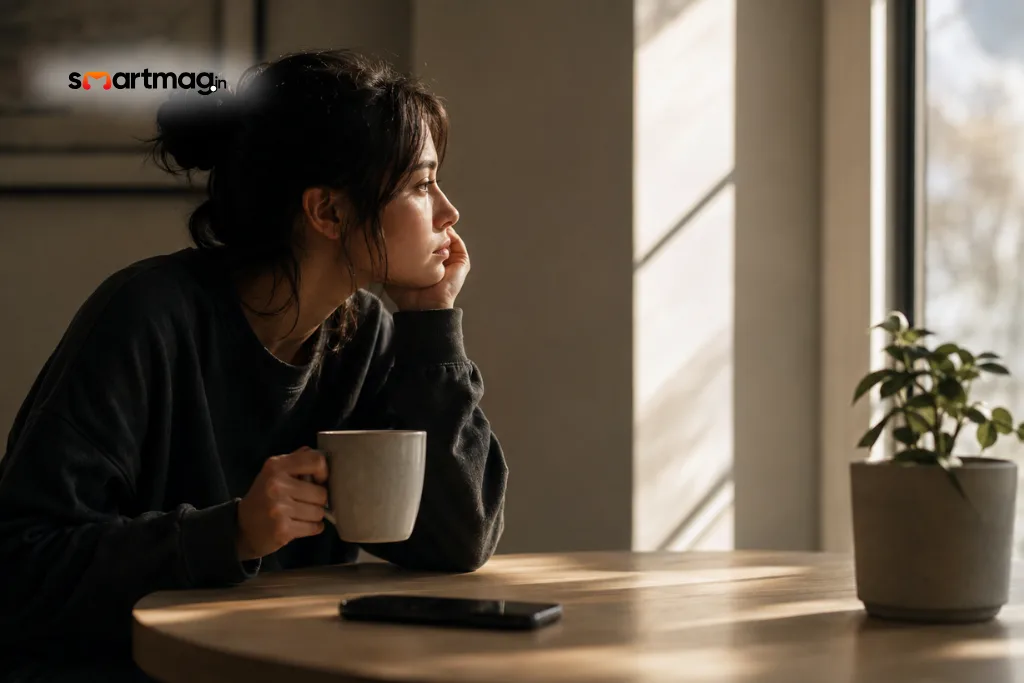
This is something that Theodore Roosevelt said way before smartphones were ever invented. Way back before people started spending their days scrolling through Instagram feeds and taking flawless “candid” photos every single day. And yet, as time has gone by, this quote has become even more relevant. For the simple reason that this is something that we see all the time, every single day.
Now take a minute to consider what I’m saying. You get up, turn around in your bed, and what’s the very first thing that you do? You check your cell phone. In under sixty seconds, you’ve been exposed to a dream vacation, an announcement of promotion, and an influencer whose physique, work ethic, and morning routine you aspire to have. From that very moment, the comparison begins.
But here is what no one will ever tell you. It’s not like you are comparing your everyday life to someone else’s life. You are comparing it to their highlight reels.
What You Actually See When You Scroll
Social media is not supposed to provide an accurate account of anyone’s life. Instead, it was developed to showcase the highlights in the most visually attractive manner. The loving couple you follow will not show the argument that took place earlier that day. The fitness coach will never reveal to you the amount of work that went into creating that perfect image on his Instagram profile. The businessman who announced that he had made a million dollars did not share with you all the times he had failed before reaching success.
You are seeing only the highlights of people’s realities. When you compare your everyday reality with the highlights on social media, you set yourself up for disappointment. And I am sure that none of this is news to anyone. We are all well aware of all this.
This is supported by research. It is shown that regular social media usage has been associated with increased depression and anxiety, especially amongst youth. Research analysing data from 14 different countries, comprising more than 35,000 people, showed that individuals who frequently compared themselves to others on social media platforms were highly likely to experience low moods. There is no denying the fact that social media jealousy is more than just an unpleasant emotion.
Why We Cannot Stop Comparing
“Throughout life, from childhood, from school until we die, we are taught to compare ourselves with another; yet when I compare myself with another I am destroying myself.” — Jiddu Krishnamurti (Philosopher and spiritual speaker)
Even knowing all of this, we still draw comparisons. Why?
We are very visual beings, and social media is built to keep us glued to the screen. Every ‘like’, every staged picture, every inspirational quote is meant to capture your attention. And we as humans have an innate need to constantly compare ourselves to others and measure how we are doing on the scale. It is an ancient survival technique that now finds itself focused on the other guy’s vacation pictures.
Clinical psychologist Miriam Kirmayer puts it into perspective. Since we get to witness the life of someone through their online presence, we fail to capture the context and the rough parts of that individual’s life story. Therefore, we make up for the missing pieces with assumptions, which often turn out to be inaccurate and paint a picture of success and happiness.
There is no such thing as a “perfect life.” At the end, they are still worrying about how to pay bills, having sleepless nights due to health issues, and having boring nights. None of that can be seen at all.
How Comparing Your Daily Life Quietly Drains You
A couple of things happen when you compare yourself to the life someone leads online.
Firstly, you lose the ability to appreciate your own life because gratitude and comparison do not coexist in the same headspace at once. As soon as you begin to measure your regular Tuesday against someone’s vacation photo, your Tuesday fades away into oblivion.
Secondly, social media jealousy causes a feeling of uneasiness. There’s always this need to do something or become something, which makes you restless. This isn’t ambition but rather an anxious mind disguised as motivation.
Third, it warps your perspective about what “normal” really means. If all the people around you are flourishing, you might think that you are the only one who is having a hard time. But that’s not the case.
Simple Mind Habits to Break the Cycle
Let me ask you a question first? Have you seen the famous Netflix film, called “The Social Network (2010)”?
There exists an irony in “The Social Network,” released in 2010. This movie is a wake-up call showing how the same networks meant to feature “perfect lives” and “friendships” are designed by real people in their unattractive and tough world. The creation is an illusion of something unreal and not a part of the true human experience. If this network is just an illusion, why should it rob you of your happiness and peace of mind? So, breaking this cycle becomes all the more important.
This being said, the good thing is that you are not forced to stop using social networks. What you need to do is to change your attitude towards it. Here are several effective practices that can be used.
Do a self-check before you start using the app. Check how you feel on a scale of one to ten. Then check again after you use the app. If your score always goes down, that’s a sign of quitting social media use.
Be engaged for the right reasons, rather than falling into routine. There is a difference between actively engaging with social media in ways such as connecting with a friend, looking up something, or following someone who truly inspires you, versus scrolling through out of boredom or anxiety. The latter kind is most strongly connected with jealousy and low mood on social media.
Unfollow without regret. No one forces you to continue following people who make you feel inferior. In case there is someone who keeps making you compare your life with theirs and feels inferior after interacting with their posts, just use the unfollow feature. It’s not being rude. It’s honestly setting boundaries.
Get back to reality. Whenever there’s that urge to compare, use your senses as a tool for bringing you back to reality. What can you see, hear, or feel around you? This is not a self-help remark. This is the practical means of moving your focus from that two-dimensional world to your three-dimensional reality.
Only ever compare yourself to yourself. The only reasonable comparison is the one that you make between the person you are now and the person you were six months ago. Have you become a bit more patient? Do you know what you want a little bit better? Have you become more honest with yourself? That is what true growth looks like.
Conclusion
When you compare yourself to what other people present on social media, you are engaging in a practice that you learned as simple mind habits. It is also something that you can stop doing. Through small brain hacks like mindful scrolling, unfollowing, and focusing on your real life rather than the internet, you can start getting away from social media jealousy. Real life isn’t just the highlights, it’s a full 3-hour long bollywood movie!
FAQs
- Is comparison a mental illness?
Comparing is not considered a form of psychological disorder. However, it is a major contributor to anxiety, low self-esteem, and depression. The process of constantly comparing your day-to-day activities to those of other people can be very disturbing, especially if you compare your life on social media excessively. If comparing is causing serious problems in your life, talking to a therapist will do you good.
- Why is Gen Z quietly leaving social media?
Gen Z generation is distancing themselves from social media platforms due to the adverse impact of constantly being visible and performing on their mental well-being. Having grown up online, Gen Z people have been exposed to jealousy, exhaustion, and pressure about their identities through social media since childhood. With the realisation of such effects increasing, there are more young people opting for their privacy through going offline, setting limits to usage, or even using fewer but closer digital connections.
- What are the dark sides of social comparison?
Social comparison may gradually eat away at one’s self-respect and increase feelings of anxiety and dissatisfaction with oneself. Social media use is associated with increased chances of being depressed, having a disturbed body image perception, and even distorted perceptions of “what is normal.” It may trigger unhealthy rivalry and prevent one from having a real human interaction.
Love to write? Read more on SmartMag or contribute your own article.