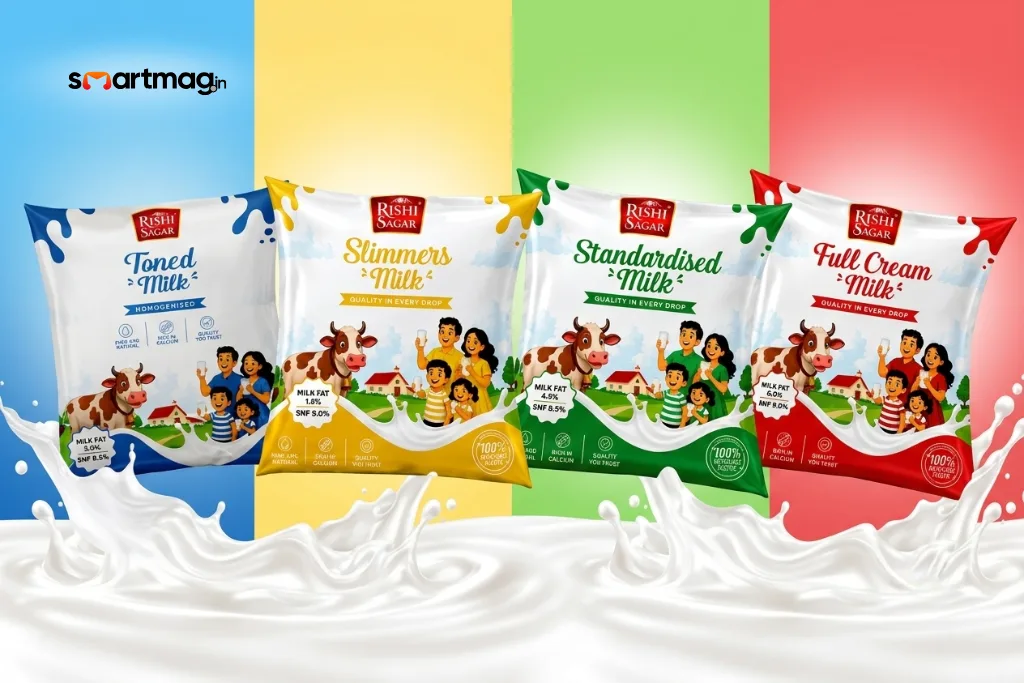
The principal difference in milk lies in the amount of fat it contains, which determines the flavor and nutritional value, along with the applications of the milk in your daily routine. In India, the common types of milk are full cream, standardised, toned, and low-fat milk. Full cream milk is ideal for cooking and drinks. Toned and standardised milk are ideal for regular consumption. Your final pick depends on your family’s age, fitness goals, and taste preference.
Key Takeaways
- Different types of milk are determined according to the fat percentage, ranging from less than 1.5% to more than 6%.
- Full cream milk has a high fat percentage and is good for cooking purposes.
- Standardised milk contains balanced fat and nutrients, suitable for home consumption.
- Toned milk has less fat content and is best for daily consumption.
- Low-fat milk is suitable for those who are conscious about losing weight and reducing fat intake.
- Always make sure that the FSSAI symbol is present on the product before purchasing milk.
- The choice of milk varies according to an individual’s age and fitness level.
Why Does Milk Come in So Many Types?
Cow milk is not a standardized product despite the popular belief that it is one. The natural fat in cow milk is standardised to produce different types of milk in India. This is referred to as standardisation, which enables companies to provide their consumers with all kinds of milk. A growing athlete needs different milk from someone managing cholesterol. Understanding these differences helps you buy milk with a clear purpose, not just habit.
What Are the Main Types of Milk in India?
There are four general types of milk obtained from cows in India, and these are distinguished based on their fat content level. Food Safety and Standards Authority of India (FSSAI) has specified the fat and solids-not-fat levels for different types of milk.
Milk is obtained through the complete milking of a healthy milch animal without any addition or removal.
Full Cream Milk
Amongst the available types of milk, full cream milk has the maximum fat content, which is generally 6%. As per the guidelines of FSSAI, full cream cow milk should have a minimum of 6% fat and 9% solids-not-fat. Full-cream milk is defined as the milk of buffalo or cow that is standardised to fat and solids-not-fat percentage. This type of milk tastes creamy and can be used in desserts, kheer, and strong chai. Kids and those who require high-calorie milk find full-cream milk more suitable.
Standardised Milk
Standardised milk must contain at least 4.5% milk fat and 8.5% SNF under FSSAI standards. This milk refers to cow milk, buffalo milk, sheep milk, or goat milk that is standardised in terms of fat and solids-not-fat percentage. Due to this consistency, it is a reliable option to use in day-to-day cooking in a household. It provides proper nutrition without being as rich as full-cream milk.
Toned Milk
Toned milk is a blend of whole milk and skim milk to reduce fat content. The FSSAI regulates the minimum fat content in toned milk at 3% with solids-not-fat at 8.5%. “Toned Milk” refers to a product obtained through cow or buffalo milk with fresh skim milk. It is suited for consumers who prefer light milk without sacrificing too much protein and calcium. Toned milk is consumed in many Indian homes in tea and coffee.
Low-Fat Milk
Some brands also offer a lighter variant that contains about 1% to 1.5% fat. Such variants are similar to double toned or skimmed milk under FSSAI classification, where double toned milk contains 1.5% fat. Double Toned Milk refers to products made from cow or buffalo milk with fresh skimmed milk. This milk will suit people who are on a low-fat diet or trying to reduce their weight.
Milk Types at a Glance
| Milk category | FSSAI fat requirement | Practical use |
|---|---|---|
| Full cream | At least 6% | Rich chai, kheer and other creamy recipes |
| Standardised | At least 4.5% | Drinking and everyday cooking when a creamier taste is preferred |
| Toned | At least 3% | Everyday drinking, tea and coffee |
| Double toned | At least 1.3% | A lighter milk option |
| Skimmed | No more than 0.5% | The lowest-fat category in this comparison |
How To Choose the Right Milk for Your Family?
Picking the right milk becomes simple once you match it to your actual needs.
- For children: full cream milk is recommended as they grow bones and gain weight.
- For weight management: go for toned or low-fat milk to reduce fat intake every day.
- For elderly family members: standardised milk will provide them with good nutrition, and it will not be heavy on them.
- For cooking and sweets: use full cream milk for its rich and authentic flavour.
- For fitness and gym-goers: go for standardised milk, which has protein and no extra fat.
Mixing types across the week also works well for many households. You might use full cream milk for weekend desserts and toned milk on weekdays.
What Should You Check Before Buying Packaged Milk?
Not every packet on the shelf offers the same quality, even within one type. Keep these points in mind at the store.
- Make sure to verify the FSSAI licence number mentioned on the packet.
- See the date on the packet and select the one that is fresh.
- See the percentage of fat and solids-not-fat written on the pack.
- Refrigerate the packet below 4°C immediately after purchasing it.
- Avoid packets with bloating, leaks, or damaged seals.
Does Fat Content Really Change How Milk Tastes and Cooks?
Since fat is responsible for flavour, high-fat milk will taste much richer and will also coat your mouth. This is the reason why full cream milk is used to make rabri, malai and thick curd. Low-fat milk, however, mixes well with black tea and filter coffee. In baking, the use of full cream milk or standardised milk will give a moist crumb to your cake. Toned milk will often result in a drier product.
How Should You Store Milk to Keep It Fresh Longer?
It is as important to store milk correctly as it is to select the appropriate fat percentage.
1) Refrigerate the milk after purchase or delivery.
2) Place the milk in the coldest place in the refrigerator, not on the door.
3) Boil the milk, either raw or pasteurised, to store it longer.
4) Pour the milk using a clean and dry ladle.
5) Consume the milk within 24 to 48 hours after opening.
Final Words
The selection of milk depends on the requirements of the family for health benefits and lifestyle. Rishi Sagar provides Slimmers, Toned, Standardised, and Full Cream Milk products, which will be suitable according to individual households’ requirements, providing them with fresh and pure milk and milk products. Discover the entire range of milk products from Rishi Sagar now.
Explore more practical insights on health, lifestyle, and everyday topics on SmartMag.