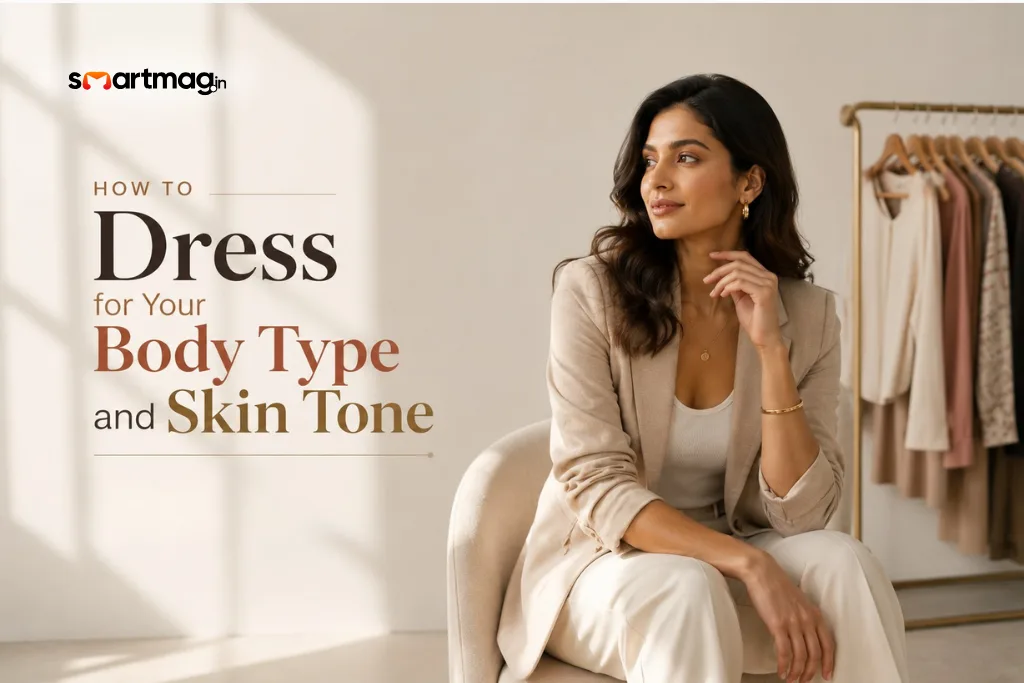
If you ever stood in front of your wardrobe thinking, “Why does this look good on someone else but not me?” you’re not alone. The answer is not always your size, budget, or fashion sense. It also comes down to fit, proportion, and colour.
Learning the art of how to dress for your body type can make your outfits feel more balanced, comfortable, and natural. When you are able to understand your skin tone, choosing colours becomes a breeze. You stop guessing and start building looks that actually work for you.
This fashion guide by SmartMag clearly explains how to dress better by understanding your body shape, choosing flattering clothes, and creating the right outfit colour combination for your skin tone.
Why Do Body Shape and Skin Tone Matter in Fashion
Perhaps good styling is not about copying every viral trend. It is more about knowing what will make you feel confident.
Your body type helps you understand proportion. It also guides you on where to add structure, where to create balance and which silhouettes will feel most natural. On the other hand, your skin colour helps you choose colours that will make your face look fresh and not tired.
As per the BoF and McKinsey State of Fashion 2026 report, the global fashion industry is expected to see low single-digit growth in 2026, while brands will be focusing more on values, identity, and consumer connection. In simple words, fashion is becoming less about buying and more about choosing better.
That is why learning about how to dress for your body type is useful. Moreover, it will also help you avoid random purchases and build a wardrobe that will easily fit your real life.
How to Dress for Your Body Type: Start With Shape, and Not Size
Your size tells you about your measurements. Your shape tells you about your proportions.
Two people can wear the same size but will need very different outfits due to their shoulders, waist, hips, and torso balancing differently. This is why dressing according to your body type is more important than simply following the size labels.
The most common body shapes have been listed below:
| Body Type | Common Features | Style Goal |
|---|---|---|
| Pear shape | Hips are wider than shoulders. | Balance the upper body. |
| Apple shape | Fuller midsection with slimmer legs. | Create definition and flow. |
| Hourglass shape | Balanced shoulders and hips with a defined waist. | Highlight the waist. |
| Rectangle shape | Shoulders, waist, and hips are similar in width. | Create curves and structure. |
| Inverted triangle | Shoulders are wider than hips. | Add balance to the lower body. |
You should use this table as a guide and not a box. The majority of people are a mix of 2 different shapes.
Outfit Guide for Pear-Shaped Bodies
A pear-shaped body generally has wider hips and narrower shoulders. Here, the goal is to create balance by drawing gentle attention towards the upper body.
So, you should choose tops with interesting necklines, structured shoulders, puff sleeves, collars, and lighter colours. These are some of the details that will also help in adding visual width to the top half. Straight-leg jeans, A-line skirts, and wide-leg trousers generally work well as they skim the hips without clinging too much.
Darker bottoms with brighter or printed tops can create a balanced look. For instance, navy trousers with a soft ivory blouse or black jeans with a printed shirt can feel simple and polished.
Avoid bottoms with heavy pockets, bulky sides, and too much volume around the hips if you are aiming for a smoother look.
The best pieces to try include the following:
- Boat-neck tops
- Cropped jackets
- A-line dresses
- Straight-leg jeans
- Flared trousers
- Statement earrings
This is one of the practical ways to dress as per your body without making the outfit bland.
Outfit Guide for Apple-Shaped Bodies
An apple-shaped body is generally the one that carries more fullness around the midsection, with slimmer arms and legs. The aim is to create length and add a gentle definition.
Flowy fabrics, V-necks, open jackets, and straight silhouettes work well. Instead of going for tight tops around the stomach, choose pieces that will help you skim the body. Wrap-style tops and dresses can help in creating a shape without making you feel uneasy.
For bottoms, slim trousers, straight-leg jeans, and structured skirts can help highlight the legs. Longline layers are also useful as they create vertical lines.
Some of the good outfit examples consist of a long open blazer with a V-neck top and straight trousers or a wrap dress with simple block heels.
The best pieces to try include the following:
- V-neck tops
- Wrap dresses
- Longline jackets
- Straight trousers
- Empire-line dresses
- Monochrome outfits
Outfit Guide for Hourglass Bodies
An hourglass body has a defined waist with balanced shoulders and hips. The goal is to follow natural shape rather than hiding it with boxy clothing.
Fitted tops, wrap dresses, high-waist trousers, and belted styles work well. Clothes that sit close to the waist tend to look more polished, as they can support the body’s natural proportion.
Soft fabrics can look elegant, but overly loose layers may hide the waist and also make the outfit look heavier than it is. If you incline towards oversized styles, try to balance them with one fitted piece. For example, you can wear a relaxed shirt with fitted trousers or a slim top with wide-leg trousers.
The best pieces to try include the following:
- Wrap tops
- Belted dresses
- High-waist jeans
- Pencil skirts
- Fitted blazers
- Tailored jumpsuits
This body-shape fashion approach will keep the look effortless while still being defined.
Outfit Guide for Rectangle-Shaped Bodies
A rectangle-shaped body has similar shoulder, waist, and hip measurements. Here, the goal is to create a shape through styling.
Layering, belts, peplum tops, pleated skirts, and structured jackets can help in adding dimension. Moreover, you can also play with colour blocking to create an illusion of a waist.
For instance, a tucked-in shirt with high-waist trousers and a belt can instantly add shape. Dresses with ruching, tiers, or a defined waistband can also be useful.
The best pieces to try include the following:
- Peplum tops
- Belted jackets
- Pleated skirts
- Wide-leg trousers
- Cropped blazers
- Colour block dresses
If you still want to know how to dress better, start by adding structure where your outfit feels flat.
Outfit Guide for Inverted Triangle Bodies
An inverted triangle body generally has broader shoulders and narrower hips. The goal is to soften the upper body and add volume to the lower body.
So, go for simple tops, soft necklines, and darker colours for the top. For bottoms, you can try wide-leg trousers, flared jeans, cargo trousers, and pleated and printed skirts. These will help in adding balance to the lower half.
You should avoid heavy shoulder pads or very sharp sleeves if you do not want to place emphasis on the shoulders.
The best pieces to try include the following:
- V-neck tops
- Flared jeans
- Wide-leg trousers
- A-line skirts
- Printed bottoms
- Soft draped tops
How to Choose Colours for Your Skin Tone
Once your outfit’s shape feels right, colour will complete your final look.
Skin tone is often described in two parts: surface tone and undertone. Your surface tone may look fair, medium, dusky, or deep. Your undertone, on the other hand, is the subtle colour beneath your skin, generally warm, cool, or neutral.
Personal colour analysis is widely used in the fashion and beauty industries to identify colours that can easily harmonise with a person’s skin, hair, and eye colour.
| Undertone | Signs | Colours That Often Work |
|---|---|---|
| Warm | Skin looks golden, peachy, or yellow. | Olive, mustard, coral, rust, and cream. |
| Cool | Skin looks pink, red, or bluish. | Navy, lavender, emerald, icy blue, and berry. |
| Neutral | A mix of warm and cool tones. | Teal, soft white, blush, charcoal, and denim. |
A quick test is to look at your jewellery. If gold looks better, you may lean warm. If silver looks better, you may lean cool. In case both look good, you might be neutral.
Outfit Colour Combination Ideas
Colours can completely change how an outfit looks and feels. A simple shirt and trousers can look casual, elegant, bold, and soft depending on the palette.
Below are some of the easy combinations that you can try:
| Skin Undertone | Safe Combination | Bold Combination |
|---|---|---|
| Warm | Cream + olive | Rust + gold |
| Cool | Navy + white | Emerald + black |
| Neutral | Charcoal + blush | Teal + beige |
| Deep warm | Chocolate + cream | Mustard + maroon |
| Deep cool | Black + cobalt | Plum + silver |
How to Dress Better Without Buying Too Much
You don’t need to invest in a brand new wardrobe to improve your style. All you need are better combinations and some guidance.
Start with these simple steps:
- Identify your body shape.
- Choose one outfit formula that works for you.
- Find your best three colours.
- Keep all the basic pieces in neutral shades.
- Add personality through accessories.
- Follow trends only when they suit your wardrobe.
In case you have a pear-shaped body and warm undertone, you can wear dark straight jeans, a cream structured top and gold earrings. If you have a rectangular body and a cool undertone, you could try high-waist trousers, a tucked navy shirt, and a silver belt.
This is where the outfit guide becomes a practical option. It will help you to repeat whatever works best rather than starting from zero every morning.
Wrapping Up
Learning how to dress according to your body shape and skin colour is not about adhering to rigid fashion guidelines. It is all about self-awareness.
Having knowledge about your physical proportions will help you select outfits that will give you a sense of harmony and balance. Knowing your undertones will help you select colours that will make you look brighter.
Combining these two concepts will help you dress up easily, quickly and pleasantly. The best style is not the most expensive one. It is the one that feels natural on you.
Therefore, the next time you are going shopping or planning an outfit, do not start with what is trending. Begin with what suits you. That is the real secret behind looking well-dressed.
FAQs
- How do I determine my body type?
When standing in front of a mirror, assess the measurements of the shoulders, waist, and hips. If the hips are wider than the shoulders, then you are pear-shaped. If the shoulder and hip measurements are the same, with an accentuated waist, then it’s an hourglass. This will help you understand your body type.
- What is the best way to dress up according to body type?
It is necessary to create visual harmony. Emphasise your favourite zones, add structure if necessary, and put on clothes that feel comfortable. The skill of dressing up properly will help in choosing outfits.
- How do I choose colours according to my skin tone?
You need to find out what undertones you have. People with warm undertones look good in natural colours, cool in jewel-like colours, and neutral in both.
- Should I follow fashion trends or dress up for my body type?
You can do both. Use trends as inspiration, but adapt them to your body shape, skin tone and lifestyle. The best trends are the ones you can wear confidently.
Passionate about writing? Join SmartMag as a contributor!