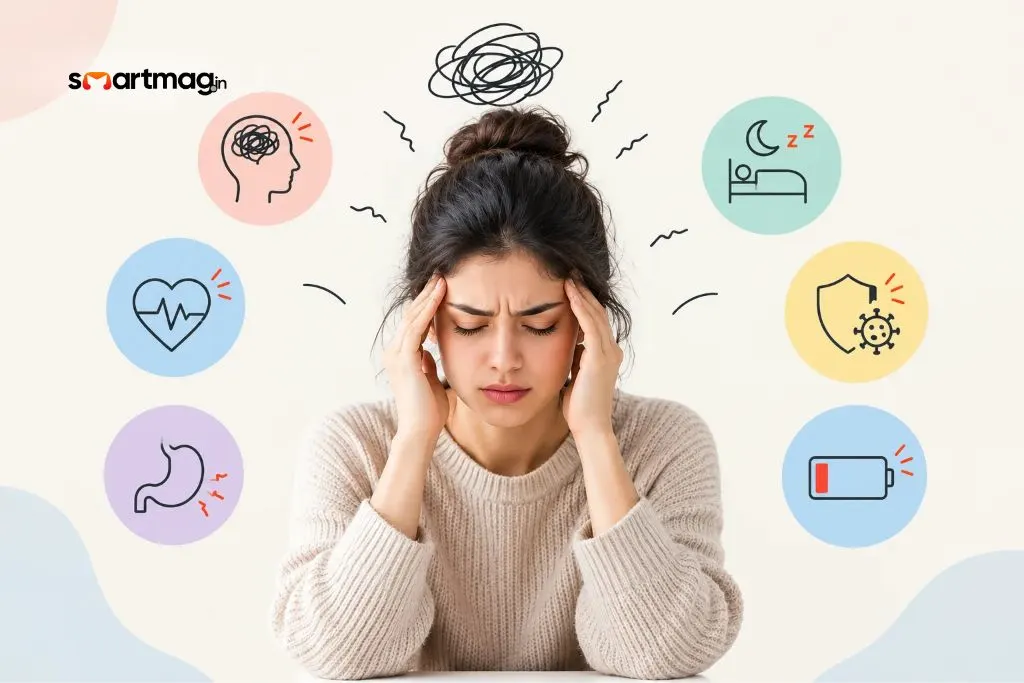
The headache that has been bothering you for days, the lack of restful sleep, the queasy feeling in your tummy, or even an unexpected urge to bite off someone’s head might appear as totally unrelated phenomena. However, they might share a single root cause: stress.
Although stress is often considered purely emotional, its effects can extend throughout the body. The effects of stress may include headaches, muscle tension, digestive problems, increased heart rate, poor concentration, irritability, and disrupted sleep. When stress continues without enough time for recovery, it can affect your physical health, mood, focus, and ability to manage everyday activities.
What Happens to Your Body When You Feel Stressed?
Stress is a biological response to some pressure or threat. Whenever a person encounters a challenging situation, his/her brain sets off the “fight or flight” response. In such conditions, hormones like adrenaline get the body ready for action, increasing alertness and heart rate, as well as breathing.
Such a reaction is beneficial before an interview, a deadline, or other stressful occasions, as it energises the body and improves concentration. However, once the situation is over, the body will calm down and go back to its normal state.
The issue occurs when a person constantly faces challenges or stress that follow one after another. The body stays on alert mode despite the absence of any imminent danger, and this state is known as chronic stress.
According to the NHS, too much stress is able to influence the body, mood, relationships, and self-confidence. Besides, long-term and intense stress can lead to exhaustion, also known as burnout.
The Effects of Stress Can Appear Almost Anywhere
Stress impacts people in different ways. For example, one person could get headaches, whereas another could experience sleep disturbances or digestion problems.
The table below lists some possible effects of stress:
| Area Affected | Possible Signs |
|---|---|
| Mind | Racing thoughts, poor concentration, forgetfulness, and difficulty making decisions |
| Emotions | Irritability, anxiety, sadness, frustration, or feeling overwhelmed |
| Sleep | Trouble falling asleep, waking during the night, or feeling tired after sleeping |
| Muscles | Tight shoulders, jaw tension, back discomfort, or headaches |
| Digestion | Nausea, changes in appetite, stomach discomfort or altered bowel habits |
| Behaviour | Withdrawing from others, overeating, undereating or relying on alcohol or cigarettes |
| Daily performance | Procrastination, frequent mistakes, reduced motivation or difficulty completing tasks |
Your Heart and Circulation Respond to Pressure
When the situation becomes highly stressful, your heartbeat accelerates, and blood pressure may also rise temporarily. These are the natural responses of your body to an emergency situation.
Occasional activation is different from living under constant pressure. With chronic stress, the body may not receive enough time to settle fully between stressful events. Stress may also influence behaviours connected with physical health, such as sleeping poorly, exercising less or drinking more alcohol.
Effective stress management does not necessarily ensure immunity to all diseases. But it may help you minimise unnecessary strain and stick to healthy decisions in your daily life.
Get immediate medical assistance in case of sudden signs such as chest pain or severe breathlessness. Do not believe that severe symptoms are “just stress”.
Why Stress Can Disrupt Sleep
A vicious cycle can be formed by stress and sleep. You cannot stop worrying at night, and bad sleep will make the next day more challenging for you.
You may keep thinking about past conversations, unfinished tasks, and possible outcomes. Even if you fall asleep, you can wake up multiple times during the night and feel tired in the morning.
Lack of sleep can decrease your patience, focus, and ability to control emotions. Therefore, simple problems will seem to be big for you. Such strong responses can lead to sleep difficulties the next night.
Establishing a bedtime ritual becomes an integral part of a healthy lifestyle. Avoiding late screen exposure, sticking to a sleep schedule, and writing down your plans for tomorrow can make your mind calm.
Stress Can Be Felt in the Stomach
The connection between the brain and the digestive system is tight, which is the reason why anxiety feels like “butterflies” in the stomach. While some individuals will lose their appetite under stress, others might tend to overeat.
Stress might be one of the causes of nausea, stomach pain, or bowel issues. If there were already issues with digestion before, those might become harder to control during stressful times.
Moreover, stress might affect the choice of food people have. When one is exhausted, ready meals may appear more tempting than cooking a proper meal.
According to a 2018 YouGov survey among 4,619 people on behalf of the Mental Health Foundation, 46 per cent of participants reported that they either ate too much or ate unhealthily due to stress. It does not mean that comfort eating is bad. It only shows how stress affects behavior as well as the body.
Muscle Tension May Be Your Body’s Warning Signal
Do you find yourself hunching up your shoulders as you work? Stress can induce muscle tension, particularly in your neck, jaw, shoulders, and back.
This might end up causing you pain and headaches. Being stuck in front of a computer for long periods of time with poor posture and not enough movement will worsen the problem.
It is a good idea to try to be aware of what is happening in your body a few times during the day. Loosen your jaw muscles, relax your shoulders, and stop clenching your fists. These small exercises can help you manage your stress.
These methods may not eliminate the source of stress, but they will help disrupt the physical tension that tends to accompany it.
Stress and Mental Health Are Closely Connected
The effects are not limited to the body. Ongoing pressure can make you feel anxious, irritable, tearful, or unable to cope. You may struggle to enjoy activities or begin avoiding friends and family.
According to the survey conducted by the Mental Health Foundation in 2018, about 74 per cent of participants had experienced being so stressed during the past year that it made them feel overwhelmed or incapable of coping. Of those who experienced stress, 61 per cent had experienced anxiety, and 51 per cent felt depressed.
While stress is not a mental health disorder, feeling stressed does not mean that a person must be experiencing anxiety or depression. Stress may have an impact on one’s emotional well-being and may exacerbate any problems they already have.
Taking care of one’s mental well-being is just as important as taking care of physical symptoms. It is better to talk about issues before they become disruptive.
Everyday Habits Can Quietly Make Stress Worse
However, when individuals become too stressed, the beneficial routines they have become accustomed to disappear first. This includes exercise, irregular meals, and late bedtimes.
There are certain methods of coping that give short-term relief but create even more issues for the person. This could include drinking alcohol excessively, smoking, emotional eating, and mindlessly scrolling on the internet.
| Short-Term Reaction | More Supportive Alternative |
|---|---|
| Ignoring every problem | Identify one issue you can act on today |
| Working without breaks | Take short, planned pauses |
| Withdrawing completely | Speak to someone you trust |
| Using alcohol to switch off | Create a calmer evening routine |
| Skipping meals | Keep simple, nourishing options available |
| Staying up to finish everything | Prioritise tasks and protect your sleep |
How to Practise Stress Management in Daily Life
The key to effective stress management may not always be significant changes. It starts with small steps that decrease stress levels or increase your capacity to deal with them.
-
Discover the Source of Stress
“I’m stressed” is an expression of a feeling but not of its source. Try to understand what causes the stress you have. Workload, uncertainty, lack of money, interpersonal conflict, loneliness, or absence of enough rest?
Understanding the source of the stress allows you to identify what can be changed and what requires help.
-
Split Big Jobs into Pieces
An enormous list can make your brain perceive all of these tasks as urgent ones. Break big tasks down into small actions and pick a reasonable starting point. According to the NHS, splitting a task is one of the techniques that can help you decrease stress.
-
Be Active
Physical activity is a good opportunity to distract yourself from obsessive thoughts and relax your body. Choose any kind of physical activity that suits your physical condition and interests, such as walking, swimming, stretching, etc.
Exercise should contribute to a healthy lifestyle, not become a goal that adds new stresses.
-
Protect Time for Recovery
Rest does not simply refer to sleeping. It might involve quiet time, pursuing a hobby, listening to music, reading, or going out into nature. Any break will be effective provided it is completely free from messages and demands associated with work.
-
Maintain Contact with Others
Under stress, you might be tempted to withdraw, but loneliness may make things worse. Talk openly to a trusted friend, family member, or work colleague. There is no need for advice in all cases, as merely being listened to is enough.
-
Try Relaxation Techniques
Taking deep breaths, meditation, or muscle relaxation can aid in calming the body’s instant reaction. Such techniques become more effective when practised regularly rather than in an emergency situation.
No one-size-fits-all technique works for everyone. Successful stress management includes identifying the techniques appropriate for you.
When Is It Time to Get Professional Help?
Self-help may not be sufficient if chronic stress starts to affect your ability to function at work, within relationships, sleeping, or even day-to-day obligations.
It might be wise to see a GP or mental health practitioner if:
- You find it hard to cope on a regular basis.
- You have experienced any changes in sleep or eating habits.
- Your physical symptoms persist and get worse.
- You increasingly use alcohol or other substances.
- Your anxiety, depression or irritability affects daily activities.
- You are not enjoying hobbies that used to bring you joy.
If you cannot protect yourself from danger or think about hurting yourself, seek assistance via emergency or crisis services.
Wrapping Up
The impacts of stress tend to go unnoticed because they accumulate over time. A tight jaw is accepted as normal. Insomnia is a routine thing. Extreme fatigue is regarded as being busy.
But these symptoms call for attention. It might not always be possible to eliminate all sources of stress, but you can definitely increase your chances of getting rest. Exercise, healthy eating, adequate sleep, good company, and proper boundaries are all elements of a healthy way of life.
Responding to your body’s needs is not an overreaction. It is one of the first forms of dealing with stress.
Explore more blogs on stress management, mental health, and healthy living on SmartMag, and visit our Write for Us page to share your ideas and insights.
FAQs
1. What are the physical symptoms of stress?
The physical symptoms associated with stress include headaches, muscle tension, problems with the stomach, appetite changes, insomnia, dizziness, and fatigue. Since these symptoms may indicate another problem, please seek help from a medical practitioner.
2. How does normal stress differ from chronic stress?
Normal stress is usually linked to a specific event and subsides as soon as it is over. Chronic stress occurs over the long term or recurrently without proper rest.
3. Does stress affect mental well-being?
Yes. Long-term exposure to stress can lead to anxiety, depression, mood swings, and emotional exhaustion.
4. Is there an easy solution that can quickly calm a person down?
Slow breathing, withdrawal from the stressful situation, and relaxation of tense muscles will help decrease acute symptoms. To achieve the desired result in the long run, the cause of the issue has to be eliminated.