
It isn’t easy to pinpoint when your way of thinking has changed.
There’s nothing sudden about it. There’s no eureka moment when reading the book, or when closing its cover. The thought remains there. Reappears in unexpected moments, in the decisions that seem effortless because they align with who you’ve now become.
Books that can change your life work in that way. They don’t interfere in your life. They simply make themselves at home in your thoughts, and gradually transform how you look at everything from within.
The best books teach. Others entertain. Then there are those rare few that just stick around.
And when they do, they aren’t just giving you new ideas. They’re changing how you perceive the world.
Why Some Books Stick Around While Other Books Are Forgotten
You forget most things you read because you only remember those that have had an impact. There’s no need to question the quality or popularity of the books. The point is, books that leave a mark resonate with some experience you’ve had and have not been able to put into perspective.
The key feature of a transformative book lies in the way it does not appear as mere information. Such books provide a sense of clarity and structure for all those thoughts floating around your mind. Moreover, a good book gives names to your feelings that you did not know how to articulate and often contradicts the values you take for granted.
That is why there is something as a good time for a certain book. You may be reading the exact same book at a different stage of life and see it from an entirely different perspective.
Reading, at this level, is not consumption. It is transformation. A deeper look at this connection between reading and cognitive change is explored in this research on how reading shapes the brain and emotional intelligence, where the focus is not just on knowledge, but on how perspective evolves over time.
1. Man’s Search for Meaning – When Meaning is Not Abstract Anymore

“He who has a why to live can bear almost any how.”
There are lines which don’t sound like quotes because they are the conclusions reached after being shown something you have never been able to ignore before.
In his book, Viktor Frankl doesn’t lead the reader in gentle steps. He immerses one into the world where everything is extremely harsh, and then poses the seemingly unreasonable question, if meaning can be preserved here, what conclusion should we reach about ourselves and our life?
What is special about the book, its message is conveyed not only in its words but through the author’s personal experience as well. One isn’t being convinced of something, one sees an idea put to the test in an environment that is far from being comprehensible to everybody.
The change doesn’t occur in dramatic bursts but quietly and with some discomfort. What used to seem overwhelming now starts seeming inadequate. And suddenly one realizes how many things in one’s life are done solely due to lack of meaning, not because of the actual difficulty of the situation.
2. Thinking, Fast and Slow – The Slow Demise of Certainty
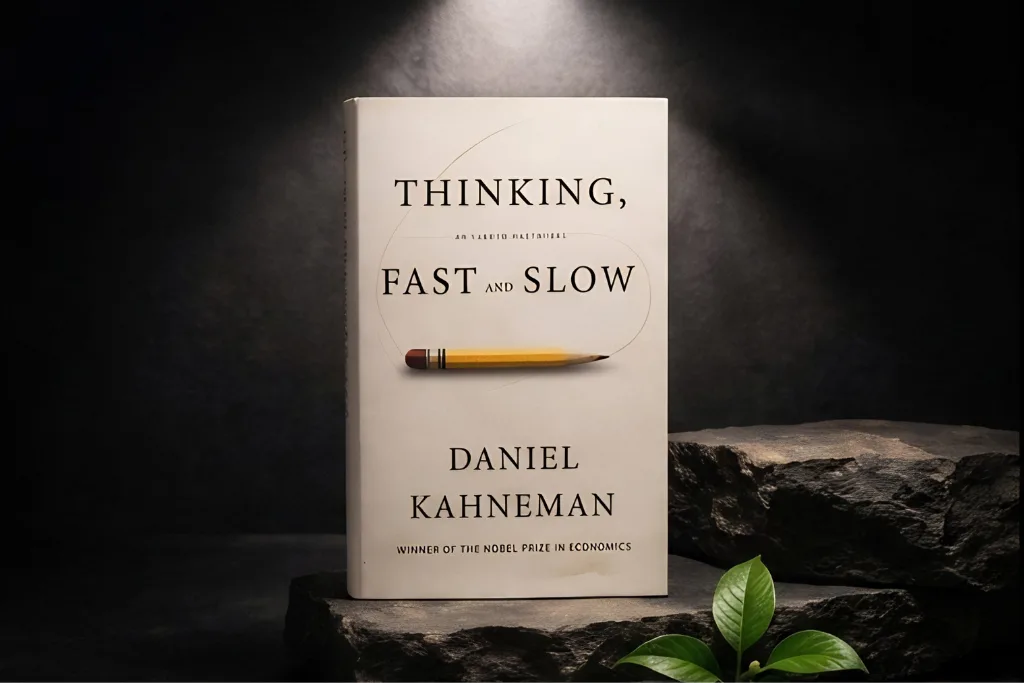
Reading this book will neither enlighten nor empower you. Reading this book will teach you to appreciate how many times you have been dead certain without cause.
In this book, there is no one dramatic revelation. There is no one event, which leads to an instant revelation of truth. Rather, there is a slow and steady crumbling of one’s sense of certainty.
The reason this process is scary is not that people act out of bias, but that bias occurs while you are completely sure you are not.
At some point within this analysis of the brain, a simple idea shakes everything up:
“There is a reliable way to make people believe in falsehoods – repetition.”
After this, you start seeing the pattern appear all around you, not in theory, but in actuality – the forming of opinions, the acceptance of narratives, the misplacement of confidence.
This is a book written by Daniel Kahneman, and this is a book, which takes away the feeling of having complete control of your thoughts from you. Once that feeling is taken away, all that is left is slow and deliberate thinking.
3. The Psychology of Money – Where Behavioral Is Really What Matters
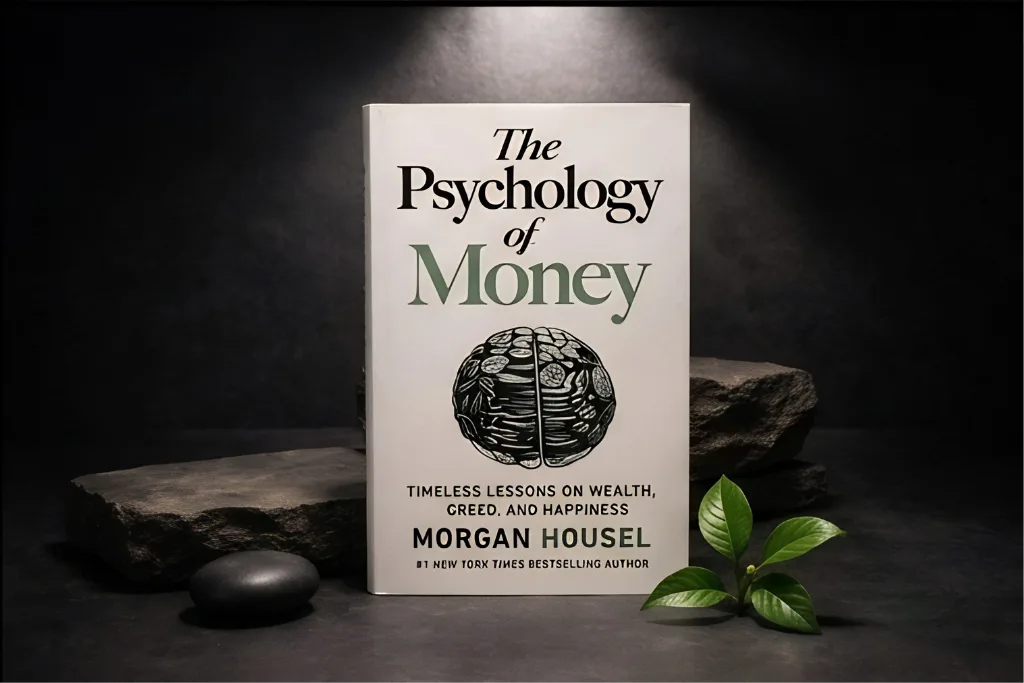
Initially, the topic may seem very monetary. However, soon enough you will see that everything described is mostly about human behavior.
It is not about any intricate systems and sophisticated strategy. Rather, the main thing discussed here is how one should behave when dealing with financial matters that include emotions, timing and uncertainty.
The distinctive feature of this book is that the author avoids the temptation of turning the financial aspect into a purely rational topic. There is the assumption that financial decisions are always made under some pressure, through comparison, impatience and even with some fear involved.
To handle money well is more about behavioral than intellectual aspects, as stated in the book.
And that message takes some time before becoming clear. Gradually, the reader realizes what was wrong in his previous financial decisions and why. What made him give in to impulsiveness instead of thinking about the long term effect.
This book is authored by Morgan Housel. It is much more than a financial guide.
4. Atomic Habits – When the Change Ceases to be Sudden
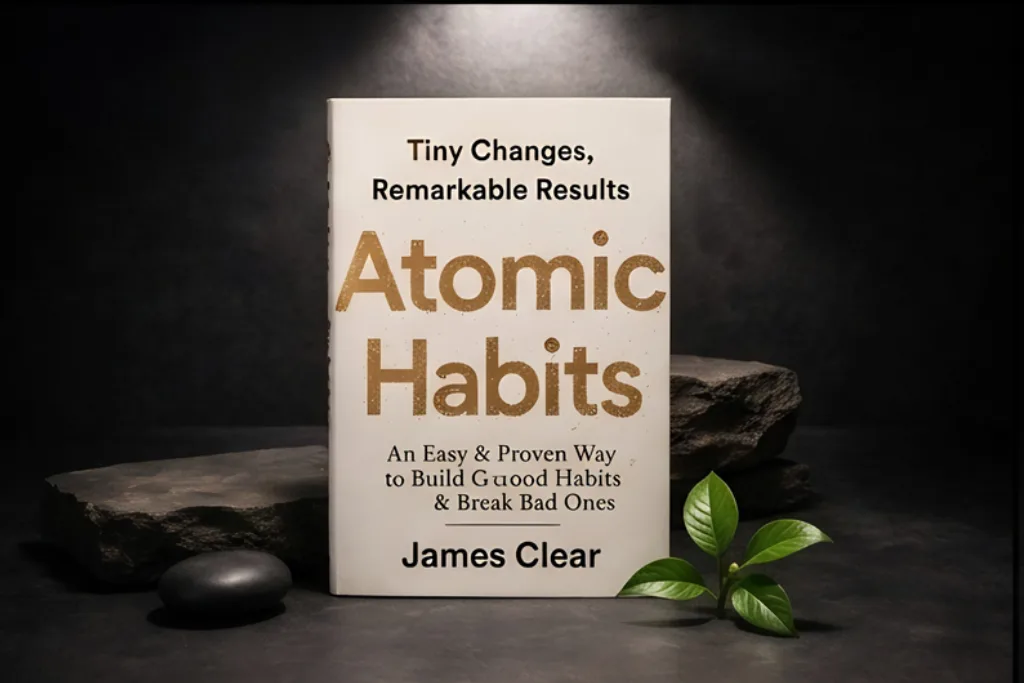
We often wait for inspiration to come. This book will help get rid of such waiting.
Not thinking on a large scale, but focusing on small aspects – the smallest actions, the patterns of behavior and habits, the invisible repetitions that define our results without calling any attention to themselves.
At the beginning, it might seem that the concepts mentioned are so simple and unpretentious that they cannot possibly affect us. Small habits, small steps, incremental progress. But with time, another idea starts taking form. Not the size of the change, but its direction and consistency.
“You don’t raise your standards to the level of your goals, you lower your standards to the level of your systems.”
These words will not motivate you right away. They will make you accept the fact of why we fail. And after accepting this concept, one thing leads to another – we stop caring about our ambitions, but start working on creating systems that support change.
This book was written by James Clear.
Why Books That Can Change Your Life Are So Effective
There is nothing inherently wrong with regular books, since there will be many things that one can learn from them, yet they are meant for being read once and never thought of again. This is why books that change lives are quite different.
First of all, books that can transform your views usually make you pause. Not because it is difficult to comprehend their meaning, but because you feel something reflected so perfectly. Rather than keep going, your mind becomes focused inwardly.
The other thing about such books is that they do not leave you right after you have finished with reading. You will think about them whenever you feel like it. It may happen in various circumstances, while communicating, while taking action, or in response to any situation.
Books that can change your life have nothing special to do with how much information they contain. Their secret lies in being constantly present inside of your head.
That is what makes them effective.
Why Do These Books Resonate More Than Others?
There is an element that connects everything above, but it is not related to structure. It is an element of experience.
Each one of these books touches you in a different way. One challenges your understanding of meaning. One challenges your thoughts. One challenges your behaviors. One challenges your actions. Collectively, they do not bombard you with solutions. Instead, they challenge your questions.
As you can notice, the effect is never instantaneous. It happens slowly through changing your perceptions of events, reactions to uncertainties, and notions about progression.
Mindset reflections like the impact of the fear of failure on personal development resonate so strongly for this reason too. Once your perception changes, your behaviors follow suit.
Closing Remarks
There are certain books that do not capture your attention; they earn it. They are passed, yet they stay put. You come across them at times when you need some serious thought, when your responses have started becoming a bit different from usual.
Gradually, it will be the realization and not necessarily the material that remains with you. It would be the pause in the middle of a decision, it could be a new way to read something, a new angle between the act of doing and its intention.
One doesn’t usually remember reading them. One recognizes them through one’s own responses.
“A reader lives a thousand lives before he dies.” – George R. R. Martin