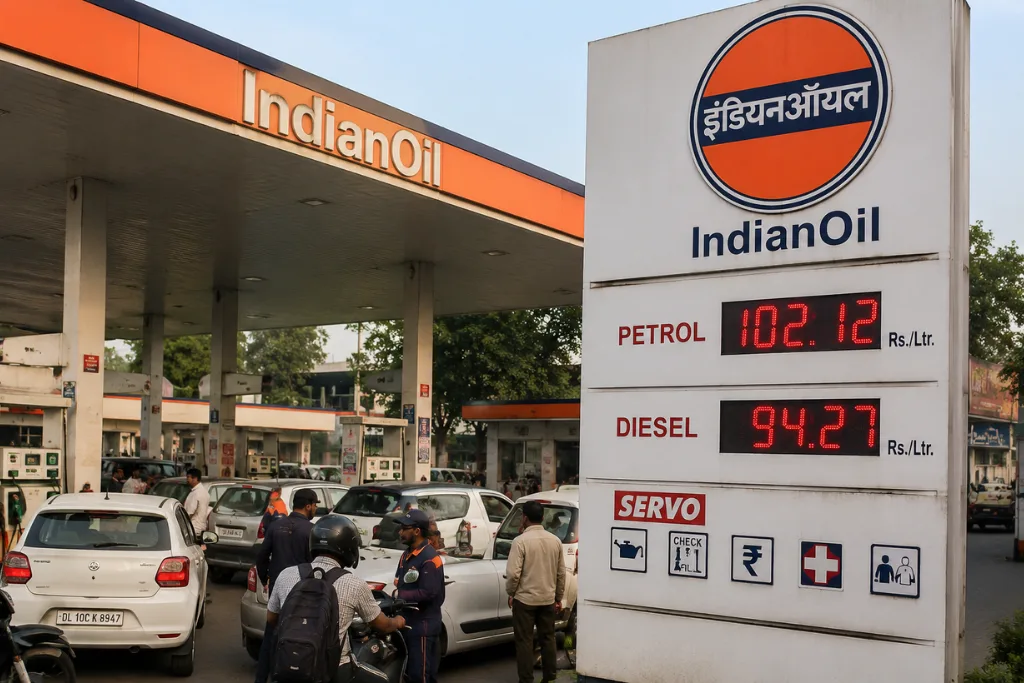
Why are fuel prices rising again? Explained simply
Petrol crossed ₹100 in Delhi again. Diesel is up 4 times in 2 weeks. And your monthly fuel bill just quietly got ₹900 to ₹1,500 heavier.
So what’s actually going on?
The price freeze broke
Here’s the thing most people missed. Petrol prices in India were basically frozen for nearly 4 years. Oil Marketing Companies (OMCs) like Indian Oil absorbed the losses quietly. That couldn’t last forever.
In mid-May 2026, the dam broke. OMCs pushed through a series of sharp revisions, sending prices to their highest point since 2022. Delhi saw petrol go from ₹99.51 to ₹102.12 per litre in one revision alone.
Crude oil got expensive, fast
Global crude oil prices jumped 12 to 15% in just a few weeks. Two main reasons: OPEC production cuts and fresh tensions around the Strait of Hormuz in West Asia. When that shipping route gets nervous, oil markets get nervous.
India imports roughly 85% of its crude oil. So when global prices climb, we feel it almost immediately.
The rupee makes it worse
Crude oil is priced in US dollars. India pays in rupees. A softer rupee means we’re paying more for the same barrel, even if dollar prices hold steady. Analysts estimate that every $1 per barrel increase adds ₹12,000 to ₹16,000 crore to India’s annual import bill.
That’s real money.
Taxes don’t help
Petrol sits outside India’s GST framework. That means central excise duty plus state-level VAT, both stacked on top. Mumbai pays ₹111 per litre right now. Delhi pays ₹102. Same crude oil, different tax structures.
The government collects a significant chunk of every litre you buy. That’s been true for years, and it hasn’t changed.
It’s not just petrol
CNG crossed ₹80 per kg in Delhi for the first time ever. The ripple is going through the whole energy supply chain, not just petrol pumps. Restaurants already dealing with LPG shortages in India are now getting squeezed from multiple sides.
Transport costs are up. Delivery platforms are recalculating. Logistics companies are warning of 5 to 8% cost increases in metro cities.
Who gets hit hardest
Auto drivers and cab operators running on fixed fare structures can’t just pass the cost along. Small transport operators with thin margins have no buffer. Farmers using diesel-powered irrigation pumps are seeing input costs climb right as the kharif season approaches.
For salaried households tracked by the RBI, fuel inflation feeds directly into the broader CPI basket, which shapes interest rate decisions. Your EMI and your fuel bill are more connected than they look.
What you can actually do
A few practical moves worth considering right now:
- Carpool on your regular commute, even 2 to 3 days a week cuts spend significantly
- Check CNG if your city has coverage and you drive more than 40 km daily
- Time your refuelling — prices are revised daily, mornings often reflect the previous day’s rate
- Maintain your vehicle — tyre pressure and engine tuning alone can improve mileage by 10 to 15%
- Factor EVs into your next vehicle decision — the cost arithmetic has shifted considerably
Will prices come down?
Possibly, if crude stabilises and geopolitical tensions ease. But don’t hold your breath for a major rollback. OMCs need to recover what they absorbed during the freeze. The government isn’t in a hurry to cut taxes on fuel.
The honest answer: plan for prices staying elevated through at least Q3 2026.
Want to stay updated on fuel prices, economy, and cost-of-living trends? Follow SmartMag for daily updates.