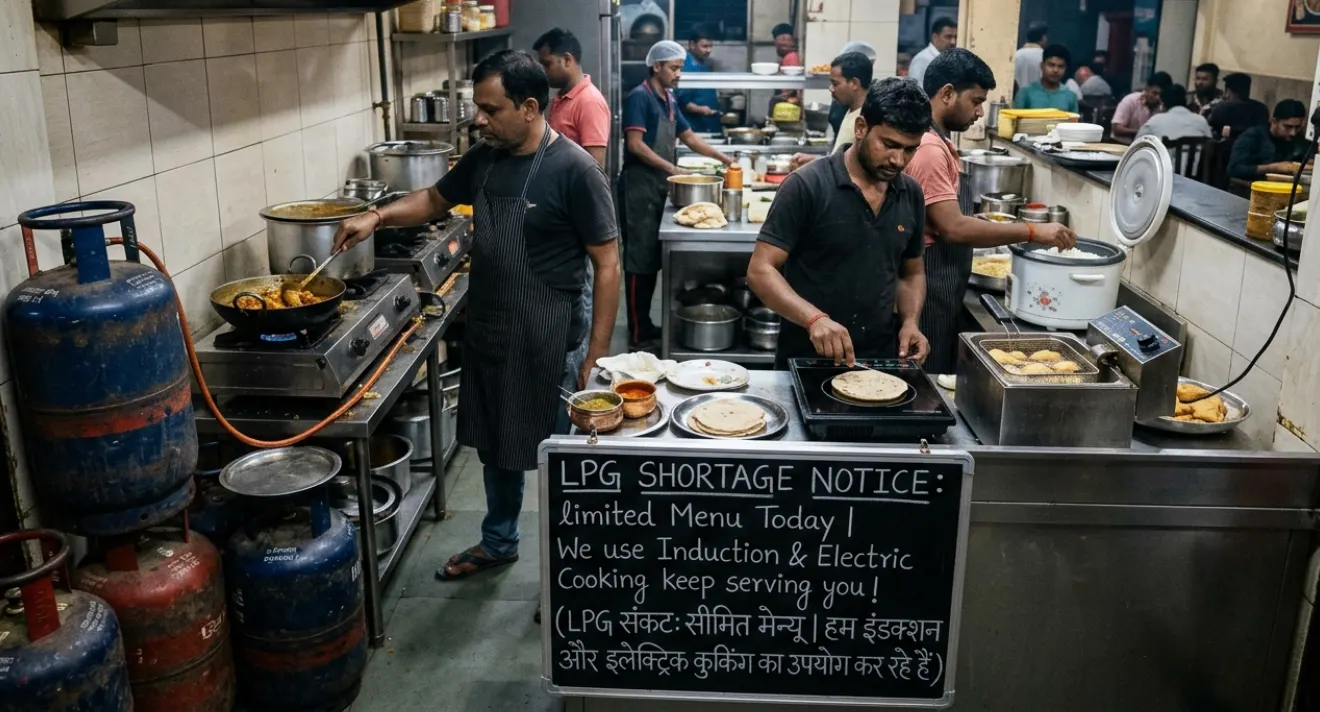
The LPG shortage in India has rapidly become a major problem for restaurants, dhabas, cafes, and other food businesses in the country. From the initial problem of LPG shortage, the situation has escalated into an LPG crisis. This has resulted in forcing restaurants and other food businesses to rethink the way they are operating their businesses.
For restaurants and other food businesses, LPG is the backbone of the business. From boiling and frying to making the gravy and baking, everything requires LPG. The shortage of LPG and the subsequent rise in the cost of LPG have already started affecting restaurant owners.
Some have been forced to reduce the number of dishes they serve, and others have been forced to reduce the number of operating hours. The shortage of LPG in India has already become a major problem for the survival of small and medium-scale businesses.
Understanding the causes of the LPG crisis and more importantly how restaurants are coping with the situation has become the need of the hour for anyone in the food business.
Understanding the LPG Shortage in India
It is important to understand that the LPG shortage in India is the result of a number of factors coming together at the same time.
India is a country that largely depends on imports in order to meet the LPG requirement in the country. A large part of the LPG used in the country is imported from international countries, mostly from the Middle East region.
Another important factor which has contributed to the shortage of LPG in India is related to the priority given to the domestic supply of LPG. Millions of people in India use LPG cylinders as a source of fuel to cook their food, and hence, during a shortage of LPG, the supply of LPG to the domestic sector is given the highest priority, which results in a scarcity of this product in the commercial sector.
To comprehend the wider context of the prevailing LPG shortage in the country, including the import dependency, the disruptions caused by the West Asia conflict, and the priority supply, recent reports carried light on the geopolitical factors influencing LPG availability in the country.
The cascading effect: The restaurant sector is the one that is affected the most in the case of an uncertain supply of LPG in the commercial sector. The supply of LPG to the sector is delayed, and the price of the commodity is raised.
This is exactly the reason why the LPG crisis is affecting the restaurant sector.
Impact of LPG Crisis on Restaurants Across India
Restaurants, although not all, are one of the most impacted by this crisis that is currently unfolding in India. This is due to the fact that the production process in restaurants entirely depends upon LPG.
Now, let us discuss some of the most prominent effects of the LPG crisis currently being witnessed.
Rise in Operational Costs
Commercial LPG cylinders used by restaurants are much larger compared to those used by households. Restaurants use 19 kg commercial LPG cylinders, and any increase in their price can have a major impact.
Any rise in the cost of LPG cylinders or their unavailability will force restaurants to purchase them at a premium, which in turn will affect their operational costs.
Any rise in operational costs can have a major impact on small restaurants, given their low margins of profit.
Supply Delays and Limited Cylinder Availability
Restaurants in major cities have complained of a delay in the availability of LPG cylinders. Instead of a regular supply of cylinders, there are instances where restaurants have to wait for several days to obtain their next LPG cylinder.
This puts restaurant managers in a tight spot as they do not know if their next fuel supply will be available in time to meet their operational needs.
Pressure on Menu Pricing
If fuel costs rise, at some point, restaurants are forced to make a choice between passing on the cost to their customers or absorbing it themselves.
If a restaurant chooses to raise their menu prices, there is a danger of their customers reacting adversely to such a move. On the other hand, if a restaurant absorbs fuel cost increases, it can also impact their bottom-line profitability.
This is perhaps the biggest challenge faced by restaurants as a result of the LPG crisis.
Disruptions in the Menu Due to the LPG Shortage in India
The most common and easily noticeable impact of the shortage of LPG in India is the reduction of dishes in the menu of the restaurant.
Indian cuisine is known for a wide variety of dishes, and most of them need to be cooked at a high flame. In the absence of a steady supply of LPG, most of the dishes are removed from the menu of the restaurant.
Dishes that Require High Gas Consumption
Dishes that need to be deep-fried or require a consistent high flame need a large quantity of LPG.
Some of the dishes that need a large quantity of LPG include:
- Puris
- Bhature
- Deep-fried snacks
- Some varieties of dosas
Shift Toward Faster Cooking Dishes
In an effort to combat the LPG crisis, there is a shift towards cooking dishes that take lesser time to cook and consume minimal fuel.
Such dishes include:
- Stir fried meals
- Quick curries
- Pre-prepared gravies
- Limited menu combos
Practical Strategies Restaurants Can Use During the LPG Crisis
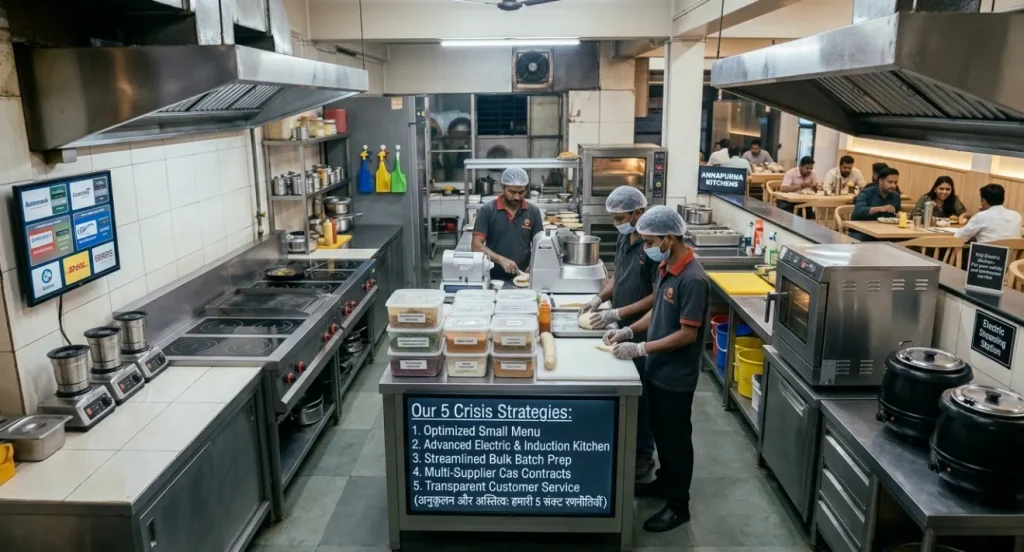
The shortage of LPG in India is a major problem. However, restaurants are using many techniques to minimize the impact of this problem on their business.
Adjusting well in time may help restaurants avoid closure in this period.
1. Menu Optimization
The first and foremost strategy that restaurants may adopt is optimizing the menu. This may help restaurants reduce the consumption of LPG.
Rather than offering a long menu with a variety of dishes in the dozens, restaurants may opt to offer only the most popular dishes. This may help restaurants optimize the cooking process and reduce the number of burners in use.
How a Smaller Menu Helps Restaurants
A restaurant with a smaller menu may help the restaurant:
- Cut down on cooking time
- Make the use of ingredients simpler
- Cut back on fuel use
Several restaurants are already operating with a small menu and are successful in the business.
2. Introduce Electric Cooking Equipment
The second strategy for restaurants is to use electric equipment for cooking during the LPG shortage period.
Several cooking processes do not require the use of gas.
Equipment That Can Reduce LPG Usage
Restaurants can use the following equipment for the reduction of LPG usage:
- induction cooktops
- electric griddle
- electric fryers
- electric rice cooker
These types of equipment can reduce the usage of LPG, though it is not possible for the equipment to replace LPG. This type of hybrid kitchen is becoming popular in modern restaurants.
3. Improve Kitchen Workflow and Batch Cooking
Another way in which kitchen workflow optimization may help restaurants deal with the LPG shortage in India is as follows:
Restaurants can cook essential ingredients in large batches during designated cooking times rather than preparing meals in small batches throughout the day.
Examples of Efficient Batch Cooking
In this regard, restaurants can cook the following in large batches:
- Base gravies in advance
- Boiled ingredients for multiple dishes
- Sauces and curry bases
4. Maintain Backup Supply Planning
One of the biggest lessons learned from the LPG crisis is the importance of supply planning.
Restaurants that have a single distributor as their source of supply are more affected when there is a problem in supply.
A better strategy would be to have a relationship with more than one supplier.
In this manner, a restaurant can switch to a different source of supply in the event that a distributor’s supply is problematic.
One of the largest distributors of LPG in India, Indian Oil Corporation, has information that can help you understand how LPG is supplied in India.
5. Clearly Communicate with Clients
During this time of scarcity brought on by India’s LPG shortage, transparency can also help restaurants keep the trust of their patrons.
Explaining to customers how challenging it is to maintain a supply of certain items can also be helpful when there is a fuel shortage.
Restaurants are already informing their patrons about the availability of specific menu items and posting notices about the LPG crisis.
The majority of clients are cooperative and aware of this issue.
Why the LPG Crisis Highlights the Need for Kitchen Resilience
The current crisis of LPG shortage in India is a big crisis for the restaurant industry. This is because most restaurants rely on a single source of energy. This is a big crisis, and the entire operation is at stake when there is a shortage of energy. This crisis is also providing an opportunity for many restaurant owners to think about the current operations of their kitchens. Diversifying Energy Sources
In the near future, it is possible that many restaurants might use a variety of sources of energy. This might include:
- LPG Burners
- Electric Cooking Systems
- Energy Efficient Kitchen Appliances
Long Term Operational Planning
The LPG crisis also highlights the need for operational flexibility. A restaurant that is flexible in its operations is likely to be able to handle any crisis situation better. Operational flexibility is thus emerging as an important skill set required for restaurant owners in this ever-changing business environment.
Businesses that know how to optimize their menu and resources will be in the best position to survive not just the LPG shortage in India, but any future challenges as well to make their business shine in 2026
What the Future Holds: The New Normal after the LPG Shortage in India
The shortage of LPG in India may eventually be resolved with the improvement of the supply chain. Nevertheless, the impact of the LPG shortage will remain with the restaurant business for a very long time.
Restaurants are beginning to understand that the secret to success is not just about the recipes and the service. It is about the ability to survive in the midst of challenges and uncertainties, including the availability of the resources they need to operate their business.
What can restaurants learn from the LPG shortage?
The most important lesson is a very simple one:
A good kitchen is not just about serving good food. A good kitchen is one that is able to serve good food even in the midst of a fuel shortage like the one caused by the LPG shortage in India. Businesses that know how to optimize their menu and resources will be in the best position to survive not just the LPG shortage in India, but any future challenges as well. Because in today’s world, it is the ability to survive in the midst of challenges and uncertainties that will define a good restaurant.