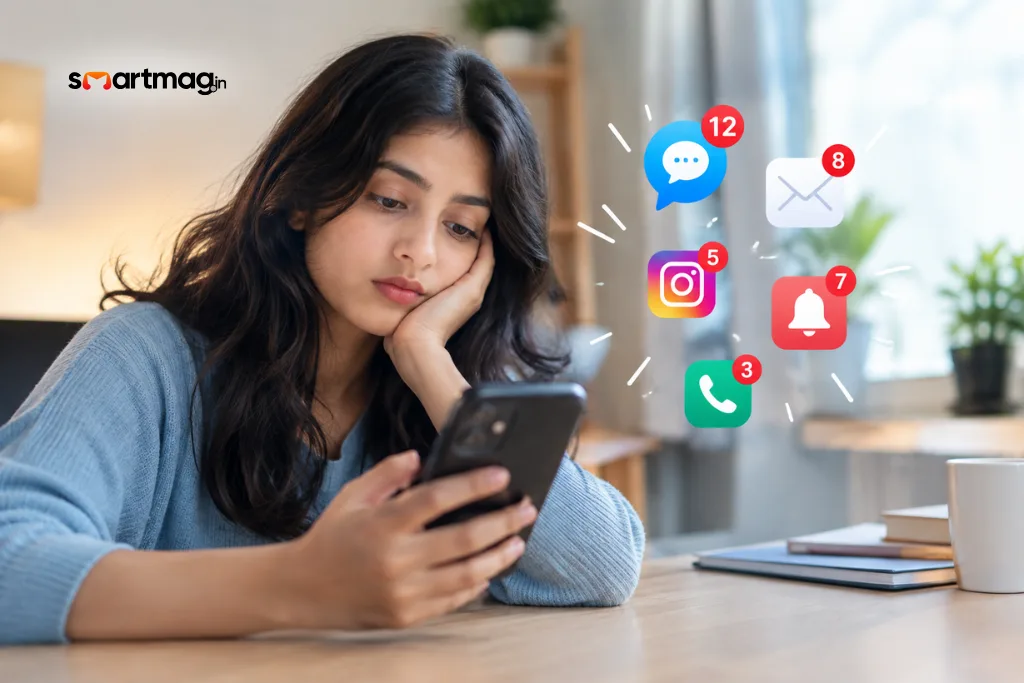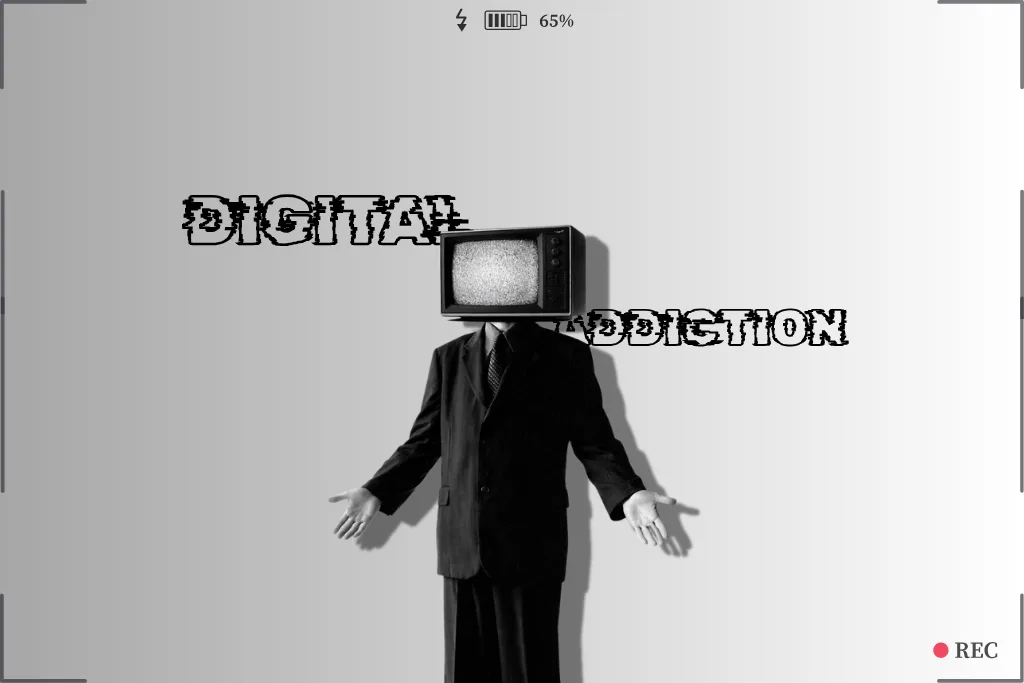
It’s not that you have to use your phone because you want something, but rather because your brain can’t function without the phone
The concept of digital addiction does not imply any addiction. It is considered normal behavior, a reflex action, which, in fact, explains why digital addiction is hard to detect. You browse through news feeds without purpose, change from one application to another, and do it all unconsciously. The reason why digital addiction is so efficient lies in its natural blend into everyday life.
Understanding Digital Addiction
Digital addiction does not mean that your usage of gadgets is excessive. The term refers to the inability to focus on other activities and be away from your phone for a long period of time.
You are not choosing consciously to check your phone every five minutes. Your brain does it automatically; there is no need for a particular reason for it – some idle moment, brief pause in work, an accidental thought.
Thus, the process of digital addiction is strongly related to behavioral patterns typical of internet addiction in psychology.
Over time, your mind starts depending on digital input to avoid stillness, a pattern that reflects how deeply mobile usage is embedded in daily life, as highlighted by research from the Pew Research Center.
Hidden Signs That You Already Are an Addict
Digital addiction does not manifest itself dramatically. Instead, it comes in repetitive patterns, which gradually dominate your daily routine.You use your mobile phone aimlessly
You activate your smartphone without having any specific reasons for doing so.
You experience discomfort in silence
In a silent environment, you instinctively pick up your smartphone.
You switch from one application to another mindlessly
No matter how boring the content may be, you keep browsing in search of some captivating information.
You feel mentally exhausted but continue consuming
Despite being aware of the fact that you are mentally drained, you keep watching, scrolling, and refreshing content.
They are not just repetitive behaviors; they are behavioral loops, which form a vicious circle of digital addiction. This is precisely why the concept of Algorithms Do Not Control Us, Habits Do is so striking.
Why You Cannot Quit Even If You Really Want To
What makes digital addiction difficult to overcome is not the absence of willpower but rather the training your brain has undergone.
With every single instance where you find yourself scrolling through your phone and finding something new, your brain gets rewarded. The reward could either be a message, an alert, or simply anything new.
You do not use your phone, you seek out stimulation.
Gradually, your brain starts expecting this form of stimulation, and when it is not provided, even briefly, it triggers discomfort. This discomfort urges you to go back to the cycle.
It is not a matter of lack of willpower, but of conditioning.
How Digital Platforms Keep You Hooked
Digital platforms have been designed in such a way that they keep users hooked for as long as they can possibly be.
Scrolling until you find the right video, autoplay features, and notifications – all these tools were developed to decrease stopping points.
With digital platforms, there is no need to finish a task since everything you see has another piece after it.
So you never actually finish what you are doing, making digital addiction easy and effortless.
There have been numerous studies and observations that demonstrate how platforms are designed in ways that prioritize engagement over the user’s well-being.
Why It May Seem Harmless but Is Really Not
The main reason why digital addiction often remains unnoticed is that it does not seem harmful at all.
It is not like you are playing a game. It is just scrolling and watching videos.
However, the danger of this process is not in the amount of time you spend online but rather in your mind.
Once your brain learns to receive input regularly, its ability to concentrate decreases significantly. You become impatient, bored easily, and distracted more quickly.
This is the actual threat of digital addiction.
Relation between Digital Addiction and Validation from Within
Digital addiction is not only associated with the consumption of content. Rather, it goes beyond this.
With each notification, liking, or reply, there is a feeling of significance or acknowledgment. The user is being recognized.
This leads to dependency. One no longer checks their phone for content; one checks it for validation.
Digital World Validation Feels So Different, there is an important lesson in understanding that validation online makes one crave for more of it.
And the more one’s mind craves this kind of validation, the more difficult it becomes for one to stop.
What Will Actually Help You Get Control Back
Overcoming your addiction to technology isn’t about banning your phone from your life altogether. It is about reclaiming control of your attention.
The first thing to do is become aware. You should recognize that you are picking up your phone out of habit rather than intention.
The next thing you can do is introduce little interruptions. Even a few seconds of lack of stimulation is helpful for the brain.
The third thing to do is minimize the distractions that don’t really serve a purpose.
These things might seem insignificant, but they’ll slowly erode the habit cycle.
It isn’t about unplugging entirely; it is about plugging back into your actions and choices.
Final Thought
It’s not just about technology; it’s about the changes that have occurred in your brain without you even knowing.
When you realize these patterns, you stop pointing fingers at yourself and start seeing the system that is controlling your actions.
If your attention was fully under your control, would your life still look the same?