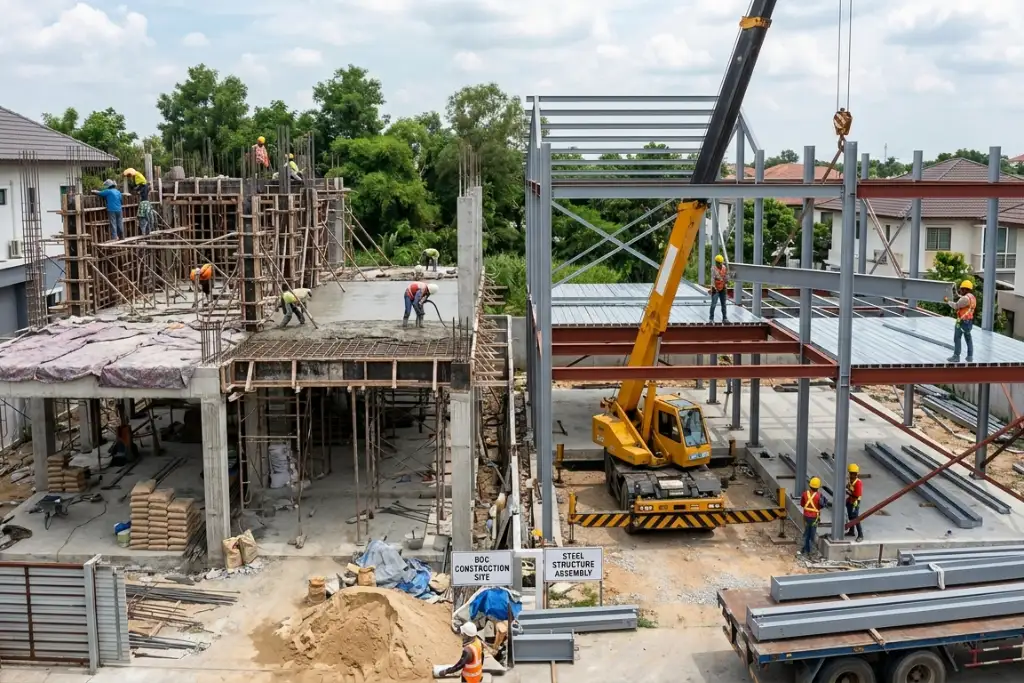
When a homeowner starts planning a new house, the question RCC vs steel structure often comes up early. Both systems are common in residential construction, yet they behave very differently. RCC construction has long been the default in many regions. Steel structure systems are growing in popularity for their speed and flexibility. Which one suits a particular house is a practical decision, not a matter of which material is better in the abstract.
This article explains both approaches plainly. It compares structural performance, build time, maintenance and design impact so a sensible choice can be made at the start of a project.
What is RCC? Plain explanation and how it is built
RCC construction means reinforced cement concrete. It pairs concrete with steel bars so the resulting element can handle both compression and tension. Concrete resists crushing. Steel resists stretching. Together they make columns, beams and slabs that last.
Typical uses in a house include foundations, columns, beams, slabs and staircases. The sequence on site is familiar: set the formwork, place reinforcement to the engineer’s details, pour the concrete and allow it to cure. Curing is not optional. The concrete needs time to gain strength and this affects the entire programme.
RCC is labour intensive and depends on local craft skills. That familiarity is one reason many owners and builders keep choosing RCC construction for conventional homes.
What is a steel structure? Plain explanation and how it is built
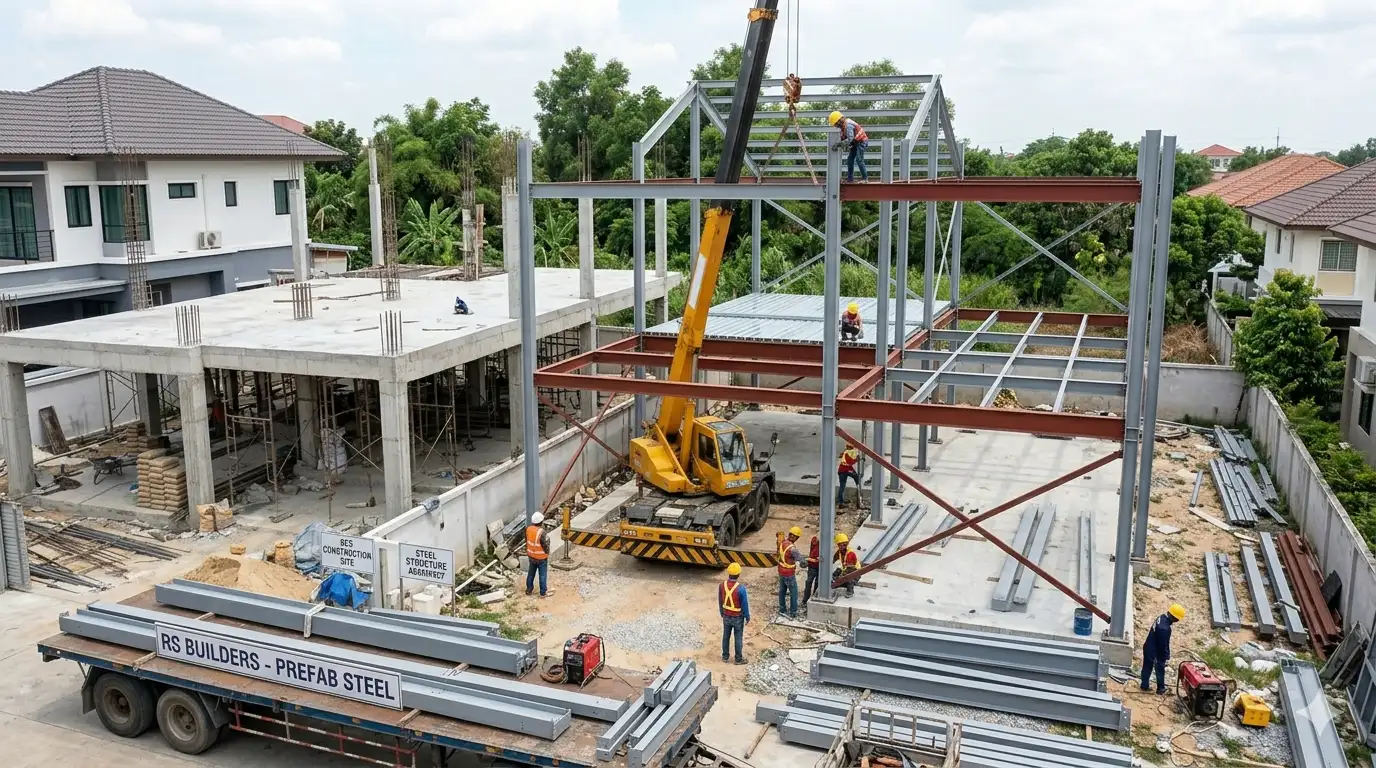
A steel structure relies on prefabricated steel members assembled on site. Columns, beams and bracing are manufactured in a workshop, delivered to the site and connected with bolts or welds. The frame goes up fast, then floors, walls and roofs are installed.
Steel frames are common in prefabricated homes, multi-storey residential construction buildings and designs that need large clear spans. The key advantage is that much of the work happens in a controlled factory environment. That tends to reduce surprises and speed up the on-site schedule.
However, steel requires accurate drawings, reliable logistics and access for cranes or lifting equipment. If the site is tight or remote, those logistical needs must be considered up front.
Structural performance and safety
On paper the debate is straightforward. RCC is stiff and strong in compression. Steel is ductile and strong in tension. But what matters most is how the whole building behaves under load and over time.
RCC structures perform well when loads are largely vertical and when the building configuration is regular. Steel structures are often better where bending, long spans or dynamic loads matter. Steel bends and deforms before it fails, which can be an advantage in seismic regions. RCC can crack, yet it also provides mass that helps with comfort and acoustic separation.
Safety comes down to design quality and workmanship. Poor detailing in either system will cause problems. An engineer’s calculations and a competent site team matter far more than brand preference for a material.
Time to build and constructability
Construction speed is a practical reason many clients consider steel structure systems. With prefabrication, erection on site is quicker than the cycle of formwork, pouring and curing that RCC requires.
That said, steel erection needs specialised crews and lifting gear. If those are not available, speed savings can evaporate. RCC work, while slower, relies on trades that are plentiful in many areas and does not always need big cranes.
So the choice of RCC vs steel structure comes back to the specific site, the available workforce, and the desired programme. For tight timelines and accessible sites, steel often shortens the schedule. For constrained sites or places with proven concrete trades, RCC may be simpler to deliver.
Cost considerations and lifecycle economics
Initial cost comparisons vary by market. Cement, sand and aggregate tend to be widely available, making RCC construction cost competitive in many regions. Steel brings fabrication, transport and protective treatment costs, and these add up for small projects.
But lifecycle thinking changes the picture. Steel can make future alterations easier. It can be dismantled or extended with less disruption than many RCC elements. Steel’s recyclability is another factor that appeals to some clients.
Ultimately, the sensible route is a cost comparison that includes not just the initial build price but also likely maintenance and the value of possible future changes.
Durability, maintenance and resilience
Both systems are durable when they are built and maintained properly. RCC offers long life when concrete quality, cover and curing are managed well. Regular inspection for cracks and water ingress keeps an RCC structure healthy.
Steel needs corrosion protection. Galvanising, paints and good detailing at joints are standard practice, especially in humid or coastal climates. If protective layers are neglected, steel elements can deteriorate faster than an equivalent RCC member.
Maintenance planning must be part of the decision. In some climates the upkeep cost of steel may be higher. In others the ability to quickly replace or repair steel parts is a real advantage.
Design flexibility and architectural impact
Architects choose structure as an enabler of space. Steel makes longer spans and fewer columns easier to achieve. That opens up layouts with large open rooms or flexible living plans. It also lets the building look lighter and more contemporary.
RCC brings thermal mass and good sound insulation. Its solid nature suits many traditional layouts and helps with temperature stability inside the home. Changes to an RCC frame later on can be more involved than changes to steel, but for many owners the solidity is an advantage.
The aesthetic and functional goals of the homeowner should guide which system is preferred.
Sustainability and embodied carbon
Both concrete and steel carry environmental costs. Cement production is energy intensive. Steel production also consumes a lot of energy, though scrap steel recycling reduces its footprint.
Practical measures can improve both choices. Recycled steel, low carbon concrete mixes and efficient structural design all reduce embodied carbon. A lifecycle view that includes durability, maintenance and reuse paints a clearer sustainability picture than a single upfront metric.
Which system suits which type of residential construction project?
There is no one-size-fits-all answer for residential construction. Some rules of thumb help:
- Choose RCC for conventional low rise houses where local materials and labour make it practical.
- Choose steel if speed, long clear spans or prefabrication are priorities.
- Consider hybrid approaches where foundations and cores are RCC and frames or long spans are steel.
Experienced teams assess site constraints, budget and long term use before advising. The right choice blends technical judgement with the homeowner’s priorities.
Practical steps to decide and engage professionals
A few simple actions make the decision process smoother:
- Commission a site survey and geotechnical report.
- Request preliminary structural options for both systems.
- Compare programme, cost and maintenance expectations.
- Ask contractors for references and photos of completed work.
These steps help the homeowner have a constructive conversation with engineers and builders and avoid surprises later. If you are planning a residential construction project, consider partnering with professionals like RS Builders for for experienced guidance on structural choices and long-term performance goals.
Conclusion
Choosing between RCC vs steel structure comes down to priorities. RCC construction offers familiarity, mass and long service life in many contexts. Steel structure brings speed, flexibility and clean spans. A thoughtful decision uses site facts, realistic budgets and good engineering. With those in place, either system can deliver a durable, well performing home.