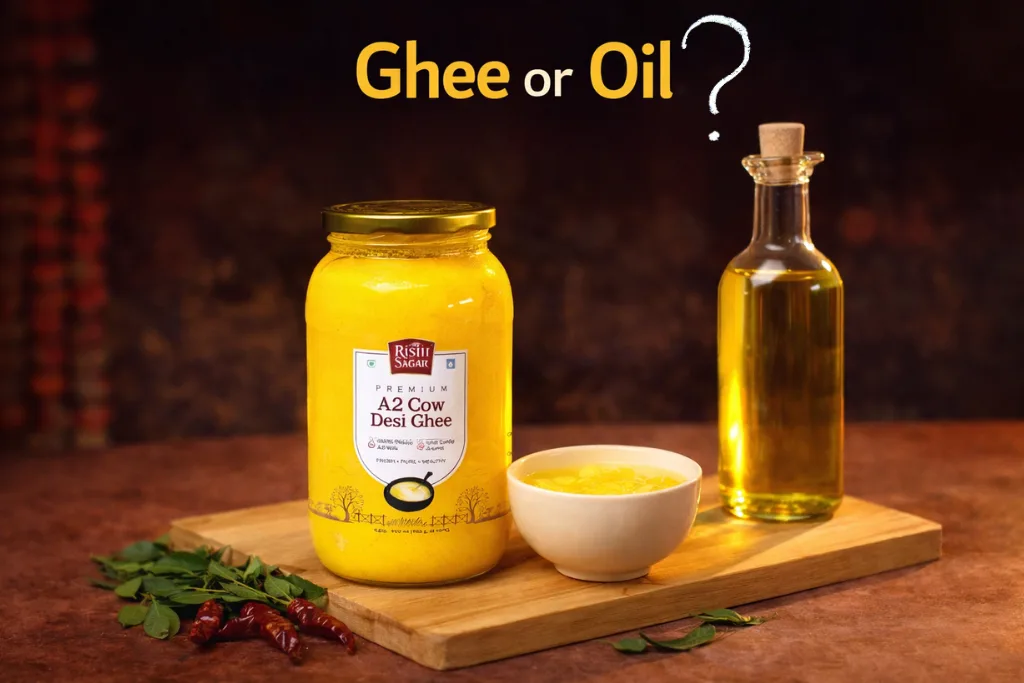
There has been a lot of talk about cooking fats for a long time. A lot of families used to switch from traditional ghee to refined oils because they thought they were better for their health. The conversation is changing again today. People are wondering what really works best for cooking every day. Is oil better than ghee?
To understand the ghee vs oil debate, we need to look at both in terms of nutrition, how well they cook, how well they digest, and how useful they are. The goal is not to say that one is better than the other, but to figure out how each one fits into a healthy diet.
Knowing About Ghee and Cooking Oils
Ghee and oils are both sources of fat, but they are made and processed in different ways. These differences affect how they cook and how they affect the body.
Ghee is butter that has been heated slowly to get rid of milk solids and water. In a curd-based process, milk is turned into curd, churned into butter, and then gently heated. This is how traditional methods work. This method keeps the flavour and smell while keeping the purity.
On the other hand, cooking oils come from nuts, seeds, or fruits. Some oils are cold-pressed and not very processed, while many refined oils are put through industrial processes that use heat and chemicals to make them last longer and look better.
The final quality of the fat depends a lot on how much it is processed.
Ghee vs Oil: Nutritional Comparison
Knowing what nutrients are in ghee and oils can help you make a smart choice. Both have fats, but the kinds of fats and other nutrients are different.
Here are the main differences between them:
- Ghee is mostly made up of saturated fats, with a little bit of monounsaturated fats.
- It naturally contains fat-soluble vitamins A, D, E, and K, which help the body work properly and are better absorbed when eaten with fat.
- Some oils, like olive oil and mustard oil, have more unsaturated fats. These fats are usually thought to be okay to eat in small amounts.
- During industrial processing, oils that have been heavily refined may lose some of their natural nutrients.
- If you heat or reuse low-quality oils too many times, they can make compounds you don’t want.
When kept right, ghee stays stable at high temperatures and doesn’t have any trans fats in its natural state.Ghee and oils are both high in calories, so it’s important to watch your portions no matter which one you choose.
Ghee and oils are both high in calories, so it’s important to keep an eye on how much you eat no matter which one you choose.
How Stable and High the Smoke Point Is
One important factor when choosing a cooking fat is how it behaves at high temperatures. Indian cooking often involves frying, roasting, and tempering, which require stable fats.
Ghee is butter that has been heated slowly to remove milk solids and water. Today, many households also prefer to buy ghee online from trusted brands that follow traditional preparation methods and maintain high quality standards.
Some oils can also withstand high temperatures, while others may start to break down at lower temperatures. When oils get too hot, they can oxidise and make chemicals that aren’t good for your health.
Ghee is a good choice for traditional Indian cooking because it stays hot.
Digestion and Nutrient Absorption
The way fat interacts with digestion is another point of comparison. Ghee contains butyric acid, a short-chain fatty acid associated with gut health. In moderate amounts, it may support digestive comfort.
Ghee also helps in the absorption of fat-soluble vitamins present in vegetables and lentils. Adding a small spoon of ghee to meals can improve the body’s ability to utilize certain nutrients.
Oils provide essential fatty acids that the body cannot produce on its own. Including different types of oils in small amounts can contribute to a varied and balanced diet.
The key in both cases is moderation and overall dietary balance.
When to Choose Ghee and When to Use Oil
There is no single answer that fits every kitchen. The choice often depends on the type of cooking and personal preference.
Ghee works well for:
- Traditional Indian dishes
- Tempering spices
- Preparing sweets
- High-heat cooking
Oils may be suitable for:
- Salad dressings
- Light sautéing
- Recipes that require a neutral flavour
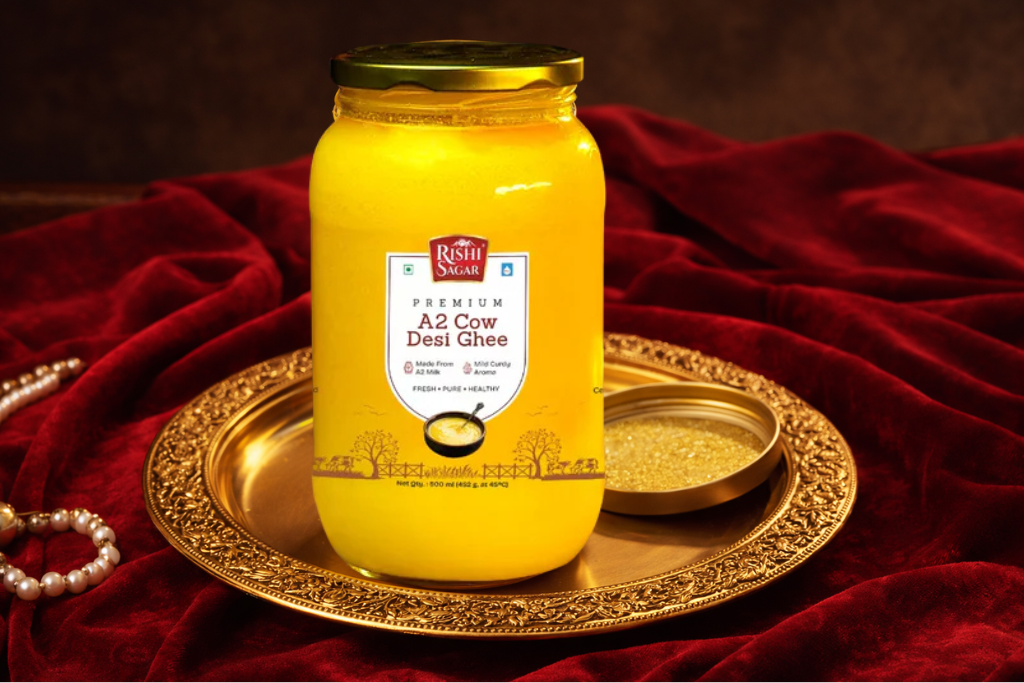
Many households use a combination of both to maintain variety. When you buy ghee online, it is important to check the brand’s preparation method and hygiene standards. Established brands like Rishi Sagar, with decades of dairy experience and curd-based preparation practices, focus on maintaining purity and consistent quality. Choosing a reliable source ensures you receive the intended benefits.
Conclusion
The comparison between ghee and oil is not about choosing one and eliminating the other. Both have their place in a balanced kitchen. Ghee offers heat stability, traditional flavour, and natural vitamins, while certain oils provide essential unsaturated fats.
The real focus should be on quality and moderation. Instead of following trends, it is wiser to understand how each fat works and use it appropriately. By making informed choices and selecting trusted brands, you can create meals that are both nourishing and flavourful.