Unless you are living under a rock, you must be aware of the changing scenario of online search. I’m sure you reached this blog via an AI search overview. This makes you think about how, as a business owner or marketer, you can be affected by this shift.
The debate over the rise of browser AI versus chatbots as rival search paradigms is one of the most significant issues in digital marketing, with both reshaping how users search for answers, discover products, and make decisions online.
So, which one is actually winning the future of search? Let’s break it down.
What We’re Actually Talking About
Before diving into the debate, let’s get clear on terms.
What is browser AI?
Browser AI can be defined as AI integrated directly into the web browsing or search process. It allows users to summarise content on the page, compare different options, and receive immediate feedback without having to switch between ten tabs and read through everything.
For instance, if a user is researching laptops, he or she would prefer to know about their features, differences between particular models, and get advice as to which one suits him or her most. And here comes the value of the AI search engine and browser AI in general.
Browser AI search tools like Google’s AI Overviews work within the traditional search interface but use generative AI to provide synthesised conversational answers instead of a list of links.
This makes it feel like a natural upgrade to the future of search, because the user does not have to leave the flow of browsing to get help.
What are AI chatbots?
Chatbots are standalone conversational AI search tools, such as ChatGPT, Claude, Gemini, and Perplexity, that users visit as a destination to ask questions, explore ideas, and get detailed responses step by step. They are especially helpful when the user does not just need facts, but also thinking support, planning support, or writing support.
The distinction matters enormously for marketers. They represent different user intents, different discovery mechanisms, and different content optimisation strategies.
Why This Debate Is Happening Now
The online search process hasn’t fundamentally changed in over two decades. Users enter some keywords, receive links, then visit these links to find what they were looking for. However, that model is now being dismantled.
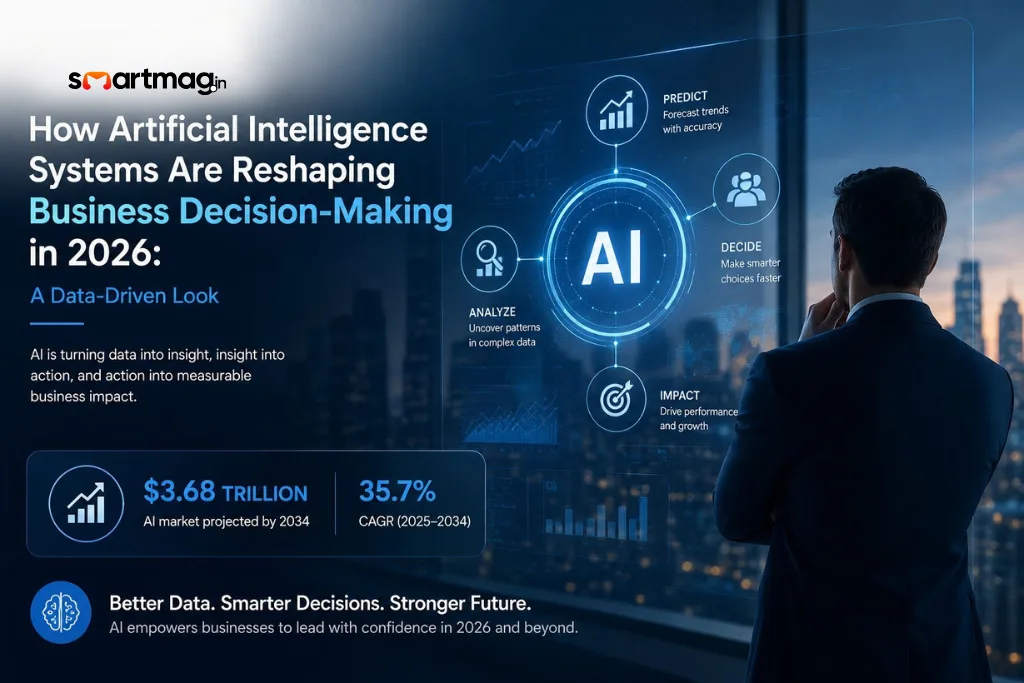
Generative AI has revolutionised how information is discovered online. Search engines are moving away from the typical list of blue links and providing more definitive and conversational answers. The industry giants like Google and Bing have begun integrating AI to keep pace with up-and-coming search engines like Perplexity and You.com.
Simultaneously, consumers are increasingly turning to standalone chatbots to handle tasks they once relied on search engines for. People are looking to chatbots for simplicity and use AI overviews to supplement what search engines do.
Here is where the debate between browser AI vs chatbots comes in; two tools, driven by generative AI, battling for the same attention from their users.
What Users Are Doing Now?
The biggest mistake people make is that old behaviour has been entirely replaced by new. This is not so. User search behaviour is being transformed by generative AI, but many are not abandoning their normal search habits and are continuing to use search engines as the default in their everyday life.
So the future of search is not about a dramatic replacement. It is about users opting for the right AI search tools that suit their search needs. Search remains the default for general discovery, while chatbots are increasingly used for more intricate deep thinking.
Browser AI vs Chatbots: A Side-by-Side Breakdown
In order to understand the browser AI vs chatbots debate, it’s important to define what these two types of tools are actually designed to do. They are both powered by generative AI, but their different user intent shapes every aspect of their strategy from content to ad spend.
| Category | Browser AI | AI Chatbots |
|---|---|---|
| Primary user intent | Fast discovery, finding answers, products, places, and information quickly. | Deep thinking, strategy, analysis, brainstorming, writing, and task completion. |
| How it handles queries | Synthesises real-time web results into a summarised answer with source links. | Generates responses from trained knowledge, increasingly supplemented by live web access. |
| Scale and reach | Massive reach, as Google commands about 90% of the global search market, with AI Overviews reaching over a billion users. | Growing fast but still destination-based; users must actively choose to visit. |
| Conversation style | Single-turn or short follow-up queries optimised for speed and clarity. | Extended, multi-turn conversations that build context across the session. |
| Real-time usefulness | Strong when the task depends on the live page, the current website, or the content already visible in the browser. | Strong for reasoning and drafting but may need browsing for up-to-date facts. |
| Best for businesses | Research, customer discovery, local SEO, competitive analysis, and driving website traffic. | Content creation, strategy, brainstorming, customer support, lead nurturing, and research assistance. |
| Content it favours | Answer-first, structured, well-cited pages that AI can summarise. | Long-form, authoritative, context-rich content. |
| Ad & commerce integration | Ads can appear alongside AI results in labelled placements. | Minimal or absent; monetisation models are still evolving. |
| Key platforms | Google Search, Microsoft Bing, Arc Search, You.com, Brave Search. | ChatGPT, Claude, Gemini, Perplexity, Phind, Waldo. |
| Biggest strength | Meets users where they already are with no behaviour change required. | Excellent for complex reasoning, planning, and in-depth conversations. |
| Biggest limitation | Less suitable for long conversations and may contribute to zero-click searches. | Can be weaker for live, source-heavy or transactional queries unless browsing is enabled. |
What This Means for Your Search Strategy?
This shift in search is already rewriting the rules of content marketing.
The rise of AI search engines has created what the industry now calls Generative Engine Optimisation (GEO), while the broader shift from traditional SEO to answer-first search is already changing how content is created and optimised. Understanding browser AI vs chatbots as distinct channels is the first step to building a strategy that works across both.
Instead of competing solely for position, publishers and businesses must now follow a combined strategy and action plan:
Answer-first content
Structure content to directly answer specific questions up front. AI systems favour clear, well-organised answers. If your pages bury the point, they won’t surface in AI-generated summaries.
Invest in authority signals and E-E-A-T: AI search engines rely on machine learning and natural language processing to examine page content and structure with a high level of detail. Domain authority, structured data, and Experience, Expertise, Authoritativeness, and Trust (E-E-A-T) signals are the factors AI search engines weigh in most heavily.
Write for semantics, not keywords
AI search engines focus more on the actual meaning of words and phrases in context, as opposed to perfect keyword matching. Prioritise writing for humans, and the AI will follow; always prioritise clarity and substance over keyword stuffing.
Diversify across platforms
The browser AI vs chatbots split means your visibility strategy can’t be one-dimensional. Perplexity, ChatGPT Search, Bing Copilot, and You.com are all growing as AI search tools with their own ranking logic. Test your brand presence on each platform to find out if you are showing up. Or what’s being said about you?
Create content for chatbot context windows
Long-form, authoritative content is what AI systems pull from when answering complex user queries. Don’t just optimise for snippets; build resources worth citing.
Go multimodal
With AI search engines now accepting video and image queries, rich media is no longer optional. Visual content opens discovery channels that text alone can’t reach.
Monitor referral traffic shifts
As AI search tools become primary discovery channels, your analytics need to reflect which tools are driving awareness and conversion, and not just Google organic.
Who Wins? The Honest Answer
So, browser AI vs chatbots: who wins? The future of search won’t be won by a single format. Here’s the realistic picture:
- Browser AI wins when users want fast, contextualised discovery. Especially for consumer decisions, local search, and quick research. Google’s scale, infrastructure, and user trust make it nearly impossible to displace for everyday search behaviour.
- Chatbots win when users want depth, reasoning, and help completing tasks. As generative AI capabilities improve and chatbots gain better real-time access to the web, their use cases will only expand.
The most likely outcome that smart marketers should plan for is convergence. The boundaries between browser AI and chatbots are already blurring. Google’s generative AI overviews are becoming more conversational. ChatGPT Search now indexes the web in real time. Perplexity operates as both a search engine and a reasoning tool. These categories are merging.
For businesses and marketers, the question isn’t which one wins; it’s whether you are visible in both.