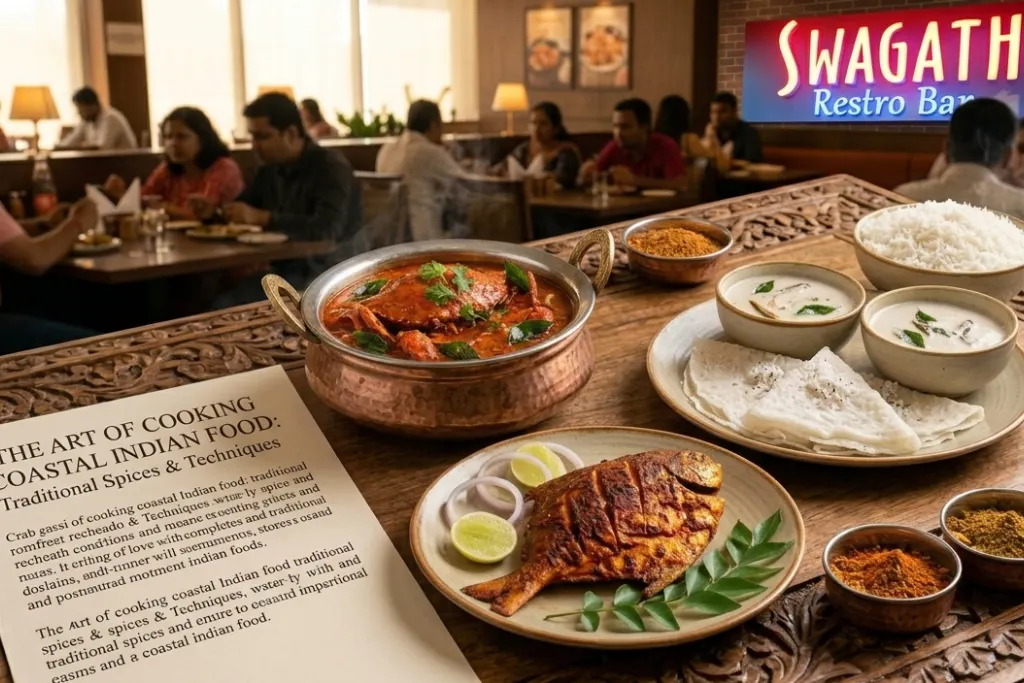
India’s coastline stretches across more than 7,500 kilometers, and along that vast expanse lies a world of flavour that few other cuisines can match. Coastal Indian food is all about preserving the tradition that is defined by the regional spices and the cooking techniques passed down through generations.
For the best seafood restaurant experience, you don’t have to travel all the way to the coast, especially if you live in the NCR. A visit to Swagath Ambience Mall, a popular family restaurant in Gurgaon, offers you a delicious deep dive into true coastal flavours, prepared the traditional way.
To really appreciate what makes coastal cuisine stand apart, let’s take a closer look at the spices, cooking styles, and coastal traditions behind it.
Spices That Define Coastal Indian Food
More Than Just Heat
While dining, you’ll often notice a mix of flavours working together in a coastal dish, like:
- Sour dish with creamy consistency.
- Sharp taste with earthy aroma.
- Balanced heat served with richness.
Spices like chilies, turmeric, cumin, coriander seeds, kokum, mustard seeds, fennel seeds, curry leaves, and more are responsible for this magic. However, traditional spices used in coastal cuisine are necessarily not used only for the heat factor. Each spice brings a balance to the whole dish. Take turmeric, for example. It is not just used for colour. It cuts through the heaviness of coconut and seafood. Also, when paired with black pepper, it even helps preserve food naturally.
The Foundation of Every Dish
Most coastal dishes begin with a simple but powerful base: tempering with the right spices. The first crackle of the tempering spices fills the air with the aroma that enhances the original flavour of the seafood.
The classic coastal tadka prepared in coconut or mustard oil use:
- Mustard seeds
- Curry leaves
- Fenugreek
- Dry red chillies
Regional Spice Stories
Every coastal region builds flavour in its own way, using local ingredients that reflect its climate, trade history, and food culture:
- Kerala (Malabar Coast): Famous as the Spice Garden of India, this region is known for black pepper, green cardamom, and kodampuli, which gives fish curries a deep smoky tartness.
- Goa and the Konkan Coast: Goan cuisine is known for its distinct Portuguese influence using vinegar, cumin, cinnamon, and cloves for the bold and tangy flavours. Kokum is widely used in Goa and Konkan coast for its cooling sourness.
- West Bengal: Panch phoron, mustard oil, and mustard seeds give many fish dishes their sharp and earthy flavour.
- Andhra Pradesh and Telangana: Guntur chilli, curry leaves, and mustard seeds give the cuisine its well-known heat and intensity.
- Tamil Nadu: Chettinad cooking uses kalpasi, Marathi moggu, tamarind, asafoetida, and curry leaves to make layered, complex flavours.
- Odisha: Odia cuisine uses its own five-spice blend, along with fragrant Kandhamal haldi, known for its strong aroma.
Time-Tested Cooking Techniques
Tadka Is Not the Same Everywhere
Coastal spices are famous for tempering the dish and making it whole. It is an age-old cooking method that is followed today in authentic Indian cooking. Like spices are used as per regions, tempering also changes across different coastal regions.
For example, in Bengal, mustard oil with kalonji creates the base for shorshe maach (seafoood made with Rohu fish). In coastal Karnataka, mustard seeds are followed by lentils and spice blends for dishes like koli saaru. It is delightful how the same technique can bring different outcomes.
Marination That Builds Depth
Seafood needs careful handling. Marination is not optional here, it’s essential. Like in Mangaluru, fish is coated in turmeric, chilli, and garlic, then wrapped in banana leaf and slow-cooked. While in Goa, prawns are soaked in vinegar-based masalas overnight and used later for dishes. Marination is an important step that gives the dish its depth.
The Role of Coconut
If you’ve ever wondered why coastal dishes feel rich but not heavy, coconut is usually the reason. If you try a dish that has coconut in it, you bet it is a coastal speciality. Needless to say, coconut is at the centre of most coastal cooking.
It appears in different forms like freshly grated, as coconut milk and oil. Each forms has different roles in coastal cuisines. For instance, in Kerala’s meen moilee, coconut milk softens the heat. In Udupi cuisine, even something as simple as neer dosa carries a subtle coconut presence.
Where Tradition Meets the Table: Swagath Experience
For anyone who wants to explore this incredible diversity on a plate, Swagath has been quietly preserving and celebrating these traditions. As a trusted seafood restaurant in Gurgaon, Swagath brings together recipes from across India’s coast, each one carefully curated to honour its roots.
- Try the Crab Gassi and you’ll understand the skill it takes to balance Byadgi chillies with roasted coconut.
- Order a Pomfret Recheado and you’ll taste the vinegar-spice tango that defines Goa.
- Even the Neer Dosa, which looks deceptively simple, comes folded with the kind of care that can’t be rushed.
While many modern restaurants experiment with fusion or deconstruct dishes for visual drama, Swagath stays grounded in authenticity. Every dish is seasoned, simmered, and served just the way it was meant to be. They maintain their commitment that has made it a preferred family restaurant in Gurgaon for over two decades.
The Heart of the Coast: Regional Signatures
- Kerala: Known for coconut-based stews and tangy mango-fish pairings. Meen pollichathu (fish steamed in banana leaf) is a timeless dish here.
- Goa: Fiery and flavourful, often with vinegar, pork, and seafood. Vindaloo and Xacuti are just the beginning.
- West Bengal: Mustard is king. Shorshe bata (mustard paste) is blended with poppy seeds and used in delicate freshwater fish dishes like hilsa.
- Tamil Nadu: Strong spices, tamarind-based gravies, and coastal herbs. The Chettinad region is known for its robust crab masalas.
- Karnataka: A subtle use of coconut and milder chillies like Byadgi. Sukka-style dry prawn dishes and kori gassi dominate here.
Each of these regions approaches seafood differently. That’s what makes coastal Indian food so diverse.
Modern Kitchens, Timeless Traditions
While coastal Indian cuisine is now served in stylish restaurants and polished plates, its essence lies in home cooking. At Swagath, this respect for tradition is visible not only in the taste but in the cooking techniques themselves. Ingredients are sourced with care, and chefs follow the same steps used by coastal families for generations.
As more diners seek authentic experiences, the demand for genuine regional cuisines is rising. It’s no longer just about spicy or non-spicy; it’s about where the spice comes from, why it’s used, and how it complements the main ingredient.
Coastal Indian Food: More Than Just Seafood
Coastal cuisine in India is not just about fish or spice. It’s the smell of curry leaves hitting hot oil, the gentle tang of kokum, the creamy richness of coconut milk, and the fire of red chillies ground by hand. It’s a cuisine that respects nature, celebrates region, and invites everyone to the table.
And for those craving this depth of flavour in a warm, inviting setting, Swagath Ambience Mall remains one of the few places where you’ll find the coast served fresh.
So the next time you sit down for a coastal meal, take a moment. Notice the details. That’s where the real story is.