If you stand at a construction site long enough, you start noticing small things. A supervisor scrolling through drawings on a tablet instead of flipping through paper sheets. A drone making quiet passes above the structure. Engineers discussing progress while looking at a live dashboard instead of waiting for a weekly report.
Construction still looks physical. Concrete is still poured the same way. Steel is still lifted by cranes. But behind the scenes, something has shifted.
The conversation around Construction Technology Trends in India has matured. It is no longer about being innovative, but staying organised, efficient, and competitive.
Let’s discuss the technology trends that are shaping the future of construction.
Digital Planning and BIM Adoption
One of the clearest changes in Construction Technology Trends is the steady rise of BIM. Building Information Modelling sounds technical, but the idea is simple. Instead of everyone working from separate drawings, the entire team works from a shared digital model.
When structural engineers, architects, and MEP consultants see the same model, clashes become visible earlier. That matters.
Without BIM, some conflicts only appear during execution. A duct passes through a beam. A pipe interferes with reinforcement. Fixing those issues on site costs time and money.
With BIM:
- Design overlaps are spotted earlier
- Changes are easier to coordinate
- Quantity calculations become more reliable
- Revisions feel less chaotic
For any construction company handling larger projects, that coordination saves more than just cost. It saves momentum.
Use of Drones for Site Monitoring and Surveys
Drones are no longer experimental gadgets. They’ve become practical tools.
Instead of sending teams across uneven terrain to measure land manually, drones capture topographical data within hours. Instead of guessing progress from ground level, project heads get aerial visuals that show real progress.
Their use is growing because it makes sense.
Drones help with:
- Site surveys
- Progress tracking
- Safety inspection
- Visual documentation for clients
For a construction company managing multiple sites, this visibility reduces blind spots. It also improves reporting accuracy.
And perhaps most importantly, it removes some of the guesswork that used to be part of site monitoring.
Automation and Robotics in Construction
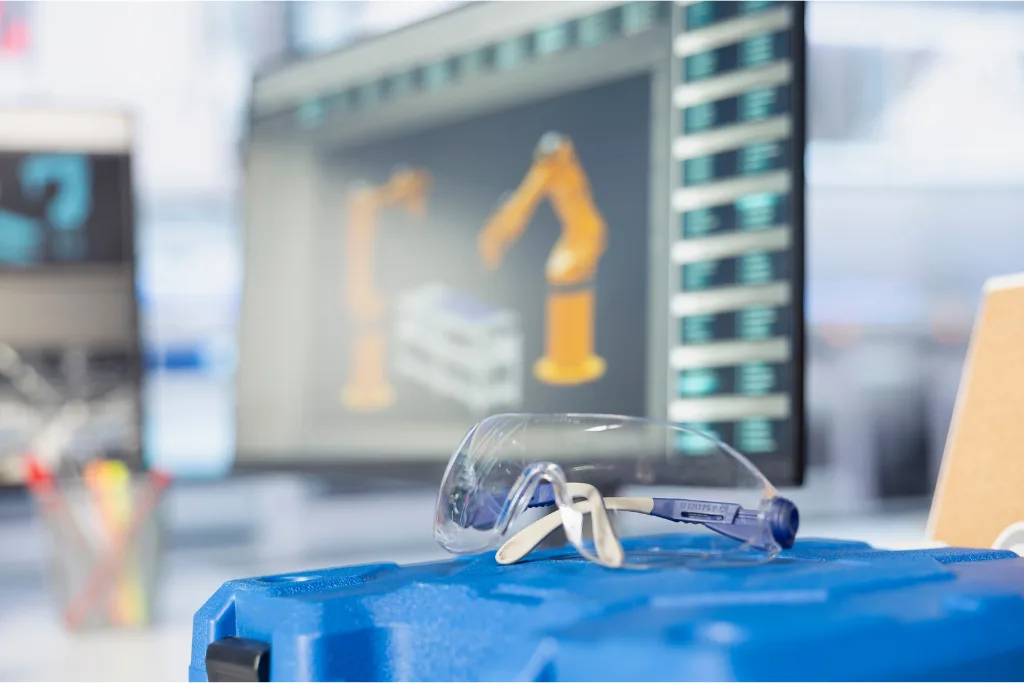
Automation in India is not about fully robotic construction sites. Not yet. But certain repetitive processes are slowly becoming mechanised.
You now see:
- Prefabricated structural elements
- Mechanized plastering
- Automated cutting and shaping systems
Prefabrication has gained attention because it shifts some site work into controlled factory environments. That improves consistency.
Construction has always depended on skilled labour. That hasn’t changed. What automation does is reduce variability. It standardises parts of the process that used to fluctuate depending on site conditions.
Among current Construction Technology Trends, automation feels less dramatic and more gradual. But its impact on timelines is noticeable.
Smart Construction Equipment and IoT Integration
Machinery is getting smarter. Today, many construction machines are fitted with sensors that monitor performance. Fuel usage, maintenance cycles, usage hours. All of it can be tracked.
This means breakdowns can be predicted instead of reacted to.
For a construction company, especially one managing multiple projects, this data matters. Equipment downtime is expensive. Idle machines cost money quietly.
IoT integration brings awareness to areas that were once invisible.
It doesn’t eliminate challenges. It simply makes them visible earlier.
3D Printing and Modular Construction Growth
3D printing in construction still feels futuristic to many, but pilot projects across India have shown it can work. Housing units built using printed concrete structures have demonstrated faster turnaround times.
Modular construction is slightly more grounded in everyday execution. Instead of building everything on-site, sections are manufactured in controlled facilities and assembled later.
This shift offers a few advantages:
- Better quality control
- Reduced material waste
- Faster installation
Construction is slowly blending site work with manufacturing methods. That hybrid approach is one of the more interesting Construction Technology Trends emerging today.
It doesn’t replace traditional methods entirely. It complements them.
Sustainability-Driven Technology Adoption
Sustainability used to mean choosing certain materials. Now it involves monitoring systems.
Smart lighting, automated energy controls, water recycling systems, building management software. These tools allow projects to track performance even after completion.
Sustainable construction is increasingly technology-backed.
Energy consumption can now be monitored in real time. Waste patterns can be analysed. Efficiency can be improved after occupancy.
This shift has changed how sustainability is approached. It is less about checklists and more about measurable performance.
Data-Driven Project Management and Software Platforms
Paper-based progress reports are fading.
Cloud-based platforms now allow teams to update drawings, upload photos, log daily progress, and track budgets in real time. Instead of waiting for weekly meetings, stakeholders can view live dashboards.
For a construction company, this reduces miscommunication. It shortens feedback loops. It also improves transparency.
The goal is not to remove human judgement. It is to support it with better information.
When data is organised properly, decisions feel more confident.
Challenges in Adopting Construction Technology in India
Adoption is not always smooth.
There are practical barriers:
- Initial investment costs
- Training requirements
- Resistance to change
- Compatibility issues with older systems
Smaller firms sometimes hesitate because the benefits are not immediate. Larger firms face integration challenges when upgrading legacy systems.
The key often lies in phased adoption. Introducing one system at a time tends to work better than attempting complete transformation overnight.
Technology adoption requires patience.
Industry Perspective: How Leading Firms Are Adapting
Established firms across India are not rushing blindly into every new tool. Many are integrating technology carefully.
Companies such as RS Builders focus on blending digital systems with structured execution practices. Rather than adopting technology for appearance, they align it with project needs.
That measured approach prevents disruption.
Technology works best when it strengthens discipline rather than replacing it.
The Future Outlook for Construction Technology Trends in India
Looking ahead, Construction Technology Trends are likely to expand into predictive planning and AI-assisted cost modelling.
Expect to see:
- More automation in compliance reporting
- Smarter scheduling tools
- Increased modular adoption
- Broader integration of AI in estimation
Urban growth and infrastructure expansion will continue driving change.
Technology is not reshaping construction overnight. It is reshaping it gradually, layer by layer.
Conclusion
Construction will always be hands-on. Concrete still needs curing. Steel still needs welding. Foundations still need precision.
But the systems guiding those actions are evolving.
From BIM to drones to modular construction, India’s building sector is becoming more structured and more data-aware.
For any construction company aiming to remain relevant, understanding Construction Technology Trends is not about chasing innovation. It is about recognising where the industry is heading.
The physical work may look familiar. The way it is planned and managed no longer is.