Why Tile Patterns Matter in Small Spaces
When it comes to small spaces, visual details play a major role. Tile designs determine how the eye moves around the floor or wall. If the lines are continuous and smooth, then the room will seem less crowded. If there are too many cuts, then the space may seem confined and boxy.
The correct design has three benefits. It eliminates visual noise, gives a feeling of movement, and spot balance. Even normally sized tiles can provide an illusion of spaciousness if they are cleverly placed. Thus, tile layout concepts are equally important as tile size or tone.
Top Tile Patterns That Make Small Rooms Look Bigger
These are some of the best possible small room tile suggestions that really make a difference in small places.
Straight Lay Pattern
This is perhaps the most straightforward and the one layout that hardly ever goes wrong. Tiles are installed in lines and perfectly aligned with the walls.
- Gives a fresh and tidy appearance
- Minimizes the number of visual splits
- Ideal for smaller bedrooms and living rooms
This design, together with light shades, makes the room look clean and huge.
Diagonal Tile Pattern
With this pattern, the tiles are set at a 45-degree angle opposite to the straight.
- Diverts the eye from the narrow walls
- Shortens the length of the floor
- Especially good for tiny bathrooms
Diagonal patterns work great if the shape of the room is a bit odd.
Large-Format Tiles
Using larger tiles means installing fewer tiles and therefore fewer grout lines, which all contribute to the overall good effect in the small room.
- Minimizes visual mess
- Gives the impression of a single floor
- Small rooms can use these large tiles as floor coverings
Large tiles can also be used in open living areas, and not just confined spaces.
Vertical Tile Layout for Walls
Vertical wall tiles can create the illusion of greater height in small bathrooms or kitchens.
- Gives the illusion of taller ceilings
- Creates a feeling of airiness
- Ideal for wet areas and backsplashes
This is an intelligent choice for spaces that are low or closed off.
Herringbone Pattern (Used Carefully)
Herringbone pattern sometimes adds even more movement and depth, but only when used in moderation.
- It leads the observer to traverse the area
- Brings vitality without imposing design
- Best combined with simple hues
When the towel color is neutral, it works well in long rooms or small corridors.
Brick or Offset Pattern
This is the pattern where each tile is slightly offset from the one under it.
- Dissipates the harshness of geometric shapes
- Directs fewer glances to the edges of the room
- Good for use with rectangular tiles
Such a pattern is commonly found in kitchens and small living areas.
Best Tile Colours and Finishes for Small Rooms
Colour and finish play a big role in how spacious a room feels. Even the best tile pattern can fail if the colour choice is too heavy or the finish is not suitable.
- Light colours work best: Shades like white, cream, beige, light grey, and soft pastels reflect more light. This helps the room feel open and airy instead of closed in.
- Neutral tones are safer: Neutral tiles blend easily with walls, furniture, and décor. They reduce visual breaks and make the space feel continuous.
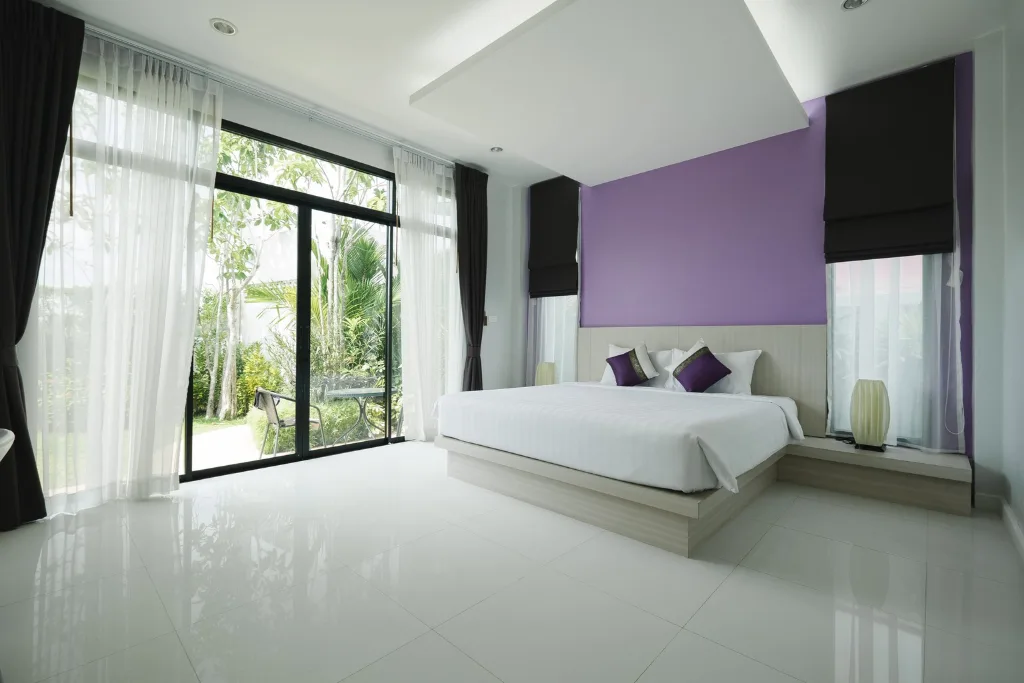
- Glossy finishes reflect light: Glossy tiles bounce light around the room. This makes small bathrooms and kitchens look brighter and slightly larger.
- Matte finishes offer balance: Matte tiles give a soft and calm look. They work well in bedrooms and living rooms where glare is not needed. They also hide dust and marks better.
- Matching grout colours helps: Grout that is close to the tile colour keeps the surface looking smooth and uninterrupted. High-contrast grout can make the room feel smaller.
Choosing the right colour and finish helps support the tile pattern and improves the overall sense of space.
Common Mistakes to Avoid in Small Rooms
Small rooms need careful planning. A few wrong choices can make the space feel tight and cluttered.
- Using too many patterns: Multiple patterns in one room can confuse the eye. It breaks visual flow and makes the space feel busy.
- Choosing very dark colours: Dark tiles absorb light. In small rooms, this can make walls feel closer, and the space feel heavy.
- Using very small tiles with thick grout lines: Too many grout lines divide the floor or wall into small sections. This reduces the feeling of openness.
- Adding borders or heavy design breaks: Borders cut the room visually and make it look smaller. A single, continuous layout works better.
- Ignoring tile direction: Laying tiles in the wrong direction can highlight narrowness instead of hiding it. Direction should always support the room shape.
Avoiding these mistakes helps small rooms feel calm, organised, and well-planned.
Conclusion
Small rooms do not have to feel tight or uncomfortable. With the right tile pattern, layout, and colour choice, such as the thoughtfully designed collections available at Spenza Ceramics, even compact spaces can feel open and well-designed. Tile patterns guide the eye, reduce visual clutter, and create a sense of flow without the need for major structural changes.
By using smart tile layout ideas and avoiding common mistakes, homeowners can improve the look and feel of small rooms easily. The right tiles do not just cover a surface. They shape how a space is experienced every day.