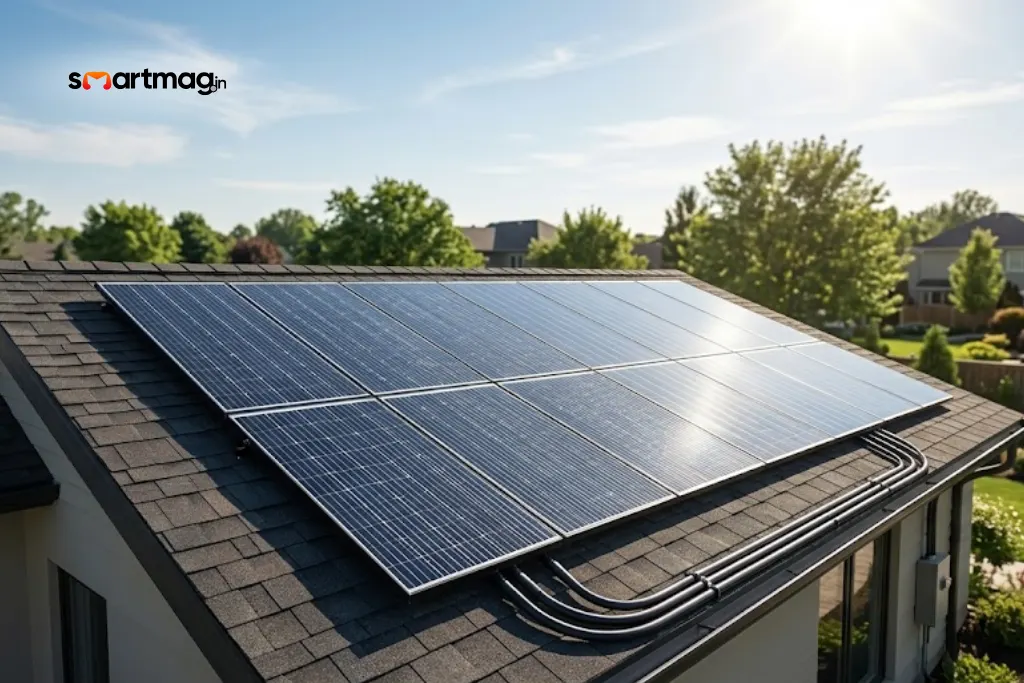
How a solar panel system works comes down to one simple idea. Light falls onto a panel, and electrons begin to move. This causes the generation of DC power. The inverter then converts this power into usable power. Our panels at Inter Solar are made specifically for this purpose.
Key Takeaways
- Solar cells absorb sunlight and release electrons, creating DC power.
- An inverter converts that DC electricity into usable AC electricity.
- Your electrical panel sends this power to lights, fans, and appliances.
- A net meter tracks electricity you consume and electricity you export.
- Batteries store surplus energy for night-time or cloudy-day use.
- An on-grid solar panel stays connected to the utility grid.
- An off grid solar panel system runs independently using battery backup.
- A solar panel manufacturer’s build quality decides how long your system lasts.
What Is a Solar Panel System and How Does It Work?
A solar panel system is a collection of components that, when assembled, convert solar energy to electrical energy in your house. The components include solar panels, inverters, wires, meters, and sometimes batteries. Knowledge about solar panel systems assists in choosing the most suitable one for your roof.
How Does a Solar Panel System Work? Step-by-Step Guide
Here is the complete process broken into clear, simple steps.
Step 1: Solar Cells Capture Sunlight
Silicon, a semiconductor material, is used in photovoltaic cells found within the panels. When sunlight reaches the cells, photons transfer energy to electrons and generate direct current electricity. You can read more about converting solar energy into electricity through PV panels.
Step 2: The Inverter Converts DC to AC
Your devices use alternating current and not direct current. The inverter used in the solar panels will convert the DC power to AC. This forms a key component of the solar panel system. Modern inverters are also able to track the performance of the system.
Step 3: The Electrical Panel Distributes Power
After conversion, the AC electricity moves to the electrical distribution board in your home. It gets to all the switches, sockets, and appliances from here. Any electricity that is not used moves onward, either to batteries or the grid.
Step 4: The Net Meter Records Consumption and Export
The bi-directional net meter monitors two aspects continuously. The meter monitors the amount of electricity being used from the grid as well as electricity being supplied to it. This transaction gets you credits through net metering and thus reduces your bill considerably.
Step 5: Batteries Store Any Surplus Energy
In case the system has batteries, any extra electricity is stored in the batteries during the day, and it powers your home at night. An off-grid house relies solely on this backup energy source.
On-Grid Solar Panel vs Off-Grid Solar Panel: Which One Works for You?
Many homeowners confuse these two setups, so here is a clear comparison.
| Feature | On-Grid Solar Panel | Off-Grid Solar Panel |
|---|---|---|
| Grid connection | Connected to utility grid | No grid connection at all |
| Battery required | Optional, not essential | Compulsory for night-time power |
| Net metering benefit | Yes, earns bill credits | Not applicable |
| Best suited for | Urban homes with stable grid | Remote areas, farms, cabins |
| System cost | Generally lower upfront | Higher due to battery bank |
| Power during outage | Shuts off for safety reasons | Continues running normally |
If you are still deciding between the two setups, this detailed guide explains the difference between on-grid and off-grid solar systems and how each manages electricity differently.
The hybrid system makes use of both systems. The system remains grid-tied but is also
equipped with battery storage. This way, you get the benefit of net metering along with security from outages.
What Affects How Well a Solar Panel System Performs?
- Temperature coefficient: panels become less efficient above 25°C; therefore, ventilation becomes important.
- Tilt and orientation: the panel should be angled in relation to your latitude.
- Shading: even some shade from trees results in decreased production.
- Dust and grime: Indian roofs get dusty very quickly; panels should be cleaned once a month.
- Panel degradation rate: high-quality panels degrade less than 0.5 percent per year.
- Wiring quality: poor connections raise the resistance and cause power losses.
These factors explain why identical panels can perform very differently on two rooftops.
Why Your Solar Panel Manufacturer Choice Matters
Not every solar panel manufacturer builds panels to the same standard. Before buying, check these points carefully:
1) Verify that the panels have been approved by BIS & MNRE for use in India.
2) Ensure that cells have been certified as being from Tier 1 in terms of reliability.
3) Verify that there is a 25-year output warranty on the panel.
4) Look out for panels resistant to PID (potential induced degradation).
5) Ask for degradation information.
As part of our commitment to quality at Inter Solar, our panels and heat pumps are manufactured with rigorous testing procedures in place.
Conclusion
So now you know everything about how the solar panel system functions, from light to powered devices. Selecting good quality panels along with the appropriate inverter and an established brand is key. Inter Solar produces durable, highly efficient solar panels designed specifically for Indian homes. So, get a quote today and start generating clean, dependable power.