Every year, as the monsoon clouds start fading away and the festive energy fills the air, homes, streets, and communities across India come alive with the arrival of Lord Ganesha, fondly called “Bappa”. From beautifully decorated pandals to the melodious sound of devotional chants and the aroma of traditional sweets, Ganesh Chaturthi brings people together in celebration, devotion, and joy.
Amidst all the celebrations and fun, have you ever wondered why Ganesh Chaturthi is celebrated for a period of 10 days? Why does the festival start with the installation of Lord Ganesha’s idol and end with the grand immersion ceremony known as Visarjan?
Well, the 10-day tradition is not simply a religious practice. It also represents a beautiful journey of welcoming Lord Ganesha into our homes, seeking his divine blessings, and finally bidding him an emotional farewell with gratitude and hope to see him next year. The festival carries deep spiritual meaning, thereby linking ancient beliefs with modern celebrations.
So, let’s understand the history, its cultural significance, rituals, and traditions behind this much-loved festival.
What is Ganesh Chaturthi?
Ganesh Chaturthi is a Hindu festival that is dedicated to Lord Ganesha, the deity known as the remover of obstacles and the symbol of wisdom, prosperity, and new beginnings. The festival starts on the fourth day (Chatruthi) of the Hindu lunar month of Bhadrapada and is celebrated with great zeal and enthusiasm across India.
Though the festival is celebrated across the country, it holds special importance in Maharashtra, Karnataka, Goa, Telangana, Andhra Pradesh, and parts of Gujarat. As per the Ministry of Culture, Government of India, Ganesh Chaturthi is one of the most widely celebrated Hindu festivals, which brings together religious traditions, art, and community participation.
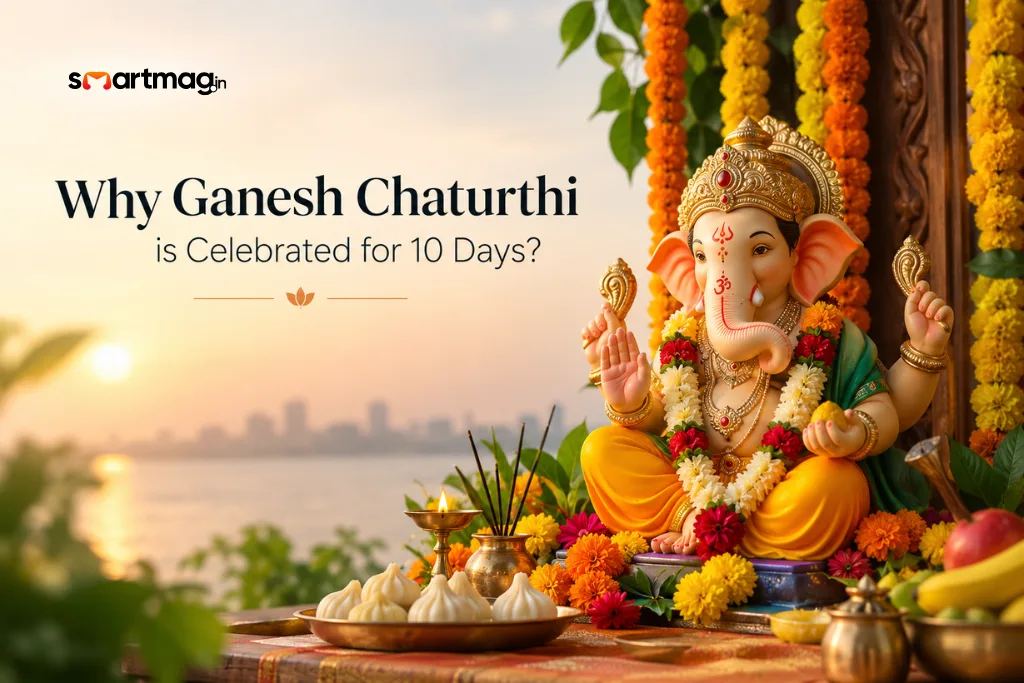
During this festival, devotees install the clay idols of Lord Ganesha at homes and public pandals, perform daily prayers, offer sweets such as modak, and take part in various cultural programmes.
Why is Ganesh Chaturthi celebrated for 10 Days?
If you are still looking for answers to why Ganesh Chaturthi is celebrated for 10 days, the roots can be traced back to Hindu traditions and mythology. The 10-day period symbolises the divine presence of Lord Ganesha among his devotees.
As per Hindu beliefs, Lord Ganesha visits Earth during this period to bless his devotees, remove difficulties, and bring happiness and prosperity to their lives. So, the festival starts with Ganesh sthapna, where the idol is placed in homes or pandals, and ends with Ganesh visarjan, where the idol is immersed in water.
The 10 days also represent a spiritual cycle:
| Day | Significance |
|---|---|
| Day 1 | Installation of Lord Ganesha’s idol (Ganesh Sthapana). |
| Day 2–9 | Daily prayers, offerings, cultural activities, and celebrations. |
| Day 10 | Anant Chaturdashi and Grand Ganesh Visarjan. |
The final immersion represents the belief that everything in nature eventually returns to its original form. The clay idol dissolves in water, reminding the devotees of the cycle of creation and renewal.
The History Behind the 10-Day Ganesh Chaturthi Celebration
Though Ganesh worship has existed for centuries, the public celebration of Ganesh Chaturthi became especially popular during the Indian independence movement.
In 1893, freedom fighter and social reformer Lokmanya Gangadhar Tilak transformed Ganesh Chaturthi into a large public festival in Maharashtra. His aim was to bring the people together and create unity among the communities during British rule.
Before this, many families celebrated the festival at home. Public pandals and community gatherings made the festival an essential platform for cultural programmes, discussions, and social connection.
Today, the Ganesh Chaturthi celebration continues to combine religious devotion with community participation, thereby making it one of India’s most vibrant festivals.
Significance of Each Ritual During Ganesh Chaturthi
The traditions that are followed during the festival carry symbolic meanings. Every ritual represents devotion, gratitude, and spiritual growth.
| Ritual | Meaning |
|---|---|
| Ganesh Sthapana | Welcoming Lord Ganesha into the home or community. |
| Daily Aarti | Expressing devotion and seeking blessings. |
| Offering Modak | Symbolises the sweetness of knowledge and happiness. |
| Ganesh Chaturthi vrat | Represents discipline, faith, and devotion. |
| Visarjan | Represents acceptance of change and the return to nature. |
Many devotees also follow the Ganesh Chaturthi vrat katha, which narrates the stories associated with Lord Ganesha and also explains the importance of observing the festival with devotion.
How Is Ganesh Chaturthi Celebrated Across India?
The real beauty of the Ganesh Chaturthi festival lies in the diversity of celebrations across different regions. While the rituals remain the same, every state has its own cultural touch.
| Region | Popular Celebration Style |
|---|---|
| Maharashtra | Large public pandals, cultural programmes, and grand Visarjan processions. |
| Karnataka | Traditional prayers, home celebrations, and community events. |
| Goa | Family gatherings and a beautifully decorated home. |
| Telangana | Large Ganesh idols and public celebrations. |
| Gujarat | Devotional events and community gatherings. |
One of the most noteworthy parts of the modern celebrations is the Ganesh Chaturthi decoration. Devotees can also create beautiful themes using flowers, lights, eco-friendly materials, and creative artwork to welcome Lord Ganesha.
The Environmental Shift Towards Eco-Friendly Celebrations
Over the years, many communities have started adopting eco-friendly ways to celebrate Ganesh Chaturthi. Traditional clay idols, natural colours, and sustainable decorations are becoming extremely popular.
As per the Central Pollution Control Board (CPCB), idol immersion can impact water quality due to the materials used in some idols and decorations. As the awareness continues to grow, many devotees are now opting for eco-friendly idols that are made from natural clay that can easily dissolve in water.
Some of the important sustainable practices consist of the following:
- Choosing natural clay idols.
- Avoiding chemical paints.
- Using reusable decorations.
- Opting for symbolic or home immersions.
These are some of the changes that will enable the devotees to preserve the spiritual essence of the festival while also protecting the environment.
Why Does Ganesh Visarjan Happen After 10 Days?
The final day of the festival, also known as Anant Chaturdashi, marks the farewell of Bappa. Devotees carry idols in colourful processions, chanting prayers and expressing their gratitude before immersing them in water.
The immersion does not represent an ending but an important reminder that our life moves in cycles. Just as the idol returns to nature, devotees carry forward Lord Ganesha’s blessings and teachings in their daily lives.
The tradition also teaches about the important values like acceptance, humility, and respect for nature.
Wrapping Up
Ganesh Chaturthi is not just a 10-day festival filled with rituals, decorations, and celebrations. It is a reminder of faith, wisdom, new beginnings, and the importance of staying connected with our traditions. Understanding why Ganesh Chaturthi is celebrated for 10 days helps us appreciate the deeper meaning attached to the festival and the reason behind welcoming Bappa.
From the initial day of Ganesh staphna to the final day of visarjan, every ritual carries a message of devotion, positivity, and acceptance of change. Whether it is the visual beauty of the Ganesh Chaturthi decoration, the devotion behind the Ganesh Chaturthi vrat katha, or the importance of following the muhrat, each tradition adds meaning to the celebration.
As Ganesh Chaturthi 2026 is all set to begin on 14th September 2026, millions of devotees will once again come together to celebrate the festival with joy and devotion. Therefore, by embracing both the traditional values and eco-friendly practices, we can contribute to preserving the spirit of this beautiful festival for generations to come.
FAQs
1. Why is Ganesh Chaturthi celebrated for 10 days?
Ganesh Chaturthi is celebrated for 10 days because devotees believe Lord Ganesha stays among them during this period, blessing homes and communities. The festival begins with idol installation and ends with Ganesh Visarjan on Anant Chaturdashi.
2. When is the best time for the Ganesh Chaturthi puja?
A suitable time for worshipping Lord Ganesh is known through Ganesh Chaturthi muhurat, which depends upon the Hindu calendar. Devotees follow the timings provided by their Panchang.
3. How do you celebrate Ganesh Chaturthi in an eco-friendly manner?
You may celebrate it in an eco-friendly manner by selecting idols made of clay, opting for natural decor, avoiding toxic substances, etc.
4. What is the significance of Ganesh Chaturthi vrat katha?
The Ganesh Chaturthi vrat katha explains the stories and beliefs associated with Lord Ganesha. Devotees listen to or read it during the festival as part of their prayers and rituals.
For more insights on the latest news, business, lifestyle, and trends, explore more stories on SmartMag.