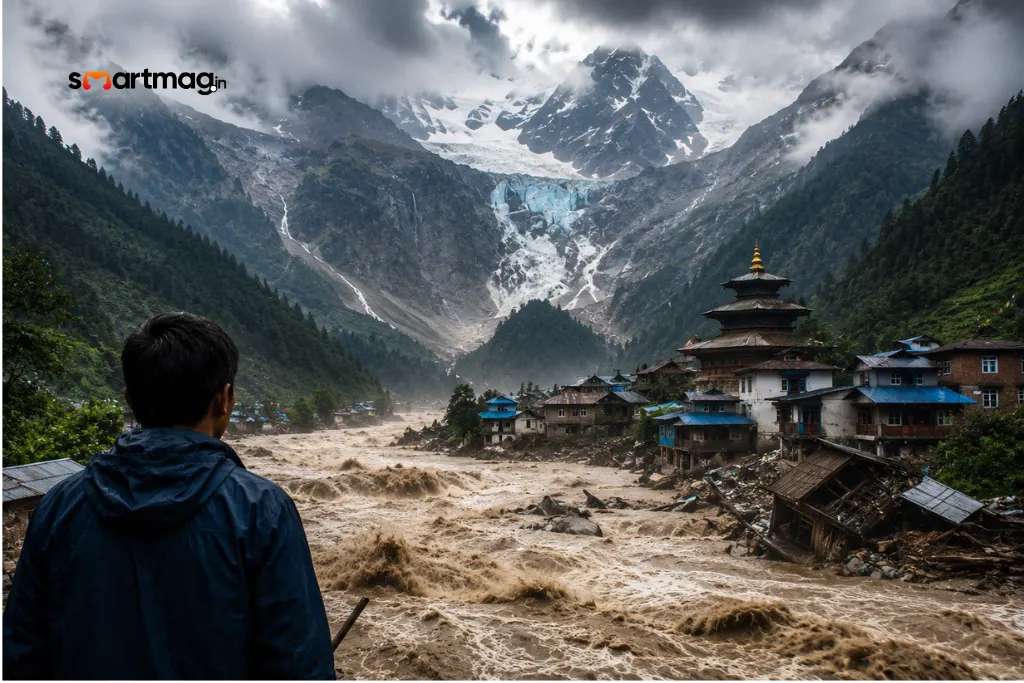
The Himalayas are known as “water towers of Asia”, as the glaciers in this region preserve fresh water used by millions of people. At the same time, the very mountains, which give people life-sustaining water, are at increasing risk of extreme weather events.
In recent years, Nepal has experienced a number of flood disasters, which have caused much damage to both local communities and infrastructure. However, when rivers suddenly become flooded and whole villages disappear within hours, one should wonder about the following question: What caused the Nepal floods?
There is no single cause behind these catastrophic floods. Heavy rains in Nepal, unstable mountain slopes, fast-melting glaciers, and glacial hazards may result in floods in the region. In addition, in certain situations, the collapse of a glacier or sudden water outbursts from glacial lakes may transform an ordinary river into a flood within minutes.
Understanding these causes is important because the Himalayas are changing faster than many other mountain regions, making communities more exposed to future risks.
What Happened During the Nepal Floods?
Being located in a country with mountainous terrain, Nepal is inherently susceptible to floods and landslides because rivers run swiftly within deep valleys, and sudden rains lead to rapid rises in water levels.
The recent Nepal floods have impacted several areas in terms of causing loss of life and displacement, and have resulted in severe damage to roads, bridges, houses, and farmlands. Even though monsoons in Nepal are a regular feature, the intensification of rainfall is making them increasingly unpredictable.
According to the International Centre for Integrated Mountain Development (ICIMOD), there have been several environmental changes taking place in the Hindu Kush Himalayan area.
Primary Factors Behind Flood Events in Nepal
There are several reasons behind the floods occurring in Nepal, ranging from climatic changes to environmental changes in the Himalayan region. The study of these important reasons enables us to know why floods have become so common nowadays.
| Factor | How It Contributes to Flooding |
|---|---|
| Intense rainfall | Heavy rainfall can rapidly increase river levels and trigger flash floods. |
| Glacier melting | Faster glacier loss can increase water flow and destabilise mountain environments. |
| Glacial lake expansion | Meltwater can create unstable lakes that may suddenly release water. |
| Landslides | Mountain landslides can block rivers and cause sudden flooding when barriers collapse. |
| Climate change | Rising temperatures increase the frequency of extreme weather events. |
What Caused the Nepal Floods? Main Reasons Explained
The Nepal floods could not be linked to one specific cause but were rather due to a combination of many factors. The causes varied from heavy rains to those caused by glacial factors.
Heavy Rainfall and Extreme Weather Events
One of the biggest contributors to flooding in Nepal is intense rainfall during the monsoon season. The country receives a large portion of its annual rainfall between June and September, but unusually heavy downpours can overwhelm rivers and drainage systems.
The excessive rains in Nepal may lead to quick water collection in the mountainous areas where rivers flow through the narrow valleys. This differs from the lowlands, where water spreads gradually. The fast-moving rivers through the steep valleys increase the possibility of floods.
In recent years, scientists have noticed that warm air can store more moisture, which may contribute to more intense rainfall events.
Glacier Collapse and Melting Himalayan Ice
One of the biggest issues relating to the Himalayan flooding is the status of the glaciers themselves.
The glaciers normally melt and regenerate according to the climatic conditions. However, climate change and an increase in temperature have caused many glaciers to rapidly retreat throughout the Hindu Kush Himalaya range. With the melting of glaciers, unstable glacial lakes may form.
The collapse of the glaciers takes place when weak ice bodies break, resulting in the release of water and debris. This is referred to as Glacial Lake Outburst Flooding (GLOF).
This flood moves very fast down the streams along with the rocks and debris, causing damage to its surroundings.
It was estimated that glaciers have decreased significantly in terms of their mass in the Hindu Kush Himalayan region.
Formation of Dangerous Glacial Lakes
Water is trapped in the depression created by glaciers as they recede. These depressions are usually contained by loose rock and soil, which act as a natural dam.
The difficulty here is that the dam may not be stable.
Any number of sudden occurrences could trigger collapse, such as:
- earthquake,
- rainfall,
- avalanche,
- or further glacier movement
This would cause a catastrophic release of the trapped water.
| Glacial Lake Risk | Possible Impact |
|---|---|
| Rapid glacier melting | Larger and more unstable lakes |
| Weak natural barriers | Sudden water release |
| Increased rainfall | Higher pressure on lake systems |
| Mountain erosion | More sediment and debris flow |
Nepal’s Challenging Mountain Geography
The geography of Nepal poses natural risks of flooding. People live close to rivers, as they offer access to water, fertile land, and means of transportation.
But due to the high elevation and valleys, the speed of flowing water becomes even higher during heavy rains.
It makes the consequences of such a disaster even more dangerous since flooding is usually accompanied by:
- Landslides
- blocked roads,
- damaged bridges,
- destruction of fertile lands.
The Human Impact of the Nepal Floods
Besides being an environmental catastrophe, the floods in Nepal were also a great humanitarian crisis. This flood, which occurred as a result of glacial activity, wiped out entire infrastructures like homes, roads, and bridges.
As per the recent reports, this disaster has claimed the lives of over 1,200 people, while more than 4,200 people have been reported missing due to continuous rescue missions in hilly areas. Many of the missing people belong to the locals, workers, and foreigners travelling in those areas.
However, the worst destruction has occurred in regions close to the rivers and dams, where floods laden with stones, mud, and other debris have done extensive damage. Rescuing people from the affected areas has been tough owing to landslides and the damage to roads.
| Impact | Details |
|---|---|
| Deaths reported | More than 1,200 people have lost their lives in the disaster. |
| Missing people | Over 4,200 people remain missing as rescue operations continue. |
| Affected communities | Villages, riverside settlements, and mountainous areas suffered major damage. |
| Infrastructure loss | Roads, bridges, and hydropower facilities were severely affected. |
| Rescue challenges | Difficult terrain, landslides, and damaged connectivity slowed emergency response. |
Are Nepal Floods Linked to Climate Change?
Climate change is not the only cause of flooding, but it is increasing the risks.
Scientists have shown that rising temperatures have had an impact on glaciers, rainfall patterns, and mountain ecosystems. The Himalayas are warming at a higher rate than the global average in certain regions, and this raises concerns for the future.
Climate change could have several impacts on floods:
| Climate Impact | Flood Risk |
|---|---|
| Rising temperatures | Faster glacier melting |
| More moisture in the atmosphere | Stronger rainfall events |
| Changing snowfall patterns | Less stable glacier systems |
| Permafrost degradation | Increased landslide risk |
However, researchers continue to study the exact connection between climate change and individual flood events.
Nepal Flash Floods: Why Are They So Dangerous?
While river floods happen gradually, flash floods in Nepal happened suddenly, with little or no prior notice.
They are particularly dangerous in mountain regions because:
- Water runs downhill very fast.
- Debris makes the floods more destructive.
- There could be less warning equipment in villages.
- Communication links can be destroyed rapidly.
Flash floods turn a tiny stream into a destructive force in just a few hours.
How Can Nepal Reduce Future Flood Risks?
Floods cannot be prevented at all times, but better preparations can minimise the risk of damage.
Some of the vital steps to take are as follows:
- Enhanced Early Warning Systems
Modern monitoring systems will help to get warnings prior to the occurrence of dangerous floods.
- Periodic Glacier and Lake Monitoring
Science uses satellite data and research in the field to monitor glaciers and identify hazardous glacial lakes.
- Climate-Resistant Infrastructures
Building strong bridges and roads, as well as improving the drainage system, will protect from extreme climate conditions.
- Mountain Planning
Prevention of building in dangerous flood areas is a must for a sustainable future.
Wrapping Up
What caused the Nepal floods? This question brings forth a bigger problem that exists within the Himalayan countries. The Himalayan mountain ranges are undergoing rapid environmental changes, and the communities located downstream are some of the first to face the repercussions.
Glacial melting does not account for all floods. Other factors like rainfall, geography, human activities, and climatic changes can affect flooding. Nevertheless, the danger of glaciers becoming a cause of natural disasters justifies the importance of monitoring and climate adaptation.
Conservation of the Himalayas does not only mean conservation of the glaciers. It also means conservation of the millions of people who depend on the mountain range.
FAQs
What caused the Nepal floods?
Nepal floods occurred due to the interaction of a number of elements, such as heavy rainfall, swollen rivers, landslides, glacial threats, and changes in the Himalayas’ climate.
Can glacier collapse cause floods in Nepal?
Yes, a glacier collapse can contribute to sudden flooding, especially when it causes the release of water from unstable glacial lakes. These events are known as glacial lake outburst floods.
Is there an increase in flooding in the Himalayas?
The scientific community has found that there is a growing danger in the Himalayas because of the receding glaciers and rainfall changes, among other reasons. However, every single flood is caused by a number of local factors.
What should Nepal do to prevent future flooding?
There are many ways for Nepal to minimise flood damage, including early warning systems, glacier monitoring, and climate-resilient infrastructure.
For more insights on technology, business, digital trends, and current developments, explore SmartMag for the latest updates and practical insights.