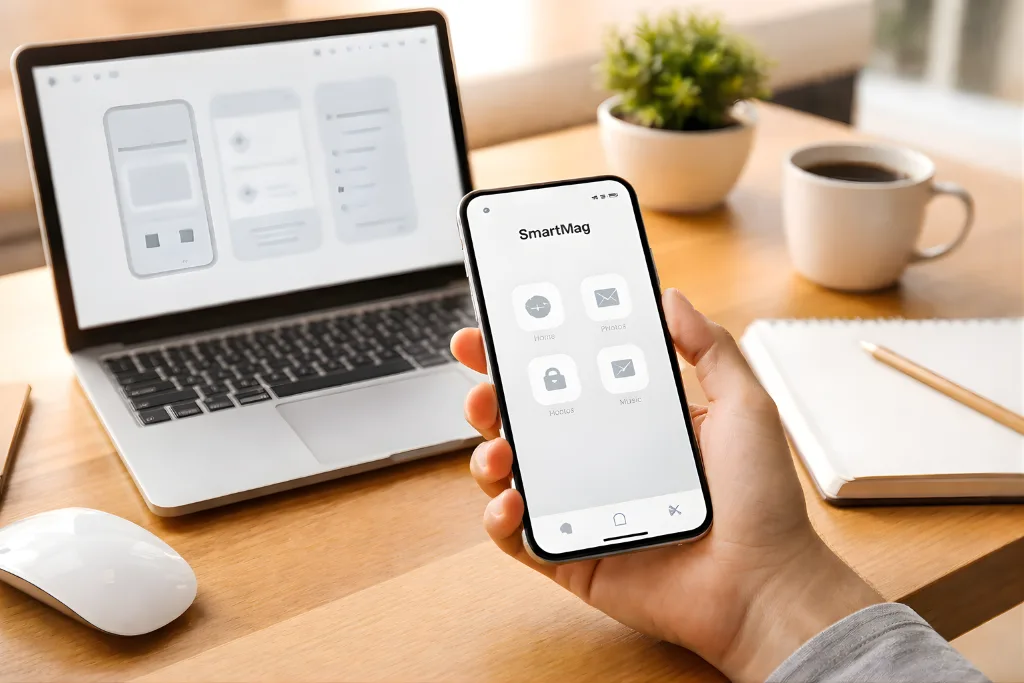
Simplicity is a Feeling, Not a Feature
What people know is that a product is simple before they can say why. They don’t think about design decisions or layout reasoning. They simply feel at ease. They know where to click, what happens next, and how to proceed without having to think about it.
This is not the result of stripping away everything. It is the result of thoughtful decisions. A product can be extremely powerful in the background and still feel very easy on top. The user doesn’t have to know how things work under the hood. They simply have to feel like the product gets them.
When simplicity in product design is executed well, the product feels helpful rather than demanding attention.
How Products Gradually Become Complex
Most products do not become confusing overnight. They often begin with a simple product design and gradually become heavier.
A new choice is introduced to meet a demand. A new feature has been added because a rival has it. An option remains because deleting it is too risky. Gradually, these tiny choices accumulate. What was once simple now feels cluttered.
The team that is building the product gets accustomed to this complexity. New users do not. What is normal inside may be daunting outside. When people have to think too much, they get bored.
Simplicity means recognizing when helpful elements begin to interfere.
Why Too Many Choices Push People Away
When there are too many options available, people tend to slow down, a pattern documented in usability research by Nielsen Norman Group. Each choice, from where to click to what to ignore, consumes mental energy, which is why user experience design principles focus on reducing unnecessary choices.
Simple products alleviate this pressure. They display fewer things at the right time. They direct attention rather than scattering it all around. The user is directed, not lost.
When a product is intuitive, it is often because it understands how people think and decide.
Simple Products Feel Safer to Use
People trust products that act in predictable ways, a core outcome of strong user experience design principles. When buttons behave as they should, and actions result in predictable outcomes, people feel secure. They can then explore and interact with the product in a more free-spirited way.
Confusing products evoke fear. Consumers are afraid of making errors or selecting the incorrect choice. They are hesitant. Eventually, they reduce their usage of the product, even if it has excellent features.
Simplicity eliminates that fear. Simplicity tells users that they are in control. When users feel safe, they stay longer.
Simplicity Encourages People to Return
One experience with a product is not sufficient. What is important is whether customers come back.
A simple product is easy to return to. Users do not have to relearn how things work. They remember the flow. It feels familiar, even after being away.
This is why many successful products keep the main experience simple and introduce advanced options gradually. Users can grow into the product rather than being overwhelmed from the beginning.
When the use of a product feels natural, it becomes a routine.
Simplicity Is Good for Business Too

Simplicity is beneficial not only for users but also for businesses, especially those looking to position themselves strongly for long-term growth, as discussed in our guide on how to make your business shine in 2026.
Products built with simplicity in product design tend to generate fewer support questions. They are easier to maintain and improve. Less time is spent on fixing confusion, and more time is spent on making meaningful improvements.
Simple products also have a more trustworthy feel. This is because people tend to associate simplicity with quality. If a product is simple to use, it feels like it is made well.
In most instances, simplicity is what gives a product a high-end feel without necessarily increasing the price.
Complex Problems Still Require Simple Experiences
Some products relate to difficult tasks. Finance applications, work environments, and professional software cannot completely avoid complexity.
The main difference is in how the complexity is presented.
Good products offer sophisticated features without mandating them for all users, while still following essential user experience design principles. They allow users to concentrate on what is important first and then dig deeper when necessary. The user is always led, never confused.
Complexity is not the enemy. Confusion is.
Simplicity Requires Constant Struggle
Simplicity is not something that can be attained one time and then forgotten. Simplicity always requires upkeep.
Everything that appears as a new functionality must be scrutinized. “Does this clarify or muddy the waters?” “Is this useful to most users or to only a few?”
Taking things away is always more difficult than putting them on. But things that remain simple will get older with finesse. They will develop while retaining their clarity from the beginning.
Only if it is safeguarded will Simplicity endure.
Final Thought
People don’t count features in a product. They remember how the product made them feel. Was it effortless? Was it calming? Did it save time for them?
In a world full of noise and cluttered options, simplicity is the whisper that quiets the room. It draws people closer and gives them cause to stay.
Simplicity in product design is not about doing less. It is about making things feel easy.