If you’re looking at solar in 2026 and wondering whether you’re late to the party, the short answer is no. Solar in India is no longer a fringe idea or a policy-driven experiment. It’s an operating energy sector with real customers, real expectations, and very little patience for half-baked execution.
Homes are choosing solar because monthly bills make less sense every year. Commercial buildings plan energy costs like they plan rent. Institutions are tired of outages and uncertainty. All of that has quietly reshaped how the market works.
So if you’re exploring solar business opportunities in India, now is the best time.
Why Solar Is Becoming a Serious Business Sector in India
A few years ago, solar conversions started with subsidies. Today, they start with numbers. What will power cost next year? How stable is the supply? What happens during peak demand?
That shift matters. Buyers are no longer convinced by slogans or panel wattage alone. They want reliability, clarity, and someone who can take responsibility beyond installation day.
This is why the solar energy business in India feels more grounded now. Projects move because they make sense financially, not because they look good on paper. For businesses entering the sector, that’s actually good news. Predictable demand is easier to build on than policy-driven spikes.
How to Choose the Right Solar Business Model Before You Start
This is where many people get it wrong. They see someone succeeding in solar and assume copying the model will deliver the same results. In reality, solar businesses are extremely sensitive to location, client mix, and execution style.
Before committing to any of the available solar business opportunities in India, it’s worth asking yourself a few honest questions. Are you better at managing relationships or managing operations? Do you want recurring clients or project-based revenue? Can you afford slow payments, or do you need quick cash cycles?
There’s no universal best model. There’s only the one you can actually run well, week after week.
Solar Panel Dealership and Distribution Business
The solar panel manufacturing business in India still runs heavily on local presence. No matter how large a manufacturer or EPC becomes, projects on the ground need dependable supply, quick coordination, and someone who answers the phone.
Dealers operate close to the customer. They understand local housing patterns, site constraints, and approval processes. Their value isn’t just in supplying panels, but in making things move when delays threaten a project.
Distributors sit one layer above. A distributor of solar panel products handles volume, inventory planning, logistics, and dealer coordination across regions. When distribution works well, projects stay on schedule. When it doesn’t, even well-sold systems stall.
This model suits people who are organised, patient, and comfortable managing multiple stakeholders without needing constant visibility.
Rooftop Solar EPC and Installation Services
EPC looks attractive from the outside. You see systems going up, invoices being raised, and installations finishing in weeks. What’s less visible is the discipline required to make EPC work sustainably.
Residential customers need reassurance and clear communication. Commercial clients expect documentation, timelines, and performance guarantees. Institutional projects demand compliance and accountability long after commissioning.
EPC businesses that last don’t chase every lead. They standardise processes, build reliable vendor teams, and learn how to say no to projects that will drain resources. For people with technical or construction backgrounds, this remains one of the more profitable solar business ideas, but only when approached with restraint.
Solar Water Heating and Thermal Solutions Business
Not every solar opportunity involves electricity. Solar water heating has been quietly serving Indian households and institutions for decades, and it continues to do so reliably.
Hotels, hospitals, hostels, and apartment complexes replace or upgrade systems regularly. The buying decision is usually practical, not emotional. Systems are expected to work, last, and save energy without fuss.
For anyone entering the solar energy business in India who prefers straightforward installations and predictable demand, thermal solutions offer a surprisingly steady business path.
Heat Pumps and Energy-Efficient Heating Solutions
Heat pumps are still misunderstood by many buyers, which is exactly why the opportunity exists. As energy costs rise and efficiency standards tighten, more facilities are looking beyond traditional heating methods.
Heat pumps often enter the conversation alongside solar PV and water heating. Businesses that can explain how these systems work together tend to win larger, more strategic projects.
This segment isn’t for casual sellers. It rewards those willing to invest time in understanding applications, sizing, and long-term performance. When done right, it builds strong client relationships.
Solar Operations, Maintenance, and Asset Management Services
As solar installations age, maintenance becomes non-negotiable. Panels get dusty. Inverters drift from optimal performance. Small issues, if ignored, quietly reduce output year after year.
O&M businesses don’t chase one-time margins. They focus on contracts, consistency, and trust. Revenue builds slowly but sticks around. Clients care less about discounts and more about responsiveness.
For entrepreneurs evaluating solar business opportunities in India with lower upfront investment and steadier cash flow, this model deserves serious consideration.
Emerging Solar Business Opportunities to Watch in 2026
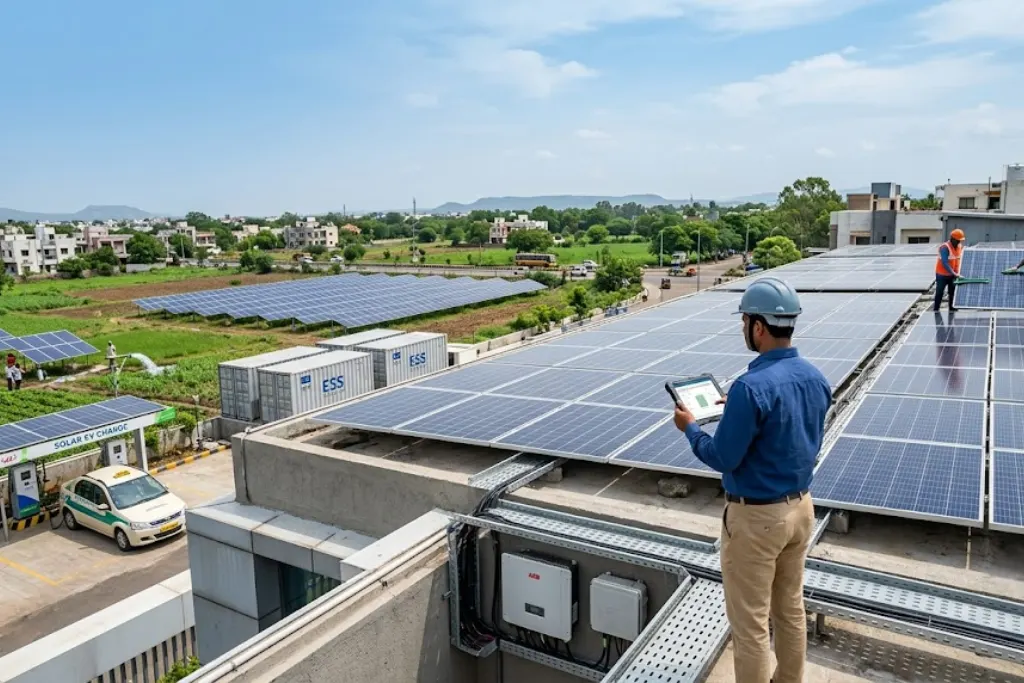
Some opportunities sit just outside the traditional solar frame. Battery storage support, EV charging integrated with solar, and energy optimisation services are all gaining attention.
These areas are less forgiving to newcomers but rewarding for experienced operators. They often grow out of existing solar businesses rather than replacing them.
Watching where your current clients struggle often reveals where the next opportunity lies.
Which Solar Business Idea Is Most Profitable in 2026?
Anyone promising a single most profitable solar business is simplifying reality. Profit comes from alignment. The right customers, the right geography, the right scale.
Some models generate steady, modest margins with low stress. Others offer higher upside but demand constant involvement. The strongest businesses usually evolve, adding layers as experience and confidence grow.
Common Mistakes New Solar Entrepreneurs Should Avoid
Most early failures in solar are business mistakes, not technical ones. Most common mistakes are:
- Overcommitting to price wars erodes margins fast.
- Depending too heavily on subsidies creates unstable pipelines.
- Ignoring after-sales responsibilities damages trust permanently.
Solar doesn’t forgive shortcuts. It rewards those who plan for delays, manage cash carefully, and think beyond the first sale.
Final Thoughts: Building a Sustainable Solar Business in India
Solar in India offers real, long-term opportunity, but it’s no longer a playground for quick wins. Whether you start as a dealer, installer, or service provider, success comes from choosing a role you can sustain and executing it consistently.
By 2026, the question isn’t whether solar is worth entering. It’s whether you’re ready to build it properly.