We are in the year 2026. And the fear is no longer hypothetical.
The warning about AI stealing jobs is no longer a warning for the future. It is a conversation taking place in boardrooms, on job boards, and in your head at 2 AM. A recent survey conducted by Mercer among 12,000 employees found that employee anxiety about job displacement by AI has increased from 28% in 2024 to 40% in 2026. That is not fear. That is pattern recognition.
At the same time, PwC’s Global AI Jobs Barometer 2025 reports that workers with AI skills are earning up to 56% more than their peers, while AI-exposed industries are seeing a fourfold increase in productivity growth.
But here’s what most people are getting wrong about it.
It is not the AI that is deciding to replace you. It is a person who has anticipated the application of AI before you. It is a person who gets the job, closes the deal, and gets the promotion. AI is only a tool. The person wielding the tool is the actual competition.
When you look at it this way, everything changes..
What Is Actually Happening in the Job Market Right Now
The conversation around AI taking jobs has moved from speculation to reality. Here is what the data and the ground-level hiring trends are actually showing in 2026 not the version the headlines tell, but the full picture.
The Numbers Tell Two Stories
The headlines prefer the frightening half. Let’s examine both.
One side of the story: AI is already disrupting the job market at a breakneck speed. Job postings with AI have increased by more than 130% in the past year, even as the overall number of job postings remains flat. AI skills are now included in more than 78% of IT job postings. In the first half of 2025 alone, there were nearly 78,000 tech job cuts due to AI.
The other side of the story: AI is predicted to create 170 million new jobs globally, resulting in a net gain of 78 million jobs. This, according to the World Economic Forum, is a good thing but only for those who adapt to the change.
The split is happening right now. The question is which side of it you land on.
The Silent Shift Nobody Talks About
This is something more interesting than the big numbers. The employment level in high exposure to AI jobs has declined specifically for young people, the percentage decline from 16.4% in November 2022 to 15.5% in September 2025. Not because they got fired. Because they never got hired in the first place.
Young people entering the job market in data, writing, coding, and legal research are finding fewer open doors for entry-level jobs. AI has silently taken over the work that was once the training ground for new professionals, similar to how search itself has shifted from keywords to AI-generated answers. This is one of the most silent effects of AI taking over jobs and it impacts young professionals the most.
Why AI Is Not the Real Problem

The issue with AI is that it is a technology that is feared for its ability to steal jobs. The truth of the matter is that technology is not the one making the decisions. It is human beings who make the decisions. And it is the people who understood this early on who are winning now.
The Tool Is Not the Threat
AI does not have any ambitions. It does not arrive at the office early, leave late, or ask for a pay increase. It does not build relationships, read a room, or make a decision under pressure. What it does is process, generate, summarize, and repeat tasks at a speed that no human can keep up with.
Only about 43% of the workforce uses AI on a regular basis, while about 40% of the workforce is actively disengaged from AI. The difference between the two is the real opportunity. Most people are standing at the edge of a tool that has the ability to double their productivity and are not picking it up
The Person Using AI Is Winning
This is what is actually happening in the world of business. The marketer who can research, write, and optimize content using AI in three hours is not being replaced, they are doing the work of three people. But speed alone is not the same as effectiveness, something we explored in our analysis of AI productivity. The financial analyst who can analyze reports using AI and highlight anomalies is not being replaced; they are becoming invaluable. The customer service manager who can use AI to answer routine questions is not losing their job, they are being given more responsibilities.
As one IT educator put it: “AI doesn’t replace the expert, it augments efficiency.” The expert has to be there. They just have to use the right tools.
Which Jobs Are at Risk and Which Are Not
Not all jobs are at the same risk. The effect of AI on jobs differs from industry to industry and job to job. The first step to figuring out what to do next is to figure out where you are.
Jobs Under the Most Pressure
The effect of AI is more pronounced in some jobs than in others. The pattern is clear: the more predictable and rule-based the job, the more at risk it is.
Legal support: Paralegals are expected to be 80% at risk, with legal researchers a close second at 65%.
Healthcare admin: Medical transcription is already 99% automated.
Content and media: Digital marketing content writer jobs are expected to decline by 50% by 2030.
Manufacturing: AI-powered robotics has already replaced 2 million manufacturing jobs worldwide.
Jobs That Are Holding Strong
Not all roles are as pliable to the same degree. The more a role requires human judgment, physicality, and emotional intelligence, the less likely it is to be automated.
- Complex decision-making and senior leadership
- Trades, construction, and physical skilled labor
- Therapy, coaching, and care work
- Creative strategy and high-level direction
- Sales positions based on deep relationship and trust
Even in these strong roles, 54% of current tech skills are projected to be altered by AI in the next three years, that is, the nature of all work is shifting, even if the job title does not.
2026 Is the Year of Adaptation, Not Automation
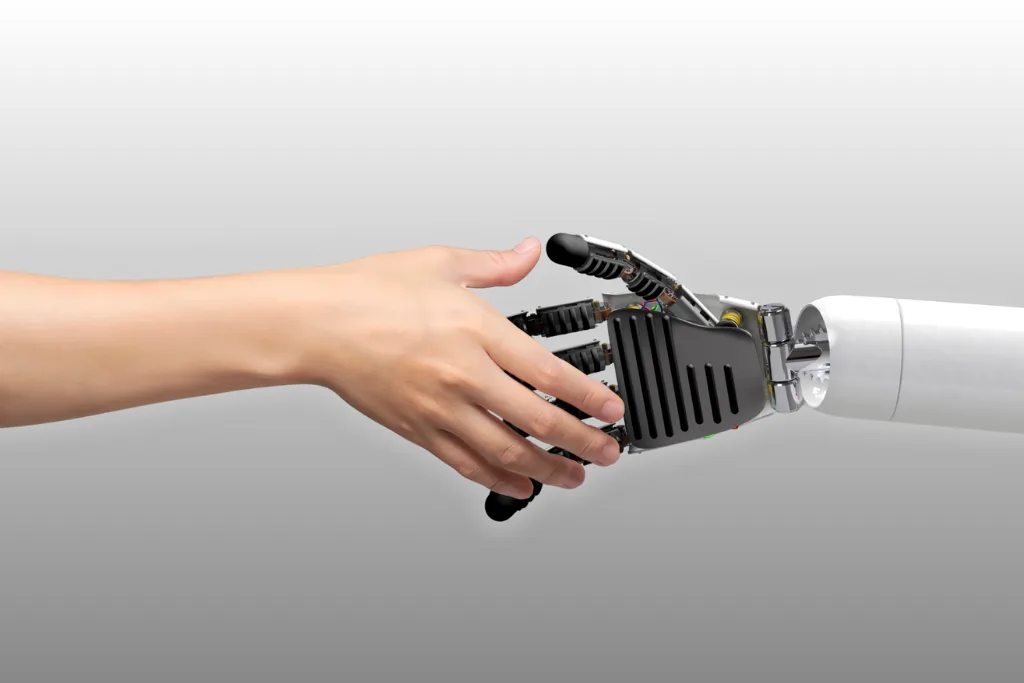
The worst thing that people are doing right now is waiting. The leaders of the industry, the investors, and the economists are all pointing to the same thing – the time for adaptation is not approaching; it is upon us.
What the Experts Are Saying
The CEO of Randstad, the largest staffing company in the world, declared 2026 “the year of the great adaptation” a time when people and team leaders must begin to seriously consider how they can incorporate AI and solidify their gains in productivity.
Research from Mercer showed that 97% of investors reported that their funding decisions would be negatively affected by companies that did not retrain their employees on AI. This is no longer a soft HR issue. It is a financial indicator.
The Skills That Still Matter Most
This is something that the AI conversation tends to overlook. It takes more than technical skills to be employable in 2026. It takes communication and critical thinking skills. A computer can spit out a report. But it can’t tell you what part of that report really matters to your client.
The application of AI is very useful. However, it is even more useful in the hands of a person who still thinks, questions, and relates with other people
What You Can Do Starting Today
You don’t need a certification. You don’t need a computer science degree. You need to start—and start small.
Use AI in Your Current Job First
Think about one thing you do each week that feels repetitive. A report you write. An email thread you summarize. A research brief you compile. Pass that task off to an AI application ChatGPT, Claude, Gemini, or Copilot and see what you get back. Improve it. Make it your own. Do that each week until it feels second nature.
That’s how fluency develops. Not in a class. In use.
Make Your AI Use Specific and Visible
“I use AI” is just background noise in 2026. Everyone does it now. It’s all about specificity.
“I use AI to cut my weekly reporting time from four hours to forty minutes.” “I use AI to compose and split-test subject lines for our email campaigns.” “I use AI to brief myself on client briefs before every strategy call.”
Specific use of AI tells a story. It shows that you not only understand the technology, but that you have actually leveraged it for your own ends.
Protect What AI Cannot Replace
Redouble your efforts on the things that no technology can ever replace. Your judgment. Your relationships. Your ability to break down complexity for another human being. Your gut when the data disagrees in two different ways. These are not soft skills. In 2026, they are your strongest possible differentiators.
The Honest Answer to “Will AI Take My Job?”
Probably not entirely. But it will change what your job looks like and it already is.
The IMF’s managing director described AI’s effect on the labor market as hitting “like a tsunami,” noting that most countries and businesses are not yet prepared. That is not a reason to panic. It is a reason to move.
The people most at risk right now are not the ones who lack talent or intelligence. They are the ones who are waiting for the right moment to start learning. That moment does not arrive on its own. You create it.
AI taking jobs is real. But so is the opportunity sitting on the other side of it. The difference between those two outcomes, in most cases, comes down to one simple thing: who started using the tools first.
FAQs;
1. Will AI really steal my job?
AI is more likely to transform your job than steal it. Jobs that have repetitive tasks are most at risk. The greatest risk is not adapting to AI in your industry. It is AI itself.
2. Which jobs are safe from AI?
Jobs that require physical abilities, high-level judgment, emotional intelligence, and strong relationships are safe. However, AI is impacting every industry in some manner. The safest job is one where you leverage AI to work smarter.
3. How can I use AI in my work if I am not technical?
You don’t have to be technical. Begin with tools such as ChatGPT or Claude for writing, summarizing, and brainstorming. Get familiar with them by using them regularly. The most important learning happens through daily practice, not mastery.
4. Is AI really creating new jobs?
Yes. AI is predicted to create 170 million new jobs globally, which is higher than the number of jobs it is expected to displace. New job titles such as AI trainers, prompt writers, and automation strategists are being created. These jobs do not require a technical background.
5. How much more money do people with AI skills make?
People with AI skills earn up to 56% more than people without AI skills in the same job, according to the 2025 Global AI Jobs Barometer report by PwC. This gap is widening as AI becomes a normal requirement in the industry.