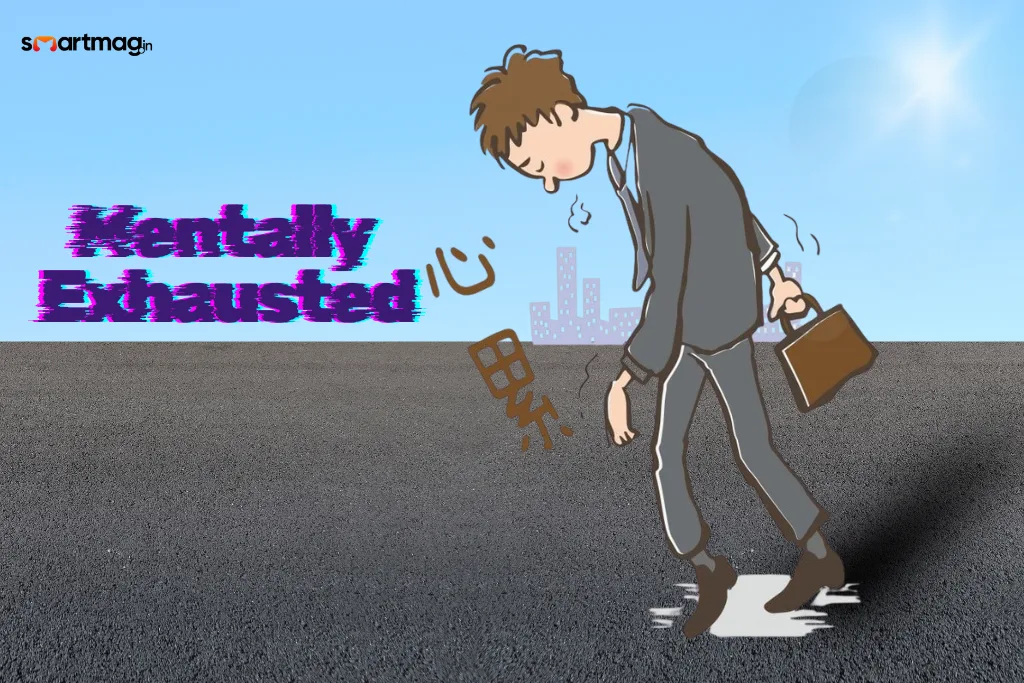
There is an exhaustion that can’tbe alleviated by rest.
You get your eight hours at night, yet something feels amiss. You may physically feel refreshed, yet your mind lags behind. Ideas feel burdensome, concentration difficult, and tasks become strenuous.
Here comes the significance of knowing the difference between exhaustion and mental exhaustion. One is fleeting, whereas the latter is cumulative.
Unlike exhaustion, mental exhaustion doesn’t hit you like a wave; rather, it is built gradually through persistent exposure to stimuli and strain without mental relief. And since everything is going well, it’s ignored.
What Is Mental Exhaustion?
A situation where mental and emotional resources have been exhausted because of stress, overthinking, and a lack of recovery is called mental fatigue. It may affect concentration, clarity, and emotions despite having physical energy.
You Struggle to Focus on Simple Things
One of the first indications is a marked decline in focus.
You read information and promptly forget it. You begin activities but have trouble continuing. Even actions you once took without thinking now require effort.
This does not imply a lack of self-control. This means overload. When your mind has been working on an excessive amount of information for a prolonged period of time, it will start to slow down.
You Feel Tired Even After Rest
Sleep no longer feels like a reset.
When you get out of bed, you feel as exhausted as when you first went to sleep. That is because, even when the body rests, the mind remains preoccupied and tense.
It has a lot to do with what was discussed earlier about feeling drained for no reason, since mental exertion counts more than physical effort.
Small Tasks Start Feeling Heavy
The challenges of responding to an email, making decisions, or beginning a task might seem particularly daunting.
But it isn’t that these activities are inherently complex; rather, it’s that your cognitive abilities seem severely restricted. Under such circumstances, even simple acts become burdensome.
This is typically when individuals mistake exhaustion for laziness despite their vastly distinct root causes.
Your Emotional Reactions Feel Stronger
Mental fatigue limits your capacity to control your emotions.
It will be easier for you to become frustrated, impatient, or react more than you usually do. Minor annoyances will seem more significant than they really are. Events that typically wouldn’t bother you will begin to have a stronger impact on you.
This is due to your mind having fewer resources available to process emotions.
You Feel Disconnected From What You’re Doing
There is an underlying feeling of disengagement that begins to develop.
You live your life, you fulfill your duties, yet you do not feel engaged in the process. You are there, but you do not really participate.
It occurs whenever the automatic becomes dominant over the conscious. In the long run, the repetition of behaviors tends to lower your level of conscious involvement in the process.
Your Motivation Keeps Dropping
You wish to accomplish tasks, but you cannot even begin.
Motivation starts to become unstable. Sometimes you manage to get things done, but on most days, you have trouble following through. It has nothing to do with your desire. It has everything to do with your lack of mental energy.
You Feel Like Stepping Away From Everything
At some point, the sensation evolves from tiredness at work to tiredness of everything.
You seek isolation from duties, talk, and even things that generally bring happiness. This can be your brain’s way of telling you it needs rest, not merely diversion..
Why Mental Exhaustion Builds Up
This kind of exhaustion rarely happens because of only one cause.
The reasons include incessant information processing, perpetual decision-making, psychological stress, and insufficient breaks. In today’s world, our minds are engaged in something almost all the time, but hardly do we have any chance to give it rest.
Based on the results of psychological studies dedicated to the effects of stress on the brain, prolonged mental effort impairs clarity and emotional regulation.
How to Start Recovering
Recovery isn’t about trying harder; recovery comes from making space.
Cutting back on stimuli that aren’t needed can make all the difference. If your mind is always on, it doesn’t have time to refresh itself. Sometimes less stimulation can help bring more clarity.
Trying to do less is another key point. If everything seems like an equal priority, your brain is overloaded. By narrowing your focus, you reduce stress.
Above all, understand that mental fatigue needs to be acknowledged and recovered from, not pushed through or ignored.
Final Thought
Mental exhaustion cannot always be detected.
You carry on with your regular activities and finish up your tasks and responsibilities, but inside, your brain feels heavier than usual.
There is a fine line that separates fatigue from mental exhaustion, yet it is important.
Fatigue subsides when you rest. Mental exhaustion needs recognition.
Rather than wondering why you are feeling fatigued…
consider if your mind has been given an opportunity to relax.