Fruit jams are no longer background pantry items. Shoppers look for real fruit, short ingredient lists, and a flavour that feels honest. That change has quietly pushed fruit jam manufacturer in India into many buyers’ consideration sets.
This article explains why. It covers where the fruit comes from, how it is processed, why private-label demand matters, and what importers actually check before placing an order.
The Global Jam Market is Changing
People do not choose jam the same way they did a decade ago. Once, it was all about sweetness. Now shoppers want transparency and flavour that reads like fruit, not chemistry.
Signs of that shift:
- A preference for recognisable ingredients rather than long, unfamiliar lists
- Appetite for regional and authentic flavours that tell a story
- Demand for clean labels and minimal processing
- Growing interest in premium and artisanal-style jars alongside everyday options
These are steady trends. They create space for suppliers who can deliver fruit-forward taste at scale, which is exactly where Indian suppliers fit.
India’s Strength Starts at the Source
The advantage begins on the farm. India grows a wide range of fruits across many climates, so processors have access to fresh raw materials through much of the year.
Why that matters:
- Wide fruit variety: mango, guava, pineapple, strawberry and many mixed-fruit options
- Staggered harvests: different regions peak at different times, smoothing supply gaps
- Established farm-to-factory links that preserve flavour and cut waste
- Cost-effective sourcing does not automatically mean lower quality
Put plainly: better fruit in usually means better jam out. For importers that translates into jars with more authentic taste and fewer seasonal surprises.
Manufacturing That Balances Scale and Consistency
Making jam at volume is doable. Making it the same way every time is harder. Leading producers have invested in systems that ensure reproducible results.
What buyers notice:
- Consistent texture across batches so the product performs on shelf and in recipes
- Stable flavour profiles so customers return for the same taste they loved before
- Flexible scaling from small test runs to container loads without sudden quality shifts
That reliability reduces operational headaches. A retailer can plan promotions, shelf space and replenishment with confidence when the product behaves predictably.
Private Label Demand is Driving Growth
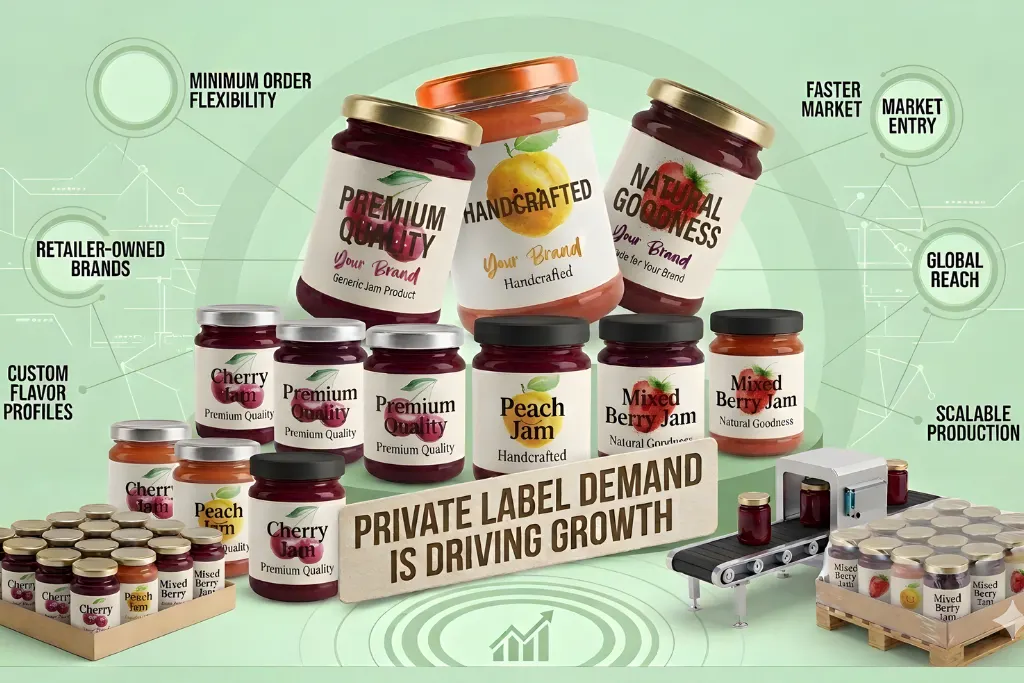
Retailers want branded control without the capital cost of a plant. Private label answers that need. It lets stores offer exclusive SKUs quickly, and that has opened a big window for fruit jam suppliers in India.
Private label advantages:
- Custom flavours and formulations without owning production lines
- Faster market entry for seasonal or trend-driven ranges
- Pack and label flexibility to suit different markets and price points
- Stronger margin control for retailers
Many Indian manufacturers now provide end-to-end private-label services: formulation support, packaging options and minimums that suit growing brands.
Meeting International Standards Matters
Taste will get a brand noticed, but documentation keeps it on the shelf. Export buyers require clear evidence of safety, quality, and traceability, and Indian fruit jam suppliers have been tightening their processes to match.
Export-ready practices include:
- Formal food-safety systems and recognised certifications
- Batch testing and Certificates of Analysis for shipments
- Traceability from orchard to jar for origin claims
- Packaging and labelling that meet destination rules and shelf-life needs
Those details remove friction at customs and make it easier for an importer to pass internal audits. That peace of mind is valuable.
Flavours That Travel Well Across Markets
A jam has to taste right to sell repeatedly. Indian jams tend to be fruit-forward, not cloying, which sits well in many markets.
Standout profiles:
- Mango with ripe, natural sweetness rather than a syrupy note
- Mixed fruit blends that layer flavours instead of masking them
- Strawberry and pineapple options with reliable acidity and sweetness
- Region-inspired blends that offer shelf differentiation
Because they strike that balance, these jams fit both mainstream aisles and speciality shelves.
A Practical Advantage in Pricing
Cost always influences sourcing decisions. Indian manufacturers offer competitive pricing with decent quality, a mix that is practical for many buyers to accept.
How they achieve it:
- Manufacturing lines that minimise waste
- Raw material sources that minimise transport costs
- Scalable manufacturing that increases economies of scale
The implications for buyers are that there is room to run promotions or compete on price without compromising on product integrity.
Trust is Building Over time
Establishing demand through repeated instances of good experiences. Jam manufacturers in India have been able to secure repeat business through this route.
Signs that trust is being built:
- Repeated business
- Clear export support
- Success stories on private label business
These are all signs that trial orders are being converted into long-term supplier relationships.
What This Means For Buyers
If you are a retailer, brand, or distributor, buying from India has several implications that are advantageous to your business:
- Access to a wide range of fruit-based SKUs
- Manufacturing consistency that minimises shelf risk
- Ability to create private label products that can be quickly tested and launched
- Competitive pricing that can be used to your advantage
Conclusion
Imported Indian fruit jams are gaining ground because they solve real problems for buyers: authentic flavour, dependable supply and sensible pricing. For anyone looking to add variety to their shelves or launch private-label lines, fruit jam manufacturers in India provide a capable, increasingly trusted option that performs in market and on the plate.