The Algorithm Is a Mirror, Not a Puppet Master
Computer algorithms are frequently deemed invisible powers driving the behavior of humans. This terminology assigns alleged intention and manipulation to the algorithm. It is almost as if the algorithm has its own set of desires. Computer algorithms do not possess the ability to think or have desires. They are merely observers of patterns.
Deep down, these algorithms are just like mirrors. They just throw back what is in front of them. With each person repeating interactions with similar data, there is assumed preference. When a person behaves the same way daily, often at the same time, a routine is assumed. This becomes increasingly accurate due to predictable human behavior.
Loop ai is well-suited to environments where repetitive actions are present. It doesn’t manufacture behavior. It tracks behavior.
How Loop AI Works in Everyday Digital Life
Loop AI works in continuous feedback rather than one-time decisions. Every action by a user turns into a signal. Every repetition of an action strengthens that signal.
In daily digital life, repeated clicks matter more than intentional choices. Consistency trains AI algorithms more than conscious decisions. Predictable routines reduce uncertainty for systems. Repetition solidifies patterns, rather than creating new ones.
This is why one accidental click rarely changes anything but the repeated behavior reshapes an entire feed. Loop AI does not respond to moments; it responds to patterns.
The Relationship Between AI Algorithms and Human Habits
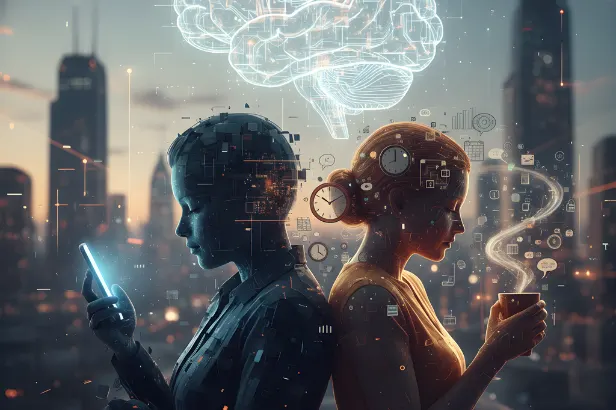
Human habits serve as inputs. Algorithms perform the output functions.
This dynamic is not well understood. People think it is driven in this way: First, algorithms enforce behavior. Rather, habits drive behavior, and then algorithms act upon what happens next.
The habit defines a user’s application open time, duration of stay, and the type of content they are most responsive to. The algorithm simply works within these confines. The more predictable the habit, the cleaner the signal. The cleaner the signal, the stronger the loop.
When individuals feel they are controlled by technology, what they are actually seeing is themselves reflected back with a high degree of accuracy.
Why Repetition Is the Real Source of Algorithmic Power
AI algorithms’ real strength is not in intelligence. It is in repetition.
Repetition removes uncertainty. When an activity is repeated, it is possible to predict its consequences. This explains why having regular routines yields very personal experiences.
Regular behavior translates into reliable data signals. Reliable signals beget accurate predictions. Accuracy creates the appearance of intentionality, which is often felt as control.
Loops involving “AI” rely on repetition. Without repetition, the loop is reduced in strength. Without habits, the system becomes unclear.
How Habits Gradually Shape Identity
Habit patterns affect behavior only. Gradually, they influence personal identity.
However, when actions are repeated often, they begin to feel like they are a part of who we are. A person does not just scroll often. They start to look at themselves as people who need steady updates. People who check notifications late at night start to feel like they can never disconnect.
Loop ai solidifies this identity by making the surrounding environment stable for it. The algorithms of artificial intelligence adapt to the behavior associated with an identity and find it difficult to undergo a shift. Not because it can’t, but it goes against self-perception.
Attention Is the Real Currency, Not Data
Data is commonly cited as “the most valuable resource of the Digital Age.” The truth is: Data comes second. Attention is what really matters.
Research on smartphone usage shows how easy it is for habitual scrolling to tire the mind and reinforce attention loops, even when users intend to disconnect.
Behavioral patterns automatically direct attention. AI algorithms follow these directions. As attention moves, there is adaptation. When attention stands still, there is tightening of the loop.
This is why small changes in habit are important. Changing the timing or method of focus input affects the whole process of feedback. Loop ai acts rapidly because it has a commitment to current data alone.
Why Breaking the Loop Feels Difficult
Unsettling experiences characterize habit breaking, which is commonly confused with technological control.
The truth is that the brain resists disturbances because habits are energy-efficient. If a habit is interrupted, the brain has to do extra work, and this is uncomfortable.
The algorithms of the AI do not impede the process of change. After a behavioral shift, an adaptation occurs. This is the reason individuals, after deliberately modifying their behavior, quickly observe a change in the digital environment created for them.
The Myth of Algorithmic Domination
The appeal of the proposition that algorithms of artificial intelligence drive human behavior lies in the absence of accountability. When the forces to which one submits aren’t one’s own, there is no point in making changes.
However, this is not the case. Algorithms are unable to perform tasks by themselves. Habits are responsible for providing the input to algorithms all the time.
Loop AI appears powerful because it is an effective listener. It mirrors back exactly what is given to it. The direction always comes from the user, even if it is not conscious.
Final Reflection
Algorithms do not rule over us.
They trail us.
They trace our habits, our comforts, our avoidance of discomfort. Loop ai just closes the gap between behavior and result.
If the experience seems overwhelming, the answer is not to resist the algorithms of artificial intelligence, but to recognize the patterns that are repeating. Habitual behavior is transformed and so is the mirror.