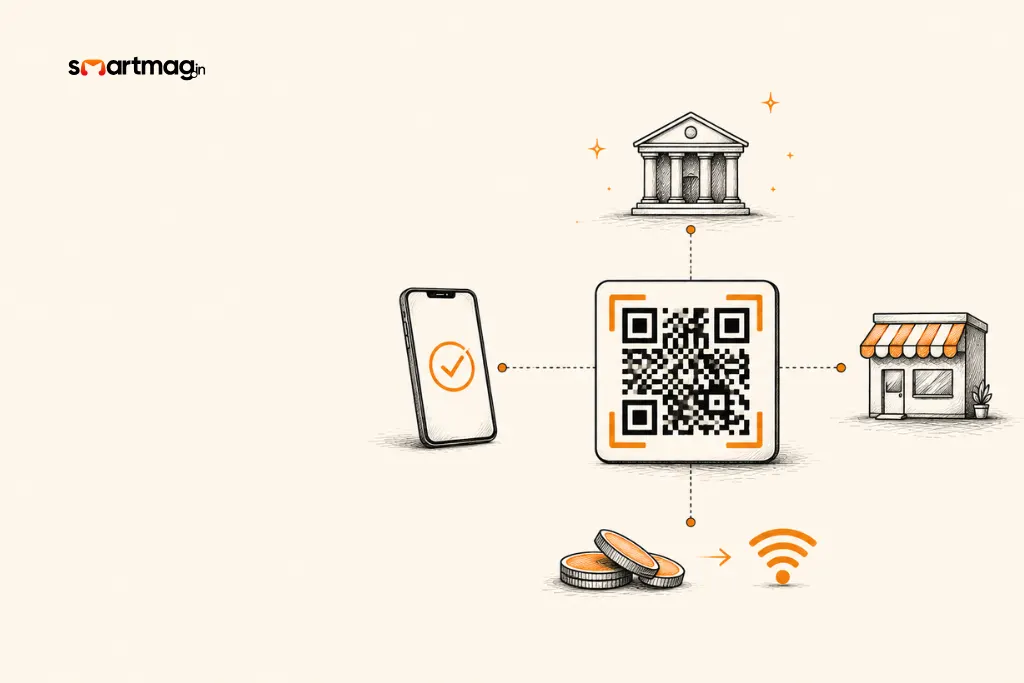
Until a few years ago, buying tea from a roadside stall often meant searching through your pockets for loose change. But today, it’s digital payments era, all you need to do is scan a QR code, enter your PIN, and complete the payment within seconds.
It is a simple shift that reflects on a much bigger story.
The Unified Payments Interface, also known as UPI, has revolutionised the way people send, receive, and manage money. In fact, it has brought large retailers, neighbourhood shops, street vendors, and individual users onto the same payment network.
Launched in 2016 by the National Payments Corporation of India, UPI now seamlessly handles billions of transactions every month. NPCI reported more than 23 billion transactions in May 2026 alone.
With this impressive growth, India has been placed at the centre of the global conversation about real-time payments.
Well, the UPI revolution was not just about replacing cash. However, it also made global payments simple enough to become an integral part of daily life. Moreover, it has also changed the landscape of fintech in India, thereby creating opportunities for banks, payment companies, and technology businesses.
What is UPI and How Does It Work?
Before we get into the depths of how UPI turned India into a digital payments powerhouse, it is important to understand what it is and how UPI works.
So, UPI is a real-time payment system that enables users to transfer money directly between bank accounts. A person can easily make a payment through a mobile application without entering lengthy account details for every transaction.
Users can easily send and receive money using:
- A UPI ID
- A mobile number linked to that account
- A QR Code
- Bank account details
- Certain approved payment addresses
Why Did UPI Succeed Where Other Systems Struggled?
Before UPI came into existence, there were plenty of digital payment options, including debit cards, credit cards, mobile wallets, and internet banking. But the majority of these methods involved plenty of additional steps, limited acceptance, and expensive infrastructure.
But UPI simplified the process.
It Made Payments Almost Effortless
As a user, you must have experienced that a typical UPI payment takes only a few basic steps. You have to either scan a code or choose a contact, enter the amount, and confirm the transaction using a PIN.
There is no need for you to remember the account number, branch details, or IFSC code for ordinary payments. This simple approach has helped people to use digital payments for both planned purchases and everyday expenses.
It Connected Different Banks and Applications
UPI was designed as a dependable system and not like a closed network. It enabled the participating banks and payment apps to seamlessly communicate through a common infrastructure.
In fact, it is the IMF that has identified reliability as a major factor behind the growth of India’s digital sector.
QR Codes Reduced the Cost for Merchants
Card-based payments often require a machine, installation, and regular upkeep. However, a printed QR code is much simpler and cheaper.
Small businesses, from fruit sellers to local pharmacies, can accept digital payments without investing in costly equipment. This has made UPI useful for all businesses and not just the large retailers.
How Did UPI Change Everyday Payments?
Well, the overall success of UPI depends on how deeply it has entered the ordinary routines. People today use it to pay their grocery bills, restaurant charges, school fees, and utility bills. Additionally, friends split meal costs through payment apps. Families send money across cities easily and instantly. Customers can pay local vendors without needing cash or extra change.
For merchants, UPI has also reduced the need to store and handle physical cash. It also helps in creating a digital payment record, which can make everyday account management a breeze.
The World Bank has described UPI as giving its users the speed and convenience linked with cash while removing barriers like physical distance and shortage of change.
UPI’s Role in Expanding Financial Access
The overall impact of UPI expands beyond urban professionals and large-scale businesses. Its simple mobile-based model has paved the way for wider participation in formal financial services.
People who have a linked mobile account and suitable mobile access can make digital transactions without visiting a branch.
This is especially important in a country where distance, paperwork, and limited banking infrastructure have made financial access difficult for some communities.
UPI alone cannot solve every financial challenge. Reliable internet connectivity, banking access, digital knowledge, and protection against fraud remain important.
Therefore, the future of digital payments in India will depend on making these systems easier to use across languages, devices, and levels of digital confidence.
How Did UPI Reshape Fintech in India?
UPI did more than just change the customer behaviour. It also reshaped the country’s financial technology sector. Because the payment system works seamlessly across different banks and apps, companies can build services on top of it.
Payment applications compete through user experience, reliability, rewards, merchant services, and additional financial tools.
This has encouraged innovation across the fintech sector in India. Companies are now able to offer services like bill payment, payment collection, expense tracking, and business payment management through well-connected digital platforms.
Banks also had to work towards improving their mobile services. Customers today expect payments to be made instantly, which is available throughout the day and is also easy to complete.
UPI Provided Small Businesses a Digital Entry Point
For small businesses in particular, going digital meant investing in specialised equipment or setting up an online payment gateway. But UPI reduced that problem.
A neighbourhood retailer can easily place a QR code near the counter and start accepting payments. The business does not require a complex checkout system for simple transactions.
This offers several benefits, including:
- Less reliability on cash
- Faster and more efficient customer payments
- Fewer problems involving change
- A clear transaction history
- Easier remote payment collection
- Access to customers who prefer digital payments
A transaction history can also help in formalising some business activity. But digital records do not automatically guarantee access to editing. Lenders will still look into different factors while reviewing an application.
Challenges That Still Demand Attention
The scale at which UPI has grown is quite impressive, but with rising popularity comes fresh responsibilities.
- Digital Fraud and Social Engineering
Fraudsters often succeed in deceiving users into sharing their PIN, opening an unsafe link, or approving a collection request. These are some of the common incidents that target human trust.
However, what users need is clear and well-defined safety education. A UPI PIN should only be entered to authorise a payment. It is not necessary to receive money.
- Failed or Delayed Transactions
Though the majority of the payments happen quickly, technical failures can still occur. A customer may see money debited while the merchant did not receive confirmation immediately.
It is the responsibility of the banks and the payment providers to improve reliability, complaint handling, and refund-related communication.
- The Digital Access Gap
Not every person has a smartphone, a reliable internet connection, or the confidence to use payment applications. Language and accessibility barriers can also make digital services difficult.
The future of digital payments in India should include people with basic phones, limited connectivity, and different accessibility needs.
- Financial Sustainability
UPI has grown in success because it is inexpensive and convenient for the users and merchants. But banks and technology providers still have to bear the cost of processing, security, infrastructure, and customer support.
The industry should be able to find the right balance without making small digital payments difficult or expensive.
Wrapping Up
UPI was a huge success since it was able to solve everyday problems without asking users to understand complex banking technology.
It brought speed, compatibility, and low-cost acceptance into one system. As a result, consumers gained an easy way to pay, merchants received an accessible digital option, and financial companies found a shared platform for innovation.
This combination transformed the UPI revolution into more than a technology story. It became an example of how digital public infrastructure can influence behaviour across the entire economy.
As the fintech sector in India continues to grow and mature, UPI will remain the core part of its development. The next challenge will be to ensure that the digital payments become not only faster but also safer, more inclusive, and dependable for every user.
FAQs
What is UPI?
UPI is a system used to make instant payments by directly transferring funds from one bank account linked to the user’s phone to another.
Why is UPI popular in India?
UPI has gained popularity due to its fast transactions, easy QR code acceptance, and interoperability with all participating banks and payment applications.
How safe is UPI for consumers?
Users need to secure their PIN and refrain from clicking on suspicious links or making payments. There is no requirement for a PIN when receiving payments.
What factors will impact the future of digital payments in India?
Accessibility, fraud prevention, availability of a robust infrastructure, cross-border connections, and alternative payment methods will play an important role in shaping digital payments in India.